


The creative team behind 2022’s critically acclaimed Superman: Space Age is back with their unique twist on another iconic DC mainstay. While Batman: Dark Age doesn’t take place in the same universe as Superman: Space Age, the creators have taken a similar approach. Retelling the origin and development of Batman beginning in 1957, the story gives us a more contemporary origin for the Caped Crusader, rather than the 1930s version we’re familiar with.

DC Comics
The Story
The issue is narrated by an aged Bruce Wayne from the year 2030. He is writing down his life story in a journal to help with his diagnosed memory loss. The majority of the first issue takes place between 1957 and 1963. The Waynes have been murdered outside of a movie theatre, but in this version Bruce was not there to witness the deaths; he was safe at home. Running through the entire issue is the False Face Society – presumably behind the murder of the Waynes in order to take over Wayne Enterprises. In an interesting twist to the story we’re used to, Bruce is fully aware who is behind the murder of his parents but simply can’t do anything as this organization is too powerful. He spends his years waiting for the other shoe to drop, and for the Society to finish the job of dispensing with the entire Wayne family. It’s hard to imagine what that must be like, living with the idea of your own mortality at such a young age. As a result, Bruce is going through the motions, “doomed and irredeemable.” He mostly goofs off with his friends and gets arrested. He knows he can get out of most of his problems with a bribe – and if that fails, the corporate lawyers are always at the ready.
Superman: Space Age dealt with some very specific historical events such as the assassination of John F. Kennedy and the civil rights movement. This series, so far, doesn’t repeat that same motif – it merely sets the story in the milieu of 1960s American society. Bruce visits coffee shops late at night in bad parts of town, and someone looking like Bob Dylan happens to be walking out. He meets a comedian who insults the audience, perhaps channeling Lenny Bruce. Bruce is coming to grips not only with the death of his parents, but with his immense wealth and what that means for his future. Growing up with so much privilege and no corresponding responsibility to do anything with that power genuinely makes our teenaged Bruce an unlikeable character. In the final pages of the issue, we find out what happens when Bruce Wayne’s luck runs out, and it sets up an interesting second issue.
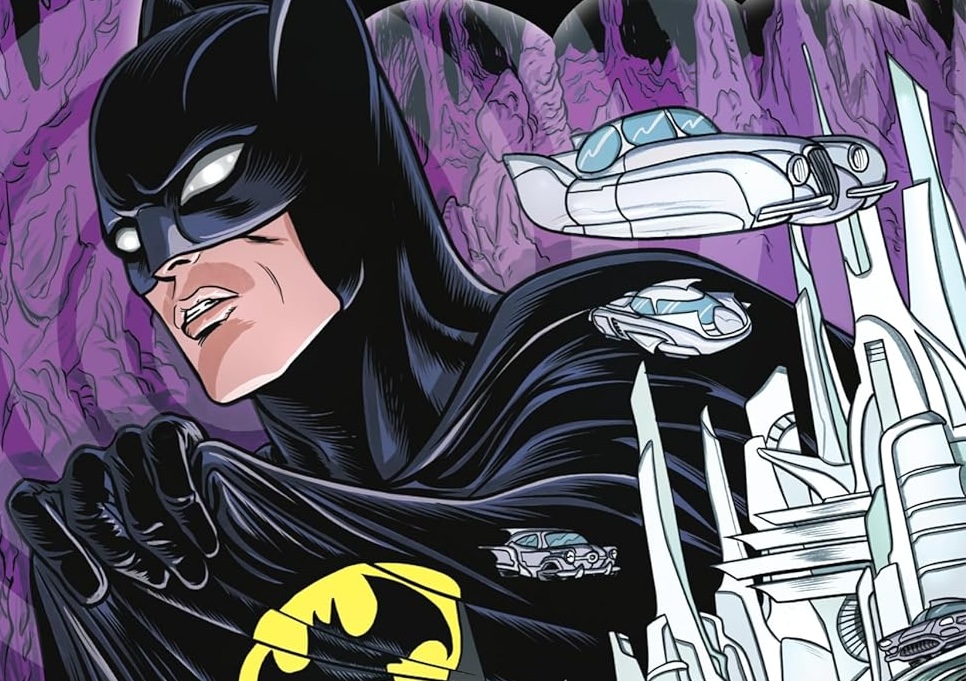
Mark Russell makes some compelling narrative choices. Beginning the book by juxtaposing scenes of a futuristic, utopian Gotham with scenes of Batman fighting the False Face Society in run-down, dilapidated buildings shows that the City of Tomorrow that was Thomas Wayne’s dream never came to pass. Having the story narrated by an elderly, wiser Bruce Wayne also makes the young, unlikeable Bruce more tolerable. There’s a sense that if we stick with this version of Bruce, we’ll be rewarded with the crime fighter from the opening pages. While most incarnations of Batman’s origins go from the little boy crying over his parent’s dead bodies to an adult either training to become Batman or already Batman, this story chooses to focus on those in-between years. Without the added trauma of being present when his parents were killed, Bruce hasn’t made any kind of vow to avenge his family. We see Bruce Wayne as a troubled adolescent, disillusioned with his place in the world. He just kind of drifts through life, trying to make the most of his time before he takes over Wayne Enterprises, though it hardly seems like he takes even that responsibility very seriously.

DC Comics
The Art
Mike Allred’s retro-styled artwork is the perfect aesthetic for this book. The futuristic city of tomorrow is where he can really shine and allow his design skills to flourish. Though it’s not a significant part of the book so far, Allred’s Batsuit is a fantastic combination of form and function. The suit looks like something that could actually exist in the real world while still having interesting design elements. The ears harken back to the early Bob Kane and Bill Finger design of the 1930s. The masks of the False Face Society are simple, yet strikingly unsettling, especially when suddenly donned by the board members of Wayne Enterprises. Laura Allred’s colors complement the artwork nicely. Lots of black turtlenecks, but also a splash of colorful outfits in the audience at the comedy show. The parts of Gotham that Bruce chooses to hang around in are derelict, and the Allreds render them perfectly, from the abandoned cars to the broken windows and dim alleyways.
Final Thoughts
In Batman: Dark Age, the creative team delivers an intriguing reinterpretation of the Caped Crusader’s beginnings, setting the stage for an interesting narrative. Mark Russell’s bold choices, coupled with Mike Allred’s evocative artwork, breathe new life into the familiar mythos. By exploring Bruce Wayne’s formative years, the series offers a fresh perspective on the iconic character’s journey. Russell’s decision to narrate the story through an older Bruce Wayne adds depth to the portrayal of the troubled adolescent, while Allred’s retro-styled visuals capture the essence of Gotham’s contrasting worlds. As the narrative unfolds, the tension builds, promising an interesting next issue. Batman: Dark Age emerges as a compelling addition to the Batman mythos, inviting readers to delve deeper into the complexities of the Dark Knight’s origins and the challenges that lie ahead.




You must be logged in to post a comment Login