


The current volume of Uncanny X-Men has been the crown jewel of the new X-Men era, playing successfully with both established characters and effectively holding up the long history of new teen teams. To do both well in one book is an impressive feat: earlier teen books like New Mutants and Generation X had their hands full establishing fresh characters and relationships without having to juggle established fan-favorite characters like Rogue, Gambit, and Wolverine.

Marvel
Sure, there is some waffling: writer Gail Simone and artist David Marquez are smart enough to shift focus – a Gambit issue here, a Nightcrawler issue there – without losing focus of the dual sides of the book completely.
The most recent storyline, Dark Artery, has largely been a teen-focused story (with a bit of a Gambit versus a dragon detour); our new cast has been drawn into a centuries-old nightmare, establishing the history of the two teams’ current hangout, Haven House.
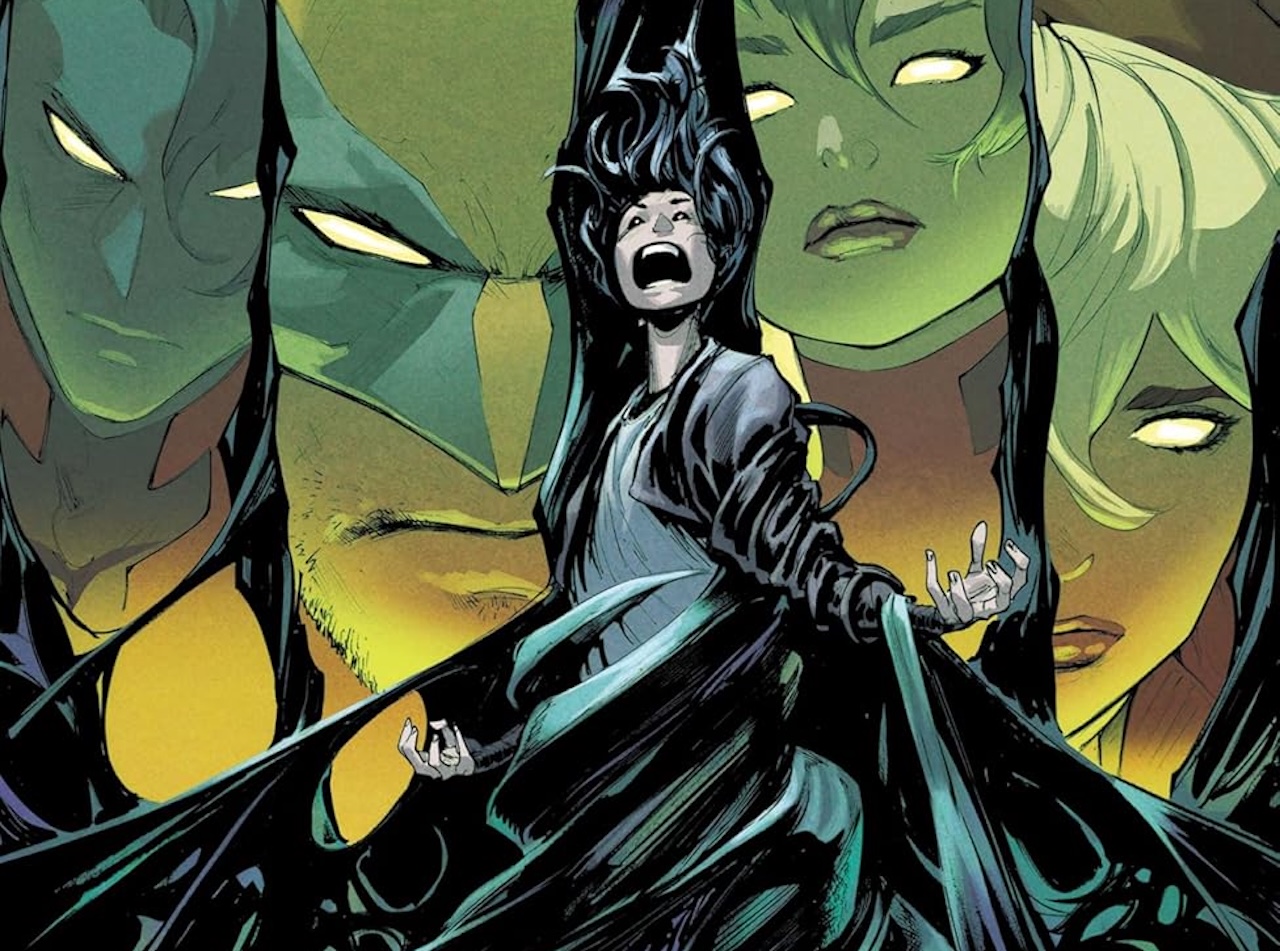
Mystical in nature – and featuring a recurring guest spot for my beloved Man-Thing – a buried secret has pulled our teens into a sort of subterranean afterlife. Issue #15 does more suggesting than providing answers to the larger mystery; there are few reveals that leave us on firm ground. A looming supernatural big bad is given a name (Shuvahrak) but left unseen. Someone, we’re told, must take her place as penitent warden of this dead prison, and the lead candidate is (of course) the team’s resident creep, Deathdream.

Marvel
The underlying story plays with the timeline of mutanity – Haven House was a refuge for mutants in the segregationist south, further establishing the much more active history of the mutant species: Namor was never really the first mutant (Apocalypse, Mystique and Destiny all prove that wrong). The mutant gene was rarely idle; mutants were just better kept secrets.

Marvel
Despite all this heavy teen action, supernatural malarkey, and historic grounding, the adult team is given solid moments of their own as they rush headlong after their students. Simone and Marquez’s balance is maintained: this book deals with a lot of characters, but few are forgotten, and rarely does the book feel overcrowded.
No matter how many big conceptual swings it takes, Uncanny X-Men feels like one of the most grounded X-Books on the stands. It knows what it wants to do and it wastes little time getting to the point. One would expect chaos, but one is (thankfully) mistaken.




You must be logged in to post a comment.