

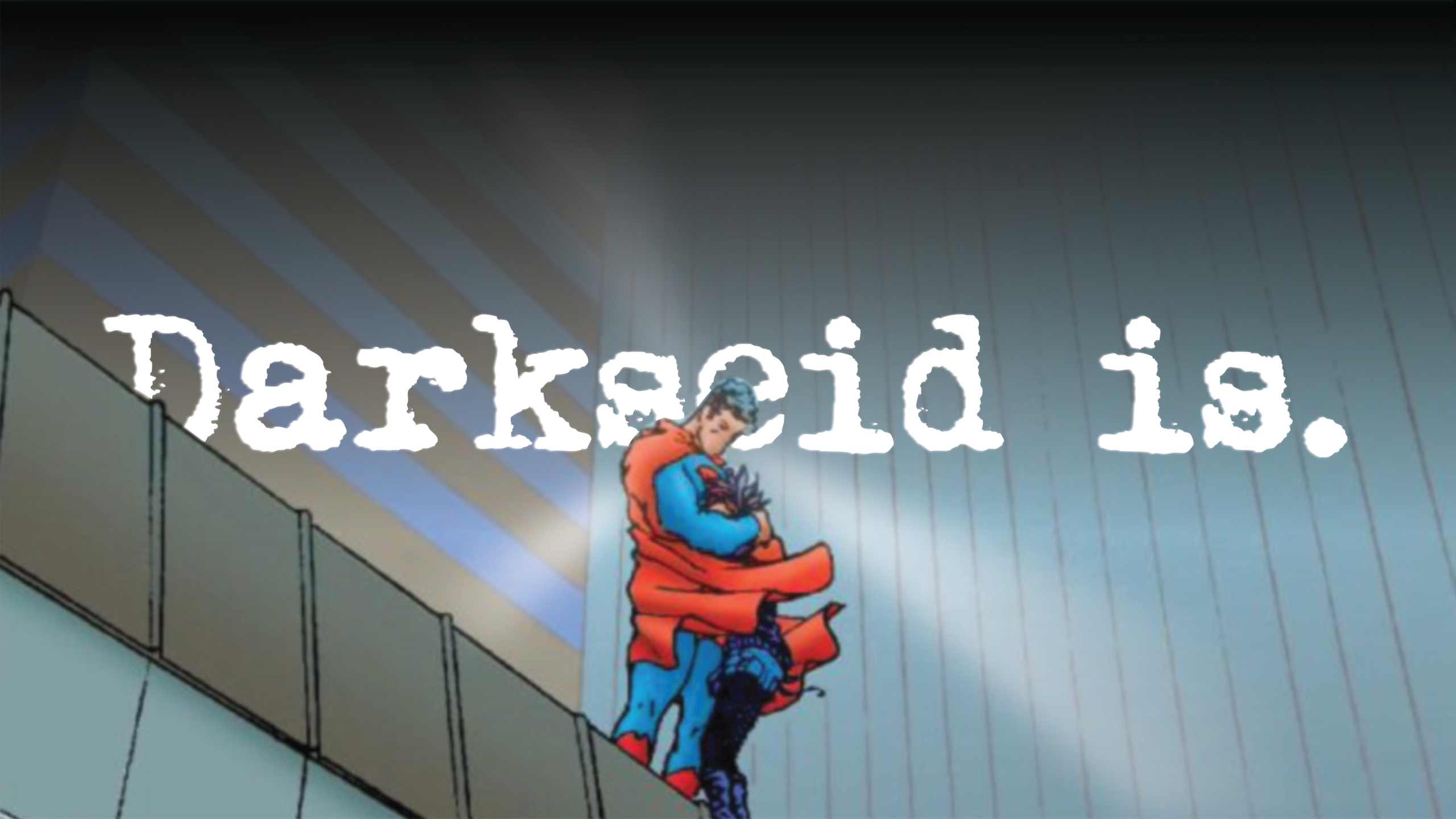

From trauma to triumph, stories about spandex-clad people wearing capes and cowls have always been quietly about mental health, whether the writers intended it to be or not. We’re just more aware now since the topics stopped being taboo. But has the comics industry really gotten mental health right, or are they still dangerously oversimplified?
As mental health becomes a more openly and enthusiastically discussed issue, it didn’t take long for the topic to appear more prominently in the pages of our favorite superhero comics. And any conversation held long enough about mental health will inevitably lead to the unspoken issue of suicide. Often only talked about in hushed tones, every mention of suicide has the chance to open an uncomfortable can of worms.
Choosing to end one’s life out of free will is something that is undeniably sensitive and requires an extreme amount of care to represent accurately in pop culture. How do comic books fare in comparison? That’s what I’m here to explore. After all, suicide is the third leading cause of death for youth aged 15-29 years old. Coincidentally, the same age bracket comprises the dominant audience for comic books. While we can’t draw any definitive conclusions, the connection here deserves some merit.
So, in honor of Suicide Prevention Day (September 10), let’s take a look at how the concept and depiction of suicide have developed in comics. Through that process, we can see how the right kind of storytelling can actually save lives.
Superheroes as Ideal Teachers
The world of psychology has always been deeply intertwined with comic books. Wonder Woman, one of the most recognizable superheroes in DC Comics’ pantheon, was created by a psychologist and inventor of the lie detector, William Moulton Marston. Jump ahead a decade or so, and a whole new era of comics (which has since been coined the Silver Age) was sparked by a psychiatrist’s unfounded fear that comics were negatively influencing children. That person, Fredric Wertham, wrote a book titled Seduction of the Innocent, which inspired a moral panic that restricted certain aspects of the medium for decades.

Seduction of the Innocent (1954) by Fredric Wertham.
What is it with comics that stirs controversy in the school of psychology? At first glance, these characters, keeping unusual company with their garish outfits, seemed to pose a danger by monopolizing children’s attention. And because of that, they were perfect deliveries for teaching; even Marston and Wertham agreed on this. The only difference was that one saw the potential for imparting lessons of love above hatred, and the other only saw in comics the making of delinquents. Marston used his standing in the industry to craft stories with radical and unorthodox feminism, even being “canceled” for his views long before the term became a social function.
That may be why mental health issues are perfectly suited to be taught through these two-dimensional paper people. Superheroes are spokespersons for simple ideas of goodness; they preach kindness and compassion through action. It’s through them that people can have something certain to hold on to even in the bleakest of times. As shepherds, heroes guide us toward the light whenever darkness pounds on our doorstep.
Marston got the right idea from the beginning: Superheroes are humanity’s better angels, the brightest moral bastion against injustice and inequality. From the genre’s inception, Superman’s founding fathers (Jerry Siegel and Joe Shuster) imprinted themes of immigration and the struggle of the common man; superheroes are as much escapist fantasies as they are wake-up calls to the world’s problems.
To Catch Us When We Fall
As far back as Superman’s second issue in 1939, suicide has reared its ugly head in comic books as a challenge for superheroes to solve. In this particular story, Superman sees a figure jumping off a bridge and, in a split second, catches him mid-air. A lesser writer would leave it at that, a throwaway save to fill the page. But not Siegel and Shuster. Instead, the issue goes deeper into how Superman helps the disgraced boxer fix his life. The hero makes sure the man never needs to make the same choice in the future. He doesn’t just save him from the fall; he saves him from ever falling again.

Superman #2 (1939). Courtesy of DC Comics.
Superheroes have often been equated to real-world firefighters cranked up to 11. They rescue cats from trees and save people from natural disasters, exploding planets, and, yes, talk people off ledges. In that same 86-year-old issue, Superman stops a war in the fictional country of Boravia. The life of a depressed man and the fate of a nation are treated with the same urgency. Saving them is framed as just another day in the life of the Man of Steel.
This act is then paid homage in the pages of All-Star Superman some 60 years later. Grant Morrison and Frank Quitely’s modern masterpiece has many iconic pages etched in collective memory. (Not the least of which was replicated in James Gunn’s Superman movie.) But another that is perhaps even more widespread on the internet is the page where Superman saves a young girl from taking her own life. There’s a reason why this sequence of images, with its accompanying text, is as viral as it is today. Why, even people who don’t read comics are affected by this massive moment.

All-Star Superman #10 (2008). Courtesy of DC Comics.
The Papageno Effect
There is a phenomenon called the Papageno effect, where mass media can pull people back from the brink of suicide by presenting positive alternatives. The effect is named after an opera, where the eponymous character overcame his intent for suicide by talking with others who reminded him of life’s value.
Intentionally or not, All-Star Superman serves to propagate this effect. The comic shows how Superman says everything a girl who is choosing death needs to hear. Rather than romanticizing the act, there’s a sincerity that radiates from the entire moment. You can’t help but believe what is being said.
When taken in the context of the whole 12 issues, you know Superman means every word; we know what he has gone through. “It’s never as bad as it seems,” he said. Superman has lost his father — he has felt hell and come out right on the other side. “You’re much stronger than you think you are.” What can be seen as a cliché is, in this case, Superman’s fundamental philosophy and worldview. He has seen humanity at its worst and still believes in our best.
What many miss, what is truly important about the scene, is that Superman himself is dying. His mortality juxtaposes the girl’s own. Near death, his last act of goodness is to save as many people as possible, especially someone who thinks they don’t deserve life. Superman, anxious about what the world would look like without him, devotes his remaining days to curing cancer and preventing suicide, death’s two biggest accomplices.
Now, the cure for cancer may be decades away, but in suicide’s case, the remedy is already right here. As Superman demonstrates, it’s in each other, and the willingness to listen and spend precious time to learn about one another’s issues. To be present. To have empathy. Small acts that could be the difference between life and death.
It’s a concept best summarized in 2022’s Superman: Space Age #1: “Heroism is simply the act of being where you are needed most.”

All-Star Superman #1 (2005). Courtesy of DC Comics.
In hindsight, All-Star Superman carves a clear line from both the evolution of comics and the depiction of suicide after a six-decade distance. In 1939, suicide was written as something caused by an external life-altering event; it’s something that Superman could fix. In 2008, suicide was more nuanced. It’s not only psychiatric research that has gotten more advanced, but also the stories we tell in superhero comics. As we know more about suicide and all its intricacies, storytelling conventions have equally developed to meet in complexity. With a lengthy publication history on its side, comic books are now able to incorporate important themes more authentically.
Frank Quitely’s precise pencilling reveals to readers what would have taken lengthy caption boxes back in the day. The reason for the little girl’s attempt is only ever alluded to, but it is clear from her painted face that it isn’t something Superman could punch. What he could do, however, what he does, is prove her misleading thoughts wrong and show a better alternative.
Death and Superheroes
Suicide is a multifaceted problem. It could be the result of a structural social issue, an inherited psychiatric disorder, or any number of other factors that affect a person’s behavior. That’s why it’s a nice surprise to see more and more comics in recent years take suicide seriously and give it the panel real estate it deserves. This brings me to Mister Miracle by Tom King and Mitch Gerads, a 12-issue maxi-series where finally the theme has proper space to breathe.
The comic begins bluntly with slit wrists. And though it is shocking and deliberately done for dramatic effect, it doesn’t stop at that. The comic’s opening act reverberates until the final panel of the final issue. Just as with the aforementioned Superman page, the pitch black panel with the words “Darkseid is” has reached beyond the comic’s readers. The panel’s recurring motif represents a feeling that everyone has in their worst days — the darkness that never leaves, an all-consuming call of the void that permeates our titular hero’s every waking moment.
It is the cause of Mister Miracle’s suicide: a constant reminder of an unspeakable, unknowable, amorphous evil. It is depression in obsidian clothing. Saying the right words is one thing, but what happens when superheroes are the ones who need saving? Is suicide as easily waved away then?

Mister Miracle #1 (2017). Courtesy of DC Comics.
In Mister Miracle, there is no singular reason that makes him decide death is better than life. His decision is based on a lifetime of trauma; it’s an accumulation of many acts of abuse, both big and small. Sometimes, life just isn’t that clear-cut, even in the flat plane of comics. And neither is death. Mister Miracle investigates this through the minutiae of tragedy. The derealization that comes after realizing you’re still alive.
Big Barda (Miracle’s wife) reacts with tears as her husband is carried to the ICU. Readers are made to empathize with the perpetrator of the act as well as the loved ones almost left behind. The ones who are rarely given the spotlight in tragedies, real and fictional. The comic’s last line sums up this message, as Miracle finally reckons with his life-ending choice. Sure, Darkseid is and always will be. There will always be dark days forever and in all of time. But humanity is there too, all the lovers and the loved, every step of the way. Remember, no one truly suffers alone.
Superheroes have always had a strange relationship with death. They risk their lives every day; most of them are even born from the death of a loved one. But due to the nature of comic books, they themselves can never stay dead. This inherent connection can make it all the more poignant when a writer or artist dedicates an entire story to exploring this theme, grounding it in real emotions. That is what these two Eisner Award-winning superhero comics do so well. Both All-Star Superman and Mister Miracle reveal a vulnerability in superheroes that just didn’t have a place yet in 1939. A vulnerability that highlights the dangerous and indiscriminate temptation of suicide, but also its readily available methods of rejection.
As shifting ideas of masculinity lessen people’s reluctance to talk about mental health issues, they transform the stories we tell, too, and our superheroes are all the better for this growth. Vulnerability is no longer seen as a weakness, but a strength. Instead of stoic, impenetrable walls of drawn-on abs, superheroes now grapple with a plight faced by millions worldwide. More relatable than ever before, they teach us to confront the pain that we have all experienced at one point or another. If even supermen can have breakdowns, then there is always hope.
Comics as Graphic Medicine
By the 21st century, Wertham’s work was proven wrong. His findings about comic books as a breeding ground for deviants? Entirely falsified. Instead, new research reveals that comic books do help with the efforts of suicide prevention. They act as protective measures, promoting perseverance and an openness to others. Where once they enforced stereotypes, now they reduce stigma. As established earlier, comics’ target audience is also a high-risk group for suicidal ideation. So, what better way to raise mental health awareness than through the most popular pop culture characters?

Action Comics #16 (1939). Courtesy of DC Comics.
There is a term called “graphic medicine” coined by comic artist Dr. Ian Williams. It concerns the use of comic books as a way to tell accessible narratives of illness (both mental and physical). Comics have a one-of-a-kind relationship with text and art; when combined, their communion can convey an approachable yet affecting message to readers of all ages. The medium is inherently empathetic, having characters’ thought processes spoken aloud in bubbles and boxes.
Comics’ expressionism and frequent use of abstract ideas could also externalize illness as something visual, as seen in the panels of Mister Miracle. This helps readers identify their problems and imagine them as something comprehensible.
The Wish Fulfillment of Superheroes
If superheroes are power fantasies, then suicide is one of the main problems that mankind dreams them up to solve. We yearn for powers to be there when our loved ones need us most. Maybe to have super-hearing that is attuned to their every doubtful whisper. Or, to possess X-ray vision that notices invisible signs of distress.
In 2025, people are more likely to lose someone to suicide than to organized crime or mad scientists. That is where superhero comics come in — as a call to action. Because, unlike the problem of gangsters or invading aliens, we can actively be part of a real fight. The lesson has always been there, crystalized for easy digestion: good versus evil, life versus death, survival versus suicide. It was there in 1939, and again in 2008, and it is here now. Whether kids or adults, we all have a chance to save people. We just have to notice — our kindness matters, even when we don’t realize it.

Poster for Spaces of Care, a conference on Comics and Medicine.
Superman doesn’t technically exist, but that doesn’t mean he isn’t right. When you feel like you have no other choice, when you can’t see tomorrow, sometimes the bravest action you can take is to reach out. All superheroes teach — all they represent, truly — is to never give up on yourself or each other.
If you or someone you know needs help, you can visit Open Counseling for a list of international hotlines. You can also find a helpline from the International Association for Suicide Prevention. For those who have lost people to suicide, visit the American Foundation for Suicide Prevention for various resources and support services.



You must be logged in to post a comment.