

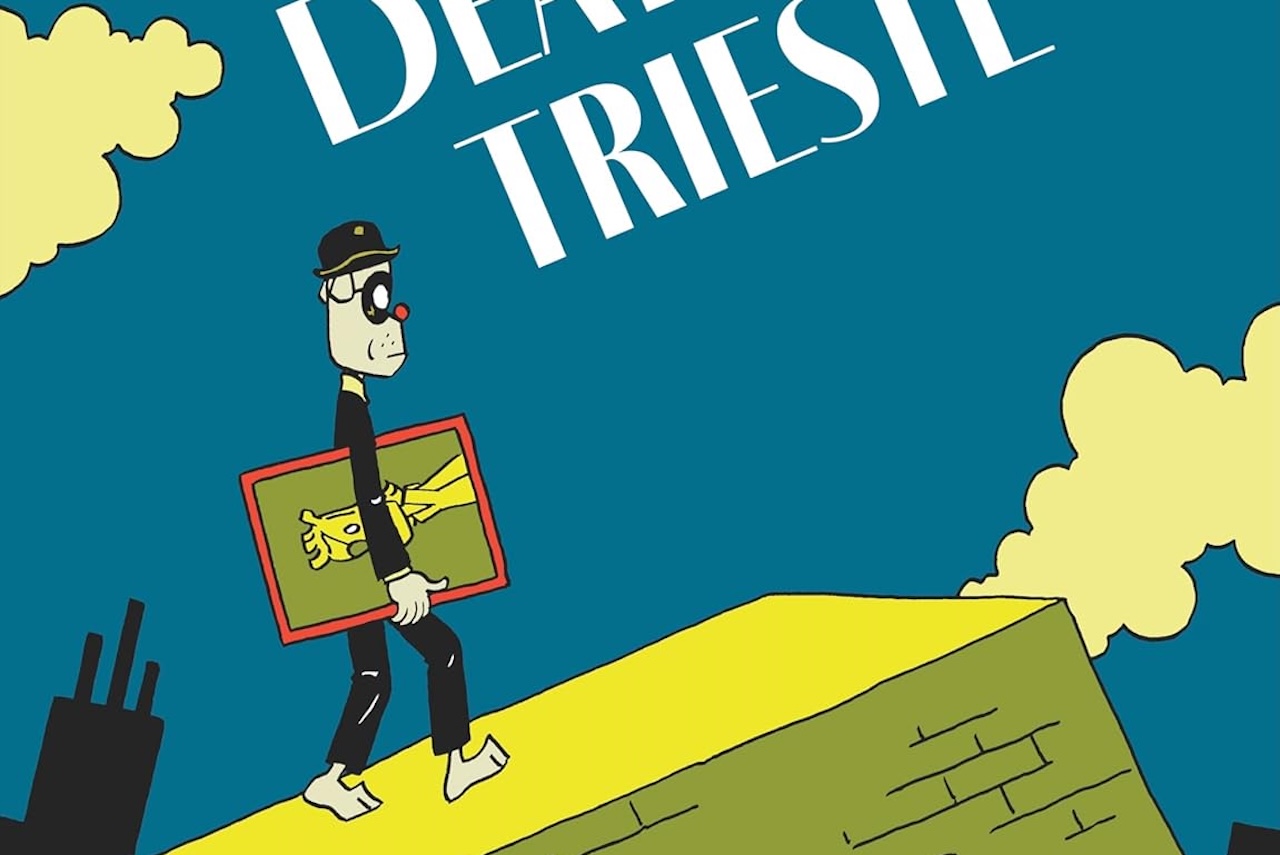

To say that Norwegian cartoonist Jason’s Death in Trieste is surreal is a bit on the nose. Yes, surrealism does factor in: in the first of the three stories collected in the book, “The Magritte Affair,” the works of Belgian surrealist René Magritte inspire a secret criminal society; the crimes they commit tend to lean more towards the Dadaist side of things. Breaking into homes and replacing wall art with Magritte forgeries created by kidnapped artists, the group dons domino masks and bowler hats to better resemble the recurring figures of Magritte’s paintings.
But the surreal isn’t the only pressing influence on the book. Art crimes aside, appreciation of a wide variety of art factors into the stories in Death in Trieste: a time-traveling David Bowie walks these pages, as does a sort of Nosferatu clone; dadaist performance poets create unwatchable live performances. Briefly, the titular version of Death is seen looking very much like Bengt Ekerot in The Seventh Seal.

Fantagraphics
The book’s final story, “Sweet Dreams”, might be the closest thing to a mainstream superhero comic book Jason has ever put to page. . . if you can call a bunch of British New Wave gadabouts attempting to stop the end of the world a ‘superhero’ story. These aren’t just New Wave fans; these might be the actual bands, themselves. Two pin-ups, for Ultravox and Eurythmics, interrupt the action of our story. These characters have magical powers, defeat panicked mummies and attempt to deflect a meteor from its collision course with Earth; when the world cannot be saved, our New Wavers consider how best to spend their final hours: drinking, screwing? One pulls a vinyl copy of David Bowie’s Low from the shelf and sits down with headphones and his hi-fi.

Fantagraphics
This is all to say that Jason is a cartoonist influenced by a wide, wide array of pop culture and art history; nearly all of his stories feature wandering Musketeers and Lost Generation writers engaging in genre-style hijinks. The high stakes of bank robberies, sci-fi epics, and crime procedurals are all tinged with literary characters and figures; pop culture figures into the comedy almost at random.

Fantagraphics
To say that Death in Trieste is surreal is on the nose because Jason’s entire oeuvre has been surreal in spirit. This book’s blend of the high-minded and the absolute, hilariously bizarre (perhaps the David Bowie’s ‘Low’-minded) makes it a unique artifact in the medium. Jason’s anthropomorphic animals engage in half-finished morality plays, and as they do so, they bonk their heads and engage in farcical conversations. Jason is a true cartoonist, but he is also a sort of pop-art visionary: he wants to leave the reader enlightened, but he wants to have fun doing it.

Fantagraphics
Death in Trieste is a perfect triptych of stories to introduce a reader to Jason’s work. It feels balanced between his extreme modes of arthouse and zany. It touches on all his recurring themes, and it does so with some fresh energy. It’s a delight.




You must be logged in to post a comment.