


Running a restaurant is no easy feat. Maintaining creative control, juggling financial concerns, and managing a top-of-their-game staff, being a restaurateur stretches a chef far past their intended skillset. It requires building an impeccable support system of equally driven and self-sacrificing individuals. These are people willing to forgo their own creative satisfaction, personal lives, and financial stability in order to work together toward something great.
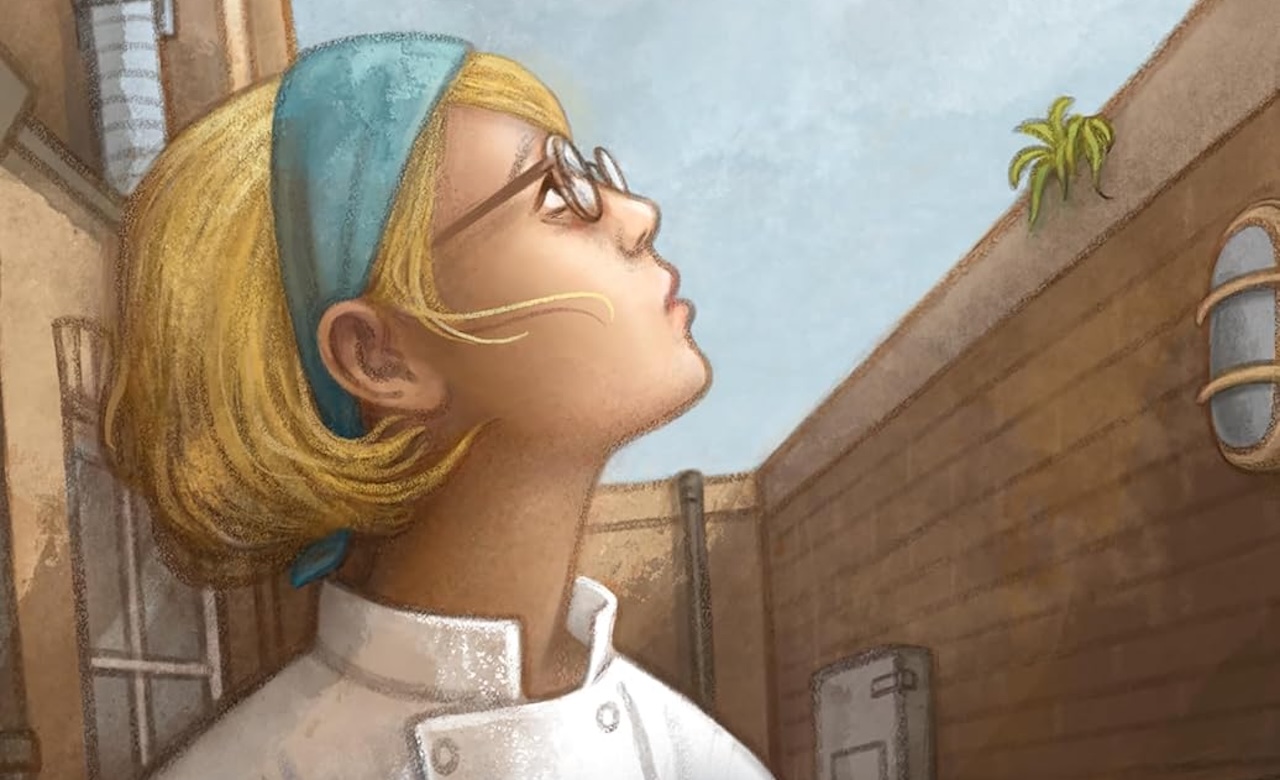
Not everyone understands that self-sacrifice, but cartoonist Katriona Chapman appears to understand it quite clearly. Her new book, The Pass, examines just such a team as they navigate the successes and pitfalls inherent to a new(ish) restaurant. From financial upsets to winning awards, The Pass quietly observes the highs and lows of the crew behind Alley, a seemingly hip and upscale restaurant spearheaded by chef Claudia, her creative partner Lisa, and their nature-forward head bartender, Ben.

Fantagraphics
The Pass isn’t an exceptionally action-packed book; these highs and lows aren’t large and dramatic so much as intimately captured. It’s a book looking at heart rather than bold strokes. Its characters’ inner lives take up more space than the restaurant itself – we don’t linger on the intense stresses of a packed house dinner rush and instead concern ourselves with the after-hours conversations, which tend toward upward ambitions and interpersonal intimacy.
This makes the book a quiet but deeply fulfilling read. The reader becomes deeply invested in Ben’s community gardening, which takes up as much narrative space as a prestigious cooking competition Claudia enters. Emotional weight is given to Lisa’s creative fulfillment: she has taken on more managerial duties despite being a chef herself, and Claudia’s gentle nurturing and insistence that she take back some control of the menu is endearing, sweet, and life-affirming. And this is to say nothing of Lisa’s exhausting family life (and very slight pill addiction).

Fantagraphics
The book is deeply realized, and incredible emotional depth is built up around small moments that read as deeply authentic, lived, and fretted over. Moments – like a brief kiss shared between two co-workers, somewhat accidentally – read so truthful to the life of a restaurant worker that they must have been observed by the artist first- or second-hand. All that stress and achievement works up a lot of emotional static, and it is only human to try to resolve some of that emotion through drink and human contact.
Chapman’s painterly, storybook illustrations cement that humanity – these characters are rendered softly, tenderly, and while this isn’t a book of action-packed scenes, a great deal of action is portrayed in the framing of kitchen scenes. Plating of dishes read as nuanced, subtle motion is implied as a flourish is performed with a ladle.
The Pass is a quiet but moving work, and it will read as deeply familiar to those who have been in the restaurant trenches. It is the story of a small business in dire straits, and of the people who run its ever-complicated human mechanism. These are all small moments, but to those inside them, they feel overlarge and profoundly troubling.




You must be logged in to post a comment.