

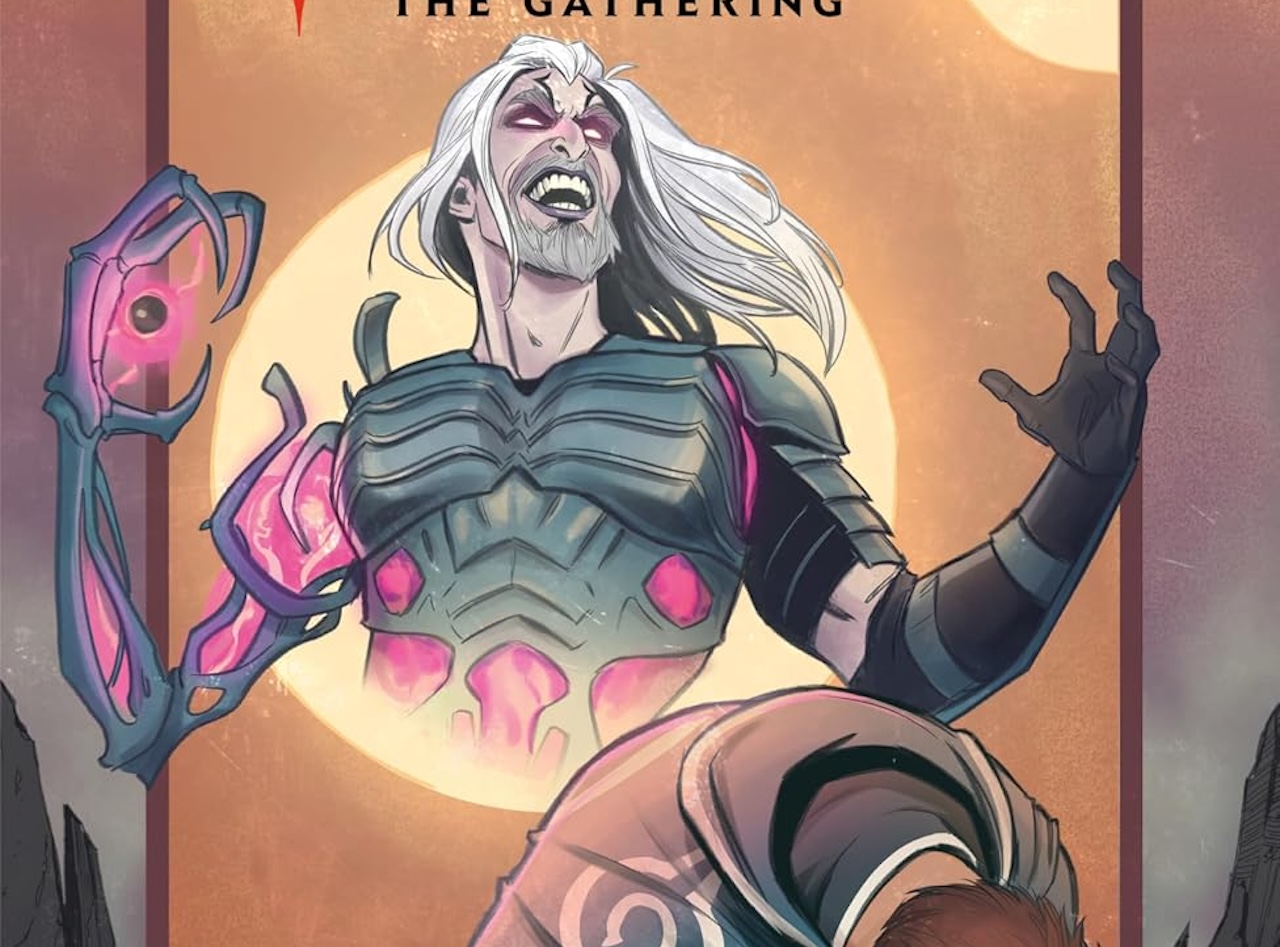

It’s been a long two months since the series debuted, but we finally have Magic: The Gathering: Untold Stories – Jace #2, and it continues to do so much right in its sophomore issue. If you’re a hardcore Magic: The Gathering fan who spikes every pre-release, this probably won’t be the story for you, but if you’re like me and a lapsed fan of the iconic card game, there’s enough going on here for you to comfortably dip your toes back into the franchise with plenty of familiar faces, planes, and artifacts.
I’m afraid I went a little too ham on the references when I reviewed the first issue, so I’m going to try and tone it down a bit and explain things to people less familiar with MTG while I catch you up to speed on the story so far.
The mind-mage Jace (read: psychic-illusionist) is trying to reclaim memories that were lost to him in a fight with his first mentor, Alhammarret. During the fight that cost him his mind, he planewalked (think traveling to an alternate world, something that only the most powerful beings can do) to Ravnica (New York City of the MTG world but with the aesthetics of late middle ages central Europe). There he meets Tezzeret, a dude with bad vibes who is obsessed with power and replaced large parts of his body with this sort of bio-metal. He sees the potential of Jace and takes him under his wing and abuses the crap out of him.

Dark Horse
This issue sees them go to Shiv, a plane with one of the more iconic creatures from Magic the Gathering’s history, and Tezzeret lets slip that they’re looking for a special artifact called a Sylex. Little do they know however, that another group of familiar-to-fans characters are also seeking the Sylex.
There are three plots happening here, and writer Michael W. Conrad provides a constant bounce between them that keeps the pace moving briskly. This is an effortless comic to read as we see Jace and Tezzeret fight Viashino warriors (dinosaur barbarian raiders), Adeliz (warrior-mage bringing two cultures) leading Squee (immortal goblin) and others fight a rogue tribe of goblins, and Jace with his partner Vraska (gorgon assassin) in the present trying to find the time and safety to replay this memory. No scene is ever boring, but the balancing act of these three plot lines give an urgency to each scene, especially in the back half of the book.

Dark Horse
The reason that urgency isn’t there in the beginning is because we see the Tezzeret/Jace fight with the Viashino warriors and it’s pretty brutal. This scene really highlights the differences between Jace and Tez pretty clearly; Tez uses his power to brutalize the natives, and Jace tries to use his to misdirect them and spare their lives. Throughout this entire conversation, we’re given Tez’s philosophy on power and it’s frankly disgusting. He so effectively paints himself as a villain it’s almost comical.
What’s interesting though is that Adeliz’s fight with the goblins later in the issue pretty similarly mirrors this fight. Even the pleasure she takes feels wrong. It’s typical hot-headed character stuff, but its proximity to the Tezzeret fight is making me rethink a character I thought I know.
The real question I have at the end of the issue is what’s driving the tension that Jace and Vraska are feeling in the present. Like I said, I haven’t followed the card game in years, so I can only make assumptions based on the story in the comic, but even I’m reaching my limit as an MTG nerd from the outside.

Dark Horse
Last month I noted that the art was serviceable but not special. I think I stand by that claim this month but I find it a visually impressive issue because it’s way more action heavy, delivering fun brutality with really clear choreography that never confuses you. The art direction is still tame considering the deep history and varied styles taken on by the cards, but it’s handled so much better here and I think it’s because Caitlin Yarsky was, frankly, let off the leash a little bit and got to draw cooler characters doing cooler things.

Dark Horse
Magic: The Gathering: Untold Stories – Jace #2 dials up the action and stakes in interesting and entertaining ways. The pacing moves faster, the art is more dynamic, and we get to see even more familiar faces and continue a fun tour through the planes of Magic: The Gathering. The biggest challenge of this book is the significance of what you’re seeing isn’t always explained, it’s often assumed. Regardless, much like with the last issue, it’s still nice to see a Magic: The Gathering book that squarely celebrates the world of the card game and not the card game’s recent business trends.




You must be logged in to post a comment.