

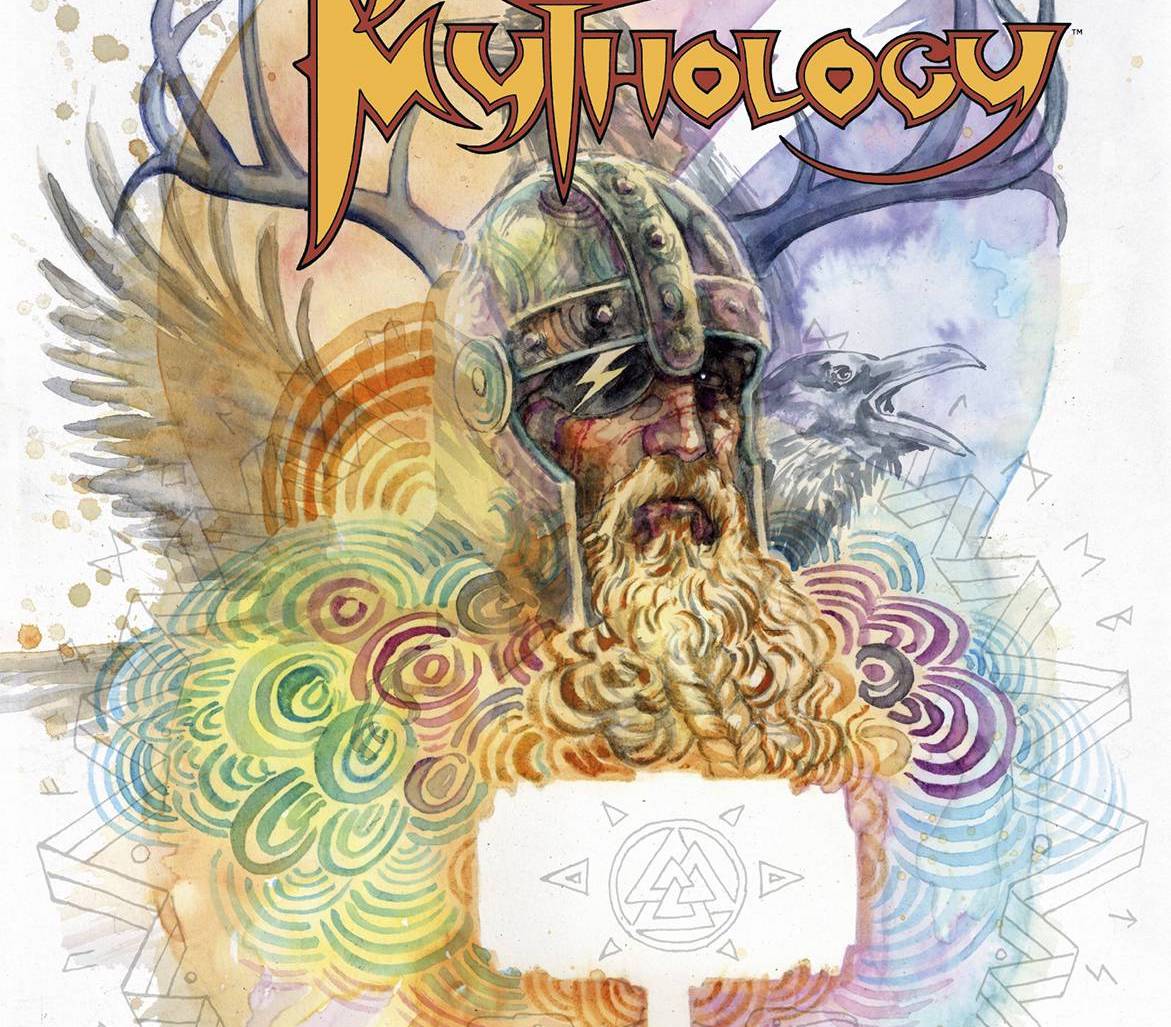

If you’re unaware, Neil Gaiman has already dabbled with Norse Mythology in his book by the same name. It’s short and to the point, retelling the ancient tale which features Thor, Loki, and all the rest. He’s now told it once more but in the comic book format. Backed up by comic book legends P. Craig Russell, Mike Mignola, and Jerry Ordway, this crew aims to tell the ancient tale in a visually stunning way. This is not your Marvel Comics Norse mythology, but something a lot older and in many ways richer.
Like a storybook, this work is more like well-chosen bits of art with melodic words written over them via captions. There are word balloons, but it takes a bit to get there. That’s because this issue serves as a creation myth for much of its page count. Gaiman is explaining to the reader how the world was created and the many factions and rules that make it whole and real. Told in three parts, the story moves from how the world is made up, a story of Odin, and finally, a great injustice made by Loki on his brother Thor’s wife. Each story is broken up via a chapter title and a different artist. It’s an interesting comic book experience like none other and it’ll hit the spot if you’re in the mood for a warm and endearing sort of tale.

Art by P. Craig Russell.
Credit: Dark Horse
The book opens with art by Russell in a creation story about the Norse world called “Yggdrasil and the Nine Worlds.” It’s rendered with panels stacked on top of each other, at times in more conventional ways, but always looking beautiful. Each panel is like a story in itself, with great colors by Lovern Kindzierski. The story is timeless, epic in nature, and will capture your imagination. If you’re unfamiliar with the original nature of Asgard you’ll want to give this a look.
Following this is a story drawn by Mike Mignola called “Mimir’s Head and Odin’s Eye” which is structured a bit more conventional. It’s a tale involving Odin who gives up his eye for great power. Colored by Dave Stewart, the story is unmistakably Mignola-esque right down the monsters and brooding nature. It has a simpler look than the previous story which gives it a more focused look at Odin and his journey.

Art by Mike Mignola.
Credit: Dark Horse
The final story is called “The Treasures of the Gods” and is drawn by Ordway with colors by Kindzierski. The art style once again changes quite a bit, using a more hyperrealistic look in this chunk of the book. Focusing on Thor, we learn Loki has stolen Thor’s wife’s hair. Thor will have none of that, and soon we see Thor at his brother’s throat. This story opens up the nature of Asgard and how it functions as a real society. Ending the book on this story also makes the series feel like it’s reaching a reality that is more tethered to our own and less like a legend or story made up from whole cloth.
Norse Mythology is as if a classic storybook from your childhood crept up and hid itself on your bookshelf only for you to find it years later. All told, this three-chapter first issue opens on an imaginative fantasy world as if dreamed up by Gaiman himself, slowly pulls itself up with a magical tale of Odin, and brings itself to a more realistic place by the book’s end. This comic is a good reminder stories deserve to be told in multiple formats; from novelizations to comic books, each holds intrinsic value in telling a different side of the story. Now, if my exclusive Bill Sienkiewicz variant cover can arrive in the mail I’ll be right as rain.



You must be logged in to post a comment Login