


Team-ups are – and always have been – key to the grand, collaborative narrative experiment of American comic books. It was a team-ups, after all, that had established the concept of shared comic universes in 1940 – first in pre-Archie publisher MLJ’s Pep Comics #4, then in Marvel Mystery Comics #7 and, a few months later, All-Star Comics #3. Team-ups were foundational to the development of both the Marvel and DC universes; they drove sales, built narrative connections, and drew readership to underperforming titles. How better to establish a new Ghost Rider than gratuitous Punisher and X-Men cameos?
Initially, it seemed baked into the format of the books; American comic books were anthology productions, with books like Marvel Mystery and All-Star already showcasing several characters in a single issue. DC’s Action and Detective had featured covers with Batman and Superman together long before the characters met—a small bit of false advertising—but the dedicated team-up book didn’t occur for another twenty years, when Brave and the Bold started double-billing characters under the title and, eventually, becoming a ‘Batman and Guest’ book by the end of the ’60s.

Marvel had a long history of double-billing characters, in the 1960s, out of cold necessity: they had been languishing under a cruelly limiting contract with Independent News, a magazine distribution company owned by their Distinguished Competition, that limited the number of titles they could publish in a given month. The initial cap was a ridiculous eight, necessitating anthology books like Tales of Suspense, Strange Tales, and Journey into Mystery.
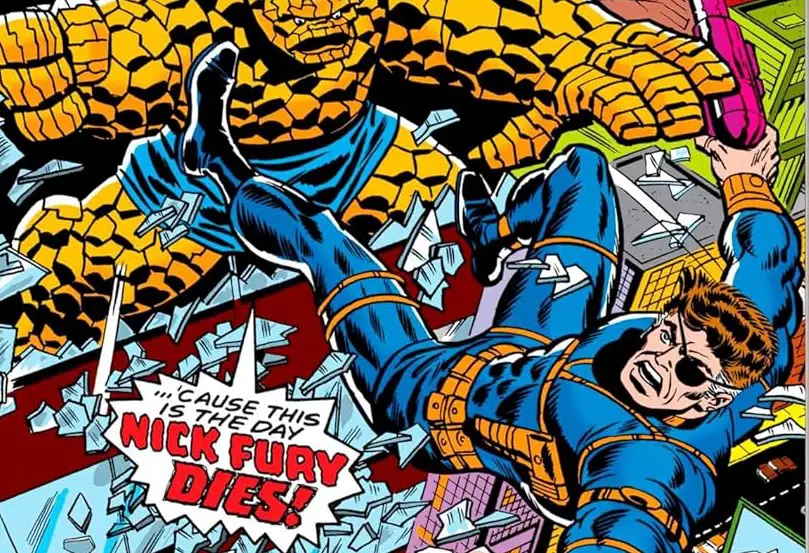
Following DC’s model of Brave and the Bold, Marvel Team-Up utilized a crown-jewel character (Spider-Man) as a sort of host to a revolving cast of guest stars. It seems strange, now, to think that their next most popular character could be the curmudgeonly, cigar-chomping malcontent Ben Grimm, aka The Thing. But by the series debut in 1974, few characters in the Marvel Universe had been given space to develop, either as a character or in terms of readership – the major players of the Marvel Universe today had either spent a decade cramped in back-up stories or hadn’t been developed at all.

The result is a team-up book with very limited charisma: Ben had become a one-note character, ostensibly a flat, catchphrase-spitting caricature of Jack Kirby, the Thing was depressive, self-loathing, and no fun. His interactions with his guest stars were often begrudging and antagonistic, which meant relationships couldn’t be developed with any degree of depth.

What’s more, major facets of the character’s identity hadn’t been established yet. Though this second volume of the Marvel Two-in-One Epic Collection begins with Ben taking on some alternate-timeline Nazis, he hadn’t yet been established as Jewish – that, amazingly, wouldn’t happen for another quarter century, in 2002’s Fantastic Four #56. It isn’t the only critical aspect of Ben missing from the early days; although he’s an astronaut (and therefore a capable scientist), Ben was forever the ‘big dumb guy’ buffoon, constantly mispronouncing words and perpetually ignorant of the workings of Reed’s shenanigans.
The issues collected in Two Against Hydra – released every other month from 1976 to 1978 – rarely find Ben as much more than barely loveable, but they do develop more continuity than the issues in the previous volume: it’s here that Deathlok joins the main Marvel Universe (after being introduced in a bleak alternate future), and the later issues build the bridge between Spider-Woman’s debut in Marvel Spotlight and her resulting solo title. It even wraps up Skull the Slayer, which had been canceled after eight brief issues.

Unlike many of the books released just after Marvel freed themselves from the bum Independent News contract, Marvel Two-in-One failed to innovate, becoming the same sort of staid and reliable workhorse as its protagonist. It feels wooden, harkening back to those constrained anthology books, even as it showcases the fresh new creations of Marvel’s second great age of creativity. Like the Fantastic Four of the era, it’s a book that drags its feet even as it relies on the future.




You must be logged in to post a comment Login