

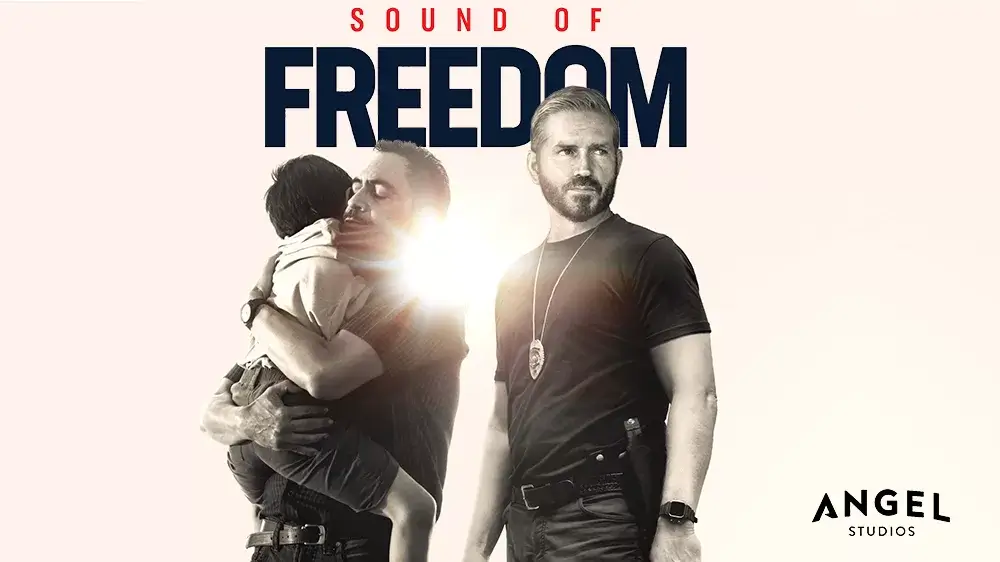

The recent release of the movie The Sound of Freedom, the “true story” of the “real life rescue” of two children kidnapped into human trafficking, has caused people to rally around helping the survivors of this horrible industry. Sadly, this movie and other media portrayals of human trafficking are leading to many misconceptions about what human trafficking is, where it’s happening, and how it’s stopped.
Films like Sound of Freedom and the Taken series (starring Liam Neeson) would have you believe human trafficking starts with a kidnapping, and masked strangers in a windowless van. The victim is then whisked away to a far-off land, where they’re held prisoner until sold to a wealthy villain. Their only hope is a testosterone-filled hero willing to come in with guns blazing and fists flying to rescue them in a glorious battle of strength and will. When it’s all said and done, the survivor is home with their family and friends, living a happy life as if it were all just a bad dream.
Alternatively, you have classics like Pretty Woman and Best Little Whorehouse in Texas. This is the fairy tale version of human trafficking, where the woman has chosen to be a prostitute, and is relatively happy with her decision. Then one day she meets a man who wants her for more than just her body. They fall in love, and she walks away from the lifestyle with no regrets, with the man who “rescued” her.
In 2019 we all learned about “Epstein Island,” and the narrative of the child kidnapped and taken to a secluded location, where they’re held captive and tortured by the uber wealthy. To make matters worse, the people who worked on the island and lived near the island knew, to some extent, what was going on, and did nothing. Some for fear of repercussion, some just turned a blind eye, and some for their own financial benefit. Once again, the release of the survivors was touted as a rescue mission.
While all of these stories hold some level of truth about human trafficking, they are made to entertain the masses, and the masses demand a happy ending.

Worldwide human trafficking is a $150 billion dollar per year industry. The U.S. accounts for nearly 52% of all human tracking, and $9.2 billion dollars. Don’t let stories on social media fool you; the vast majority of victims aren’t kidnapped in grocery store parking lots, parks, or right off the street. The truth is so much worse.
The book Girls Like Us by Rachel Lloyd is the autobiographical tale of a woman who believed she was in a loving, caring relationship with a man she could spend the rest of her life with. He’d met her family and they were building a life together, or so she thought. Before she knew what was happening, she was in Las Vegas, being forced to do things for money and her own survival.
This is the truth for many survivors. They are groomed by their trafficker into believing they’re in a relationship, and often don’t know they’re being trafficked, thinking they just have a strange dynamic with their partner. Children often find themselves in even more shocking situations, as family members are involved in nearly half of all child human trafficking cases. If you Google “woman sells daughter for drugs,” you’ll encounter story after horrific story of children being sold in exchange for drugs, alcohol, cigarettes, or even just a ride somewhere.
Human trafficking isn’t something that only happens in highly populated areas. Over a two-week period in August of 2023, the FBI arrested or identified 126 human traffickers, and freed 200 survivors, including 59 children. Operation Cross Country XIII was a nationwide initiative which took place in urban, suburban, and rural locations, in all 50 states. It’s not difficult to find stories of human trafficking in your area; you just need to recognize that the word “prostitution” is often used in situations that are really trafficking. This is especially true when children are involved. The media will use the term “child prostitute,” but these are simply children being trafficked.
When people are freed or when they’re finally able to leave their trafficker, they’re left with an immense amount of trauma, some have forced addictions from being kept “dope sick” and compliant, and most have a felony criminal background. Fortunately, there are organizations available to help them heal and recover. Places like Safe Harbor and Brightstar Community are giving these survivors a safe place and hope for their future.
The final piece to the recovery of survivors of human trafficking is financial stability and freedom. With limited education, work experience, and felony records, it can be very difficult for survivors to find employment that will pay for even the essentials. Their criminal backgrounds also make it nearly impossible to get educational grants and loans to attempt to gain a marketable skill. This, sadly, can lead to them returning to their trafficker, because the only other option is homelessness.
Julie Chapus, owner of a 5-star salon and recent winner of the Rochester, New York, International Athena Award, is working to help solve this issue. She’s opening Miss Julie’s School of Beauty, a first of its kind in the nation, scholarship based, therapeutically supported, cosmetology program for survivors of human trafficking. Chapus has spent the last eight years educating those in the beauty industry on how they can help survivors. Her training was approved by the FBI, and she has recently begun training health care workers, lawmakers, law enforcement, lawyers, social workers, educators, and students across the state.
You can help too; there are organizations like this all across the country, and they need support to combat the horrors of human trafficking in communities everywhere.
If you or someone you know is a victim of human trafficking, visit this website for help, or call the hotline at 1-888-373-7888.



You must be logged in to post a comment.