

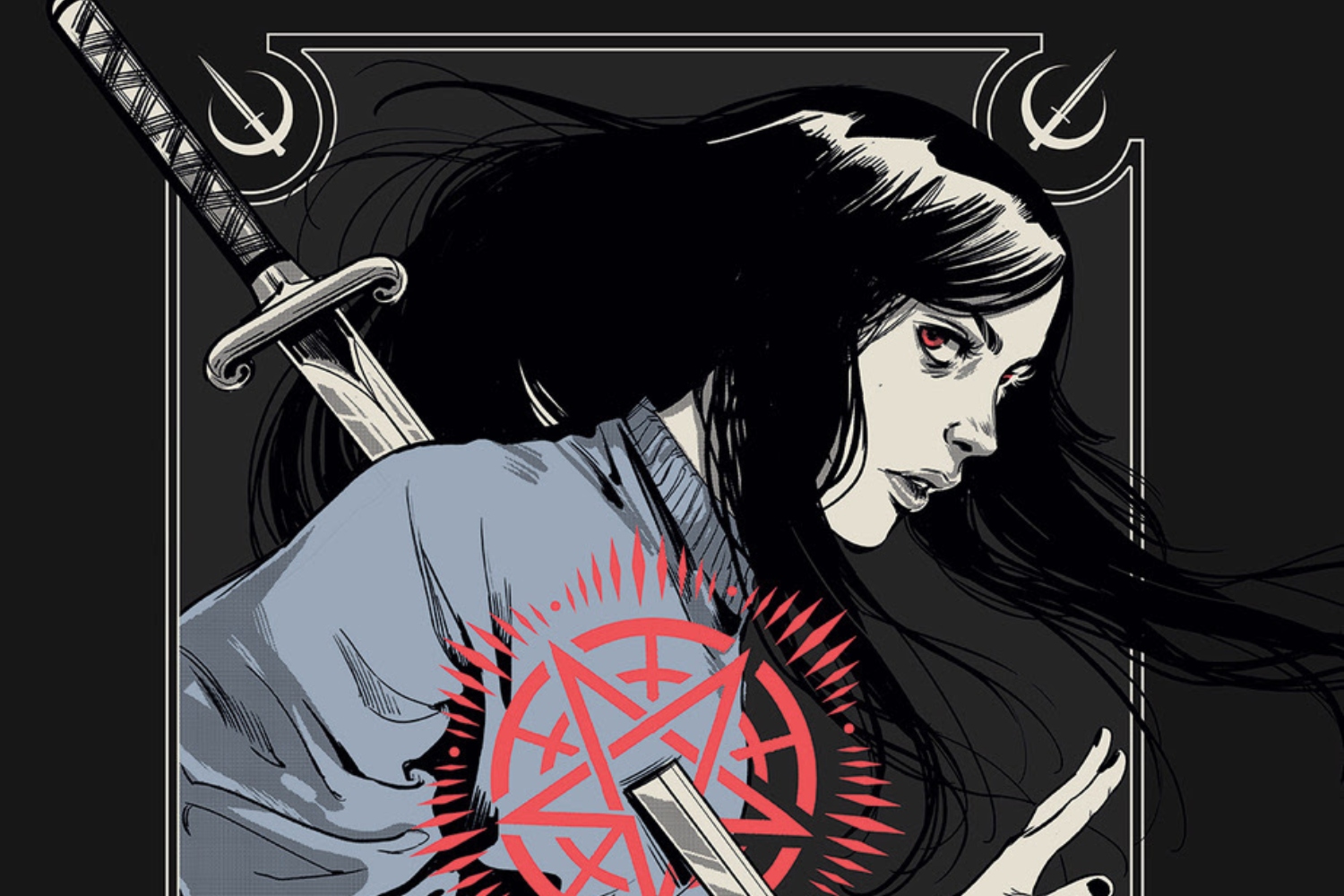

If you’re going to talk about Dying Inside, a book co-written by Pete Wentz of Fall Out Boy, you can’t do better than the day after Oasis announced their long-awaited reunion.
“I woke up this morning at 2:45 a.m. because I was so paranoid that they were going to drop tickets at the announcement,” said co-writer Hannah Klein, who previously worked with Wentz on projects like Everything’s Fine. “I’m trying to get a ticket for the first night because I’m so afraid that they’re going to break up again.”
In fact, Dying Inside (which is rounded out by artist Lisa Sterle) is a lot like Oasis: big on emotions and energy; all about artistry and theatrics; and something that can speak to the true music geek in all of us. A book with music at its very core, which it uses to explore questions about life and death, friendship, and even all those other things worth singing about.
If we’re keeping with the whole Oasis bit, there’s this essential refrain from “Stop Crying Your Heart Out” that feels applicable to Dying Inside’s core premise. More specifically, Dying Inside follows Ash, a “16-year-old girl with more angst than Ian Curtis and Elliott Smith combined.” When Ash thinks that suicide would be better (at least not as “embarrassing [as] a lame death),” she instead finds herself cursed with immortality. Alongside her polar opposite Liz, Ash sets out to “fight for her death” while dealing with the twin terrors of “a strange new antidepressant called Somnia and her mom’s gross boyfriend, Greg.”
Despite all of that, the whole thing filters down to one simple truth: Ash is a good kid with a lot on her plate.
“Ash is definitely a good person. Just because she has her own issues to deal with…it’s clear that she cares about other people,” said Klein. “There’s a few times she goes out of her way to help others. She is lost, and doesn’t know what she’s doing necessarily. She just feels like she’s trapped in this life that she’s not happy about. I think that this story falling into her lap, this destiny that she has to fulfill by undoing this curse, then pushes her to go outside of herself and figure out who she really wants to be. It’s kind of like a coming-of-age just on speed because you have so much learning to do in so little time.”
Ash is, in many ways, representative of most of us at that age: in a big old hurry to grow up.
“I’m trying to think of an example of that I can relate to in my own life, but it feels like [being] a kid when you get a time out,” said Klein. “Like, you’re being forced into this time-out phase, and where she has to really reflect on what she was planning on doing. So it’s this forced growth because I think that at the end of the day, this situation is what helps her grow. By the end of the book, she is not actively suicidal. It guides her into a place of reflection.”
The immortality device/trope, then, is about making Ash wait when she can’t hardly.
“I don’t want to say it’s just pure luck, but it does feel lucky for her to have that opportunity to slow down because I think as a teenager, when you get your mind set on something, you just don’t necessarily think of the consequences,” said Klein. “Your frontal lobe isn’t done developing until you’re, like, 25. It’s basically just forcing her to slow down and take a beat, which I think is hard when you are some sort of manic depressive kid. You don’t want to take a beat and really think about things. It’s very uncomfortable to sit in discomfort.” Klein added that it’s a chance for Ash to “see things outside of her own little moody bottle world for a minute.”

Courtesy of Vault Comics.
A big part of that anxiety and impatience is that not only are teenagers incapable of waiting, they often really don’t deal with nuance that well. Being cursed to stick around when maybe she doesn’t want to means that Ash has to consider more of the world than she’d ever really like to.
“I like the fact that we made up something that’s extremely gray in terms of the morality of it,” said Klein. “I think it’s also pushing Ash as a character in the future and in this exact moment as well — she has to grapple with that things aren’t black and white all the time, and that includes your depression. Just because you’re depressed today doesn’t mean you’re depressed forever. Things are complicated, and it takes time to really sit in that discomfort and figure out what’s really going on.”
It’s a concept furthered in Ash’s relationship with stepfather Greg. While Klein said the next bit is a little spoiler-y, it ultimately speaks to larger themes of both understanding life’s gray areas as well as an even bigger idea: you can be a good person who does bad things and very much vice versa.
“Like, he’s actually not a full villain. Yes, he is doing some bad shit, but he’s actually very well intentioned,” said Klein regarding Greg. “And I think that for me, that’s indicative of the entire theme of the story, which is that there are so many different layers to things. Things are so much more complicated than a 16-year-old can imagine, which is why you shouldn’t kill yourself when you’re 16. [Greg’s] intentions are coming from a very good place. So it’s not like he’s saying, ‘I want to make you suffer.’ It’s that he’s saying, ‘I don’t want this person I care about to suffer more.’ Like, ‘What can I do even though it’s wrong? How can I control the situation?'”
There’s little denying by now that Dying Inside truly goes for it in terms of its thematic interests. It might be a pop culture-laden, YA-adjacent tale, but it never backs down from its big ideas about death and growing up. For Klein, there never was any notion of doing it any other way.
“I think that the high-risk, high-reward system really works,” said Klein. “If you really put yourself out there with a story that’s maybe a little bit challenging or maybe a little bit shocking to some, you end up making some of the coolest art. So it doesn’t scare me off in the slightest. And I think that was so great about working in this graphic novel space, which I didn’t realize until I was actually doing it, is that there’s so much more creative freedom with what you want to do in a graphic novel. I know that from experience in film and TV, you have to worry about standards of practices. You have to worry if you’re put something on TV that a teenager might see and want to replicate — the lawyers will freak out.”
It’s not just fewer lawyers; Dying Inside (which is Klein’s first OGN, FYI) benefits from our primary perceptions/relationship with graphic novels.
“And so what’s nice about a graphic novel is that it almost takes out that realism element that I think helps tell more weird stories because you’re separating it from reality a little bit,” said Klein. “So with Ash, for example, the subject matter is extremely dark and she’s only 16 and it’s a little spooky. But because it’s in graphic novel form, I feel like we were able to portray it in a way that’s a little bit more removed. It doesn’t feel too upsetting, I think. I feel like the way that it’s set up isn’t too…it’s a little more slapstick than gore. It makes me really happy to work in a medium like that because it’s like automatic sugar with a medicine. So I can talk about these more serious things in a way that’s a little bit less scary to approach.”
Added Sterle, “I think it’s absolutely easier to talk about this stuff in comics. I mean, for one, I’m an artist, so words aren’t exactly my preferred manner of communication and connection. I hope that the art rings true to a particular lived experience, of being young and searching for reasons to make it to tomorrow.”

Courtesy of Vault Comics.
But it’s not just graphic novels, either. Klein points to certain films that facilitate the same ideas and the same “approach” as Dying Inside.
“Something I think about a lot is the movie Drop Dead Gorgeous, where it’s so clearly this extremely dark/black comedy to the point where you are able to forget the real-life implications of what they’re actually doing because it’s in this world that is so real. So a graphic novel is an easier way in because it’s not just that you have to trust your audience to watch it and understand the tone, but it’s an illustration. So it does help to really remove them and not be too freaked out about it.”
Sterle expanded on the Drop Dead Gorgeous thread, adding that the right films/stories can be deeply potent despite their gimmicks.
“Dark comedies have always been my jam, and I believe Jennifer’s Body has been a tentpole inspiration for my last several comics,” said Sterle. “It’s just a great tone to work in, you get a chance for humor and absurdity as well as space for real, true emotional beats. I love stories with magic gone awry, of blessings that turn into curses and vice versa. Give me my teen dramedies with a healthy dose of magic (or horror!) always.”
Perhaps, then, it’s OK to be freaked out a little. Going back to some of her other points about being young and needing to grapple with moral complexity and the shortcomings of those you love, Klein said that she views Dying Inside as a way to talk directly to young people.
“I think what is missing in the landscape is that there’s not a lot of content that’s for a younger [audience] that discusses intense depression or mental health; a lot of it just lacks levity,” said Klein. “A lot of it is Euphoria-esque. Where it’s this doom-and-gloom situation and I feel like it mires anyone who’s suffering with depression into this weird space of, ‘This is your life now.’ I feel like, especially when you’re someone who’s only 16 or a young person who’s depressed, there’s so much ahead. There’s so much more to it than that immediate feeling of pain that you have.”
I mentioned that the media landscape now is complicated. Case in point: TikTok is huge among young people, but it’s hard to have a frank discussion about mental health when you can’t even say words like “suicide” on these platforms.
“It’s tough because there’s so much censorship around this, especially with young people,” said Klein. “And so it’s hard to have a real conversation. Like, a 16-year-old can be extremely smart. And I feel like they’re just not going to hear it if it’s just this hotline number followed by a million different sanitized therapy sayings. They’re going to really want to connect with something that feels more realistic to them, even if it’s a cartoon.”
Sterle also up on the idea of connection, and noted how much teens simply need the space to be there for one another.
“Depression is pretty common in teenagers and young adults, and I think just recently we’re starting to be this open in our discussion of it,” said Sterle. “I remember being a ‘moody teen’ and thinking that it was just normal to feel that way all the time. I wish I’d had a friend like Liv to talk about it with, but it wasn’t something I felt like I could share. The more we see different type of mental illness in media, and different methods of coping and surviving, the more we can feel seen, understood, and less alone.”
It’s why the Dying Inside team really lean heavily into comedy. The book may be quite serious, but there’s a brevity in joy in dissecting these heady ideas.
“Coming at it with a sense of humor — not trying to make light of it — that’s really helpful to get them to join in,” said Klein. “I found that humor is, especially with the younger set, a really great way to have those discussions.” I mentioned a ’90s fave like Daria, to which Klein responded, “I think another example of that, although it’s a much more intense version, is BoJack Horseman. It was a brilliant show and the animation did not take away from that at all.”

Courtesy of Vault Comics.
It’s here that we begin to drill down even deeper into Dying Inside — the book’s not just an aid for young people or a blow against digital censorship. It’s very much a personal effort among its creators.
“Pete and his work, obviously, it’s deeply personal because of his lyrics. My work is always deeply personal,” said Klein. “That being said, in the past, I’ve definitely used even more specifics of my actual life. And in this case, this is not based on me. But at the same time, one of the themes that we’re tackling in this, which I think a lot of people can relate to, especially young artists, is this romanticizing of artistic depression, which I definitely fell victim to when I was younger.”
Klein added, “At 16, you think you know so much, but at the same time, you’re not really seeing the full picture. Now I’m 30, I look back and I’m like, ‘Oh God, you didn’t know anything.’ And I’m only 30. So it’s definitely something where when you’re 16, you romanticize darkness because you have all these big feelings and you don’t know where to put them. And then you sometimes assign greatness to depression.”
That artistic angle is key here. For so long, Klein said she felt as if she needed to fill certain spaces and criteria to be worth a damn.
“I thought if I was going to be a good writer, I had to be very disturbed,” said Klein. “And I think with Ash, I would say she definitely could be seen as a younger version of me, but also a lot of different young artists who love Elliott Smith, who has obviously suffered and dealt with a lot of mental health stuff and mental illness. But that’s not what made his music great. He was an incredible artist in his own right. It just was a shame that he happened to be mired down by all of this horrible stuff. But I think that when you’re young, you get a little bit confused and you associate the artist’s pain with their success or their brilliance. And I think that’s probably true of a lot of Pete fans, too — his lyrics can be very dark, and I’m sure that they might glamorize it.”
The trick, it would seem, is to find that sense of balance.
“That goes back to what I was saying before about how it’s not your whole life,” said Klein. “Just because you have depression doesn’t mean you’re depressed every second of every single day and that’s going to be your life forever. And without joy, you can’t even feel sadness. So everything just goes hand-in-hand at the end of the day. That’s what I wanted [the Liv-Ash] friendship to be — learning how to blend those different feelings to create a more whole being.”
As such, Ash and Liv aren’t just battling a witch’s curse, but really navigating what it means to find those people who can one day change your life.
“It’s about taking in more than just one version of things,” said Klein. “That’s like what’s interesting about Liv and Ash’s relationship — they’re so different and they use each other as a resource to dip a toe into other feelings and other ways of being. Which again, as a teenager, things are so confusing that you maybe will glob onto something that feels very specific and one-sided because you don’t want to deal with the complexities of life yet. So it’s also just about a balance, too.”
Klein added, “When you’re 16, your world can feel very insular. You’re very much thinking about, not because you’re a total asshole, but you’re thinking about yourself a lot. I think that the first time that you meet someone who’s super different from you and you guys are forced into spending time together and potentially bonding, it opens up your world a little bit. I mean, you’re meeting someone who just has a very different demeanor than you and you’re actually getting to know them on more than just a surface level. Once you’re starting to open your eyes a little bit outside of yourself, that’s the first step to kind of building a life that is meaningful. You can have a friend who’s very different from you and it’s going to be one of the most important friendships of your life even though they couldn’t be more different.”

Courtesy of Vault Comics.
The difference in the two friends is even represented somewhat by the art.
“There’s a few different ways I approached color choice in the book, and while a lot of it is just good old intuition and vibes, there is a bit of intentional symbolism,” said Sterle. “Pink, for instance, being the bright bubbly femme contrast of Liv to Ash’s muted gray and blacks. But a lot of the color choices depending on the mood of the scene, or the time of day I was hoping to portray. I just knew I wanted to keep in very simple, very inspired by manga art, and ’90s indie comics”
Similarly, the art touches on that idea of finding magic in the mundane and recognizing the wonder of things you otherwise might ignore.
“There’s a particular moment involving some very sparkly nail polish that I loved to illustrate,” said Sterle. “I absolutely love to dwell in the details of quiet moments that seem insignificant, but actually hold so much meaning.”
Klein also mentioned that “anyone who has met a best friend around that age [16], it’s definitely a big pillar moment in your life.” And the other big pillar — one that inevitably ties all these various threads together — is music.
“I feel like for most people, any music fan in general, but also specifically when you were 16 and you liked music, it feels like such a huge part of your life and a huge part of your identity,” said Klein. “It’s why Hot Topic is just selling band tees like there’s no tomorrow.”
And, sure, we’ve mentioned that music is very much central to Dying Inside, but it’s a little deeper still. It’s not just that Ash is obsessed with Ian Curtis and Elliott Smith, or that there’s these references or cultural artifacts throughout the story proper. For one, there’s lyric-esque poems from Wentz throughout Dying Inside, and those have some proper utility.
“Pete’s writing is actually extremely visual. So the poems that he wrote for the book are featured throughout,” said Klein. “I feel like that’s what I’m personally missing from my writing style. So it’s nice that he has this likevisual writing style that I just don’t possess. I’m more of a real dialogue person.”
And that brings to light another important idea: music very much informed the writing process for both Klein and Wentz.
“I know Pete writes this way because it’s his job. Like, I always write with music in mind,” said Klein. “It wasn’t that I was making a specific effort. I think that we always write with music in mind, and it just so happens that it works in a graphic novel format as well as film format.”
Sterle, especially, tried to use music as directly as possible in the art.
“It’s definitely a challenge to bring the energy of live music to a silent medium,” said Sterle. “I tried to capture that feeling as best as I could through color, expressive line work and some inspiration from DIY show posters. I loved having the opportunity to sneak my own musical easter eggs in as well, through the posters and records and stickers decorating Ash’s room. I drew this comic listening to my favorite albums from when I was Ash’s age, and in a similar headspace and mental state. I’d like to think the vibes came through.”
But what’s perhaps the most fun “added layer,” according to Klein, is that Dying Inside features not only a Wentz-Klein ” integrated playlist” but actually unheard music from power-punk duo Daisy Grenade (to whom Klein is also their creative director).
“It makes sense to me to really heavily feature the music that those characters would be listening to or would be excited about because I think that it really helps you further delve into their psyche and into their experience,” said Klein. “At the very least, it gives you this extra sense outside of just reading and imagining — it gives you this extra layer of, ‘I’m there with them on this journey.'”
Klein added, “I feel like your music taste says a lot about who they are and what they like and what they gravitate towards. And then when it comes to Daisy Grenade…they represent this really lovely version of young womanhood, which is you have problems and a bunch of dark shit, but at the same time, you can write a really fun punk pop spanger. And it’s like when everything is all encompassing. And I feel like that’s, in my opinion, very close to my experience of being that age, where things are gritty and dark, but at the same time, they have the ability to be extremely upbeat and fun depending on the day.”
Heck, there’s even a dang theme song for Liv-Ash. (OK, not really, but still.)
“‘Be Careful With Yourself’ by Julia Jacklin is my pick, as I think it fits Ash and Liv’s relationship perfectly,” said Sterle.
And at the end of the day, music may be the one unwavering thing that unites its creators. It’s the beating heart of any good narrative, and it can cross all sorts of borders, creative or otherwise.
“I feel like what we all have in common is that we’re all storytellers of some type,” said Klein of working with Wentz and Sterle. “And when you have that in common, it makes it very easy to collaborate at the end of the day.”
That kind of breeziness is very much central to Dying Inside (among some other things, obviously). It may be hard to swallow at times, and unblinking in its emotional depiction, but there’s real magic to the OGN. It’s about being young, finding your tribe (and your soundtrack), and trying to make a go of it in a world that doesn’t always want you. The magic ain’t always on your side, but if you can just hold out, things just might go your way. Even if you’re an Oasis fan.
“Ash would be 1,000% excited,” said Klein regarding if the character had heard of the Gallagher brothers’ reunion. “And Ash would be Team Liam. She would not kill herself until the Oasis tour happened. She would wait it out the entire year.”
Dying Inside is available September 25 from Vault.



You must be logged in to post a comment Login