

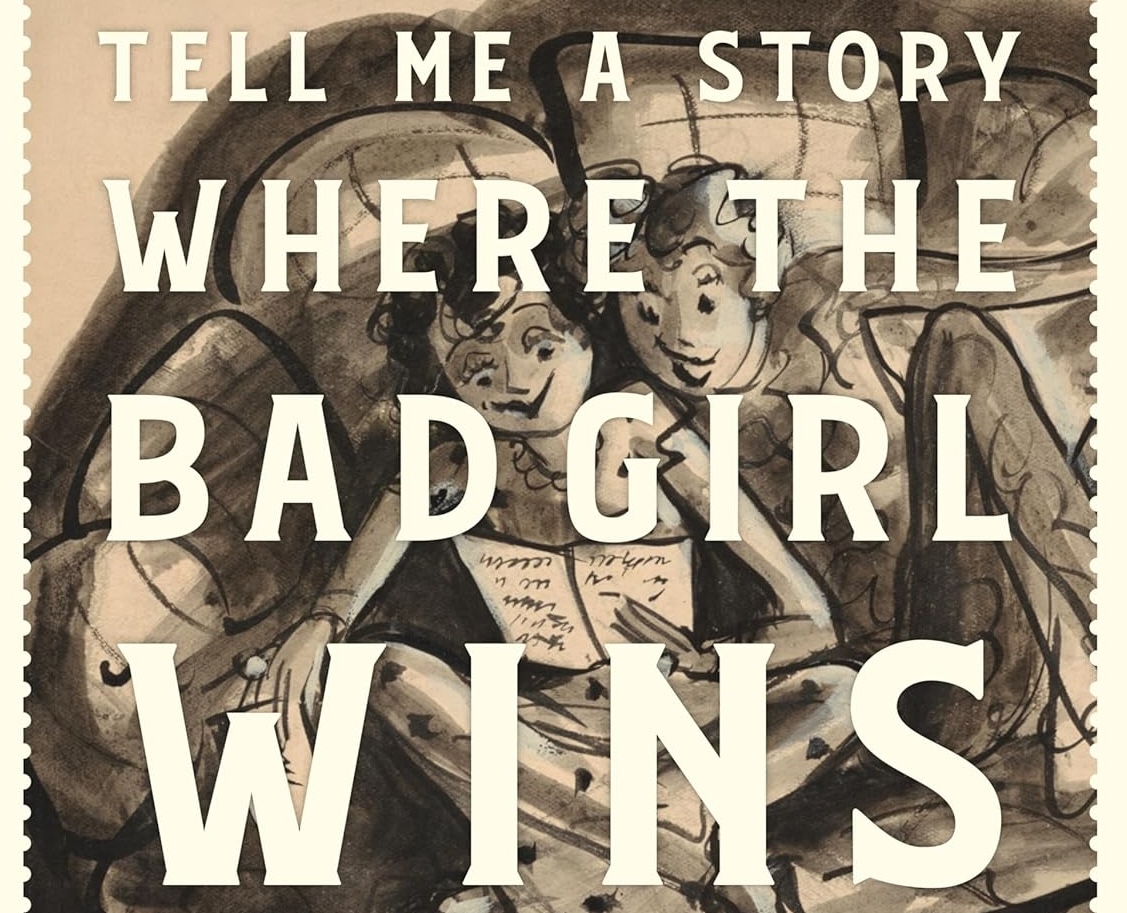

Sadly, I knew very little about Barbara Shermund until reading Fantagraphics’ new book Tell Me a Story Where the Bad Girl Wins: The Life and Art of Barbara Shermund, written by Caitlin McGurk. Shermund was one of the first female cartoonists with a career that spanned the 1920s to the mid-’60s. She worked for the New Yorker magazine at its inception and helped it grow to one of the premier magazines of that era, then moved on to do work for the equally prestigious Esquire, Life and Collier’s magazines. The book gives a wonderful overview of Shermund’s life and career, including dozens of her cartoons and covers as well as her preliminary sketches (with her notes).
Millennials, do you think you’ve lived through a lot of awful stuff? Barbara Shermund says “Hold my beer!” Born in 1899, as a child living in San Francisco, she was near the epicenter of the Great Earthquake of 1906 when it hit. The earthquake obliterated most of San Francisco and ignited fires that would burn in the rubble for weeks. It devastated the city so badly that it took years to restore it and it was never the same again.
The city had barely recovered by 1918, when the Spanish Flu epidemic spread across the country, killing thousands. Though Barbara avoided getting it, her mother, who she was very close with, caught the virus and died. Barbara’s father, devastated by the loss of his wife, spiraled downward, losing both his mind and his job and Barbara, at only 19 years old, had to take the reins, supporting her father while trying to find a life for herself.
In the early sections of the book, author Caitlin McGurk really makes you feel what Barbara went through. You’re placed dead center in the middle of the earthquake and experience the terror of it and the excruciating years of Barbara Shermund’s childhood.

Fantagraphics
But Barbara was all about persevering and she does, making the rest of the book incredibly fun to read. Once Barbara starts attending the California School of Fine Arts (CSFA) , her interest in art turned into a full-blown obsession. From there, each section of the book shows Barbara ascending up the ladder of her career, starting with doing cartoons with the New Yorker magazine then doing covers for the magazine as well. She was a rarity for that time, a woman who had a job she loves and making a lot of money doing it.
There’s a generous amount of her work throughout the book, including various cartoons, covers and advertisements she did (including LOTS of adverts for good old Pepsi-Cola!), and it shows how Barbara’s work evolved over time. In the early years of her career, she never played it safe. Sure, she could have sketched and tossed out some cute little inoffensive ditties and just collected a paycheck, but she loved to push the boundaries. Most of her cartoons in the New Yorker featured intimate conversations between liberated women. The 1920’s were an incredibly empowering era for women and Barbara capitalized on that. Women could vote now, they could drink and smoke in public and flaunt their style.

Fantagraphics
Of course, many men of the time considered women who drank and smoke as “wicked” while also desperately wanting them. It’s a hypocrisy that Barbara loved putting on full display in her work. Barbara also randomly dotted her work with homosexual characters (both male and female), making the references just subtle enough to shoot a wink at those living the culture while not outraging the rabid anti-gay people of the time. Years later, when she started working for Esquire, she could really cut loose with the sexuality in her work, pushing the medium to new heights and staying competitive in a male-dominated market.
Though the book heavily discusses the philosophy of her work and how she continued improving her craft, it also spares no details in covering her personal life.
Have you ever read about someone’s life and been envious of them? Well, I’m jealous as hell of Barbara’s life. Working remotely is pretty standard these days, but Barbara did it 80 years ago, creating her cartoons at whatever location she was living in at the moment and mailing them into the magazines. With that kind of freedom, she was able to travel anywhere while still keeping her career rolling. It’s a theme that continues throughout the book, Barbara’s fierce need to be independent. Even when she married, it was more a matter of convenience and she always kept her last name. She was a woman who had the self-confidence that comes from loving yourself and never being satisfied with just settling for what the world gave her.
And later in life, when the tastes of the country moved from burlesque to pornographic, and she found that her sense of humor was growing to be passé, she moved on to another satisfying period in her life, continuing to create the art she wanted while surrounded by scenery as beautiful as her work.
I found Barbara’s story inspiring, a woman who overcame an extremely difficult childhood and the challenges of a male-dominated magazine industry to carve a wonderful life for herself. If you love great art, pick up this book and join in on the revolution she ignited 100 years ago.




You must be logged in to post a comment.