

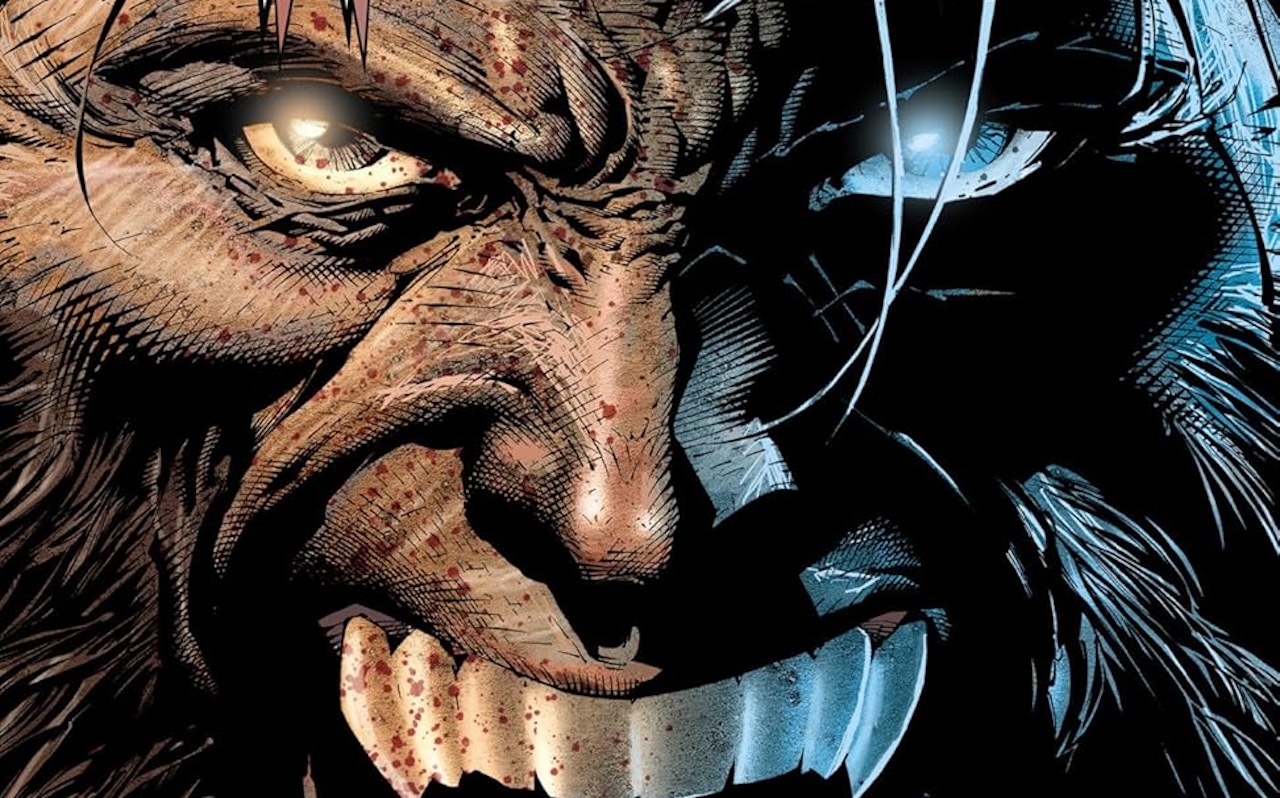

Comic readers are accustomed to constant relaunches to grab some of that sweet, sweet issue #1 money. It’s a publishing strategy I’ve never cared for (I think most readers can jump into a story without having to start with the first issue), but the sales numbers don’t lie, and every year or so we end up with a relaunch of an ongoing title. That’s why it is so wonderful to see a collection of issues from a book like Wolverine, which had a good two decades before it concluded with this final arc. This Epic Collection is not necessary reading, with its style and storytelling influenced by the X-Men films. It’s a more grounded, more cinematic, and arguably, more restrained version of Logan. Yet, it’s a nice glimpse into an era of transition, not just for Wolverine, but for Marvel as a whole.
Collected here are Wolverine #173–189 from the early 2000s, with stories by Frank Tieri, Matt Nixon, Daniel Way, and a brief glimpse of what’s to come from Jason Aaron. The collection opens in Las Vegas, where Logan takes on a rising wave of threats, including the criminal underworld and the familiar chaos brought by Sabretooth, Lady Deathstrike, and Omega Red. Logan also finds himself working with a good cop to root out corruption on the force, reconnecting with Amiko and Yukio, and even going toe-to-toe with the Punisher in a satisfying showdown. Appropriately, these stories center Wolverine, but allow for Marvel mainstays like Iron Man and Alpha Flight to anchor the character in the broader universe. One arc even sees Logan infiltrating the Mafia to protect a young girl, with events taking a more “beastly” turn than expected, which feels like it could be a standalone film in the character’s canon.
None of the writing breaks new ground, but it keeps with what fans should expect from a Wolverine solo adventure. Frank Tieri delivers serviceable, action-driven scripts that stick closely to Wolverine’s familiar formula: haunted pasts, savage battles, and personal vendettas. There’s a clear attempt to give each arc a standalone crime-noir feel while keeping Logan moving forward, but much of it feels like a retread of ideas explored more effectively in previous issues. The narrative is competent and occasionally entertaining, but it rarely rises above the baseline. If there’s a high point, it’s in the sheer variety of set pieces and antagonists; there is a lot to digest here, and it feels like Marvel is giving you your money’s worth.
The art is unmistakably early 2000s Marvel, which is a blessing or a curse depending on your perspective. I find the visuals to be too realistic and polished for its own good. Artists like Sean Chen, Ethan Van Sciver, David Finch, and Jorge Lucas all bring competent, clean lines and dramatic compositions, but the gritty edge that defines Wolverine sometimes feels smoothed out under layers of stylized rendering. This is where the visual influence of the X-Men movie era feels most apparent: leather-clad characters, moody lighting, and anatomically intense designs. This was true of many titles from this time, and it’s a love it or hate it situation. To be fair to these artists, there are flashes of flair throughout, but the book rarely ventures outside the expected visual language of the time.
This Epic Collection is incredibly light on supplementals, with a single variant cover and the front of Wizard magazine from this era. With some of these lesser-known arcs from iconic characters, I wish Marvel would include more reflections on where the book was during its publication run.
In the end, Wolverine Epic Collection: Law of the Jungle is a decent if unremarkable farewell to Logan’s original solo series. The book offers plenty of action, familiar villains, and some entertaining guest stars, but doesn’t do much to elevate the material beyond standard fare. For completists and fans of early 2000s Marvel, it’s a worthwhile pickup. For casual readers, it’s more of a curiosity a glimpse at Wolverine in the moment just before his next evolution.




