


In my first two reviews of Universal Monsters: The Mummy, I’d readily used some variation of the term “Disney-fication.” And say what you will about the Mouse’s business matters, but that’s a compliment above all else.
Because whereas some of the other Universal stories leaned heavily into their horror essence, writer-artist Faith Erin Hicks (alongside colorist Lee Loughridge and letterer Hassan Otsmane-Elhaou) opted for something altogether more playful, charming, and deeply personal. That rather than scare outright, the mummy-centric mystery surrounding young Helen has played out more like a coming-of-age tale about fate and personal agency. And there’s no denying that this more human spin on The Mummy has worked as it bucked certain expectations and made this more than a story about a dusty corpse.
Only as we enter the penultimate third issue, The Mummy‘s Disney vibes seem to have back-stepped on their Cinderella-esque run toward an otherwise compelling, life-affirming story.

Variant cover by Joëlle Jones. Courtesy of Image/Skybound.
In The Mummy #2, Helen came face-to-face with two men that represented her life’s most likely path forward. The handsome young Frank is someone she could have chosen for herself. Meanwhile, the mysterious Ardeth Bey was clearly connected to the mummy and a past/tradition that Helen seemed disconnected from outright. Who or what path might this half British/half Egyptian girl choose, and could she really be the one steering her own destiny?
Issue #3 of The Mummy, then, clarifies a lot of the mystery. As you may or may not have gathered by now, Helen’s disembodied voice friend is actually Ankh-Es-En-Amun, the pharaoh’s daughter and the lover of Imhotep (the aforementioned mysterious stranger Ardeth). The ghost of Ankh is fully “awakened” after Helen-Imhotep’s meeting, and the former princess now wishes to take over Helen’s body and resume her life among the living. Yeesh, talk about no new friends, amirite?
I can mostly excuse the sheer “overtness” of this development — it had to come at some time, and Hicks and company generally handle it with grace and efficiency to make the story land. (So much so, you almost have to root for Ankh-Imhotep despite their clearly messed up reunion plans.) But there’s other aspects of this issue that just didn’t land or click with sufficiency.

Variant cover by Christian Ward. Courtesy of Image/Skybound.
For one, Frank didn’t get nearly enough screentime, and was instead relegated to basically a support role (actually watching over Helen and using her as bait to lure in Imhotep). And, sure, these kind of “squashed” narratives are often what happens when you only have four issues to work with regarding an involved enough story like The Mummy.
At the same time, we’re going in to the fourth and final issue with Frank still feeling like a stranger, and his obligation to Helen seems to perpetuate more misogyny as opposed to him feeling like an option and a partner for Helen as she chooses her own fate. That dynamic is really central to making The Mummy‘s Disney sheen work — otherwise, we’re not letting this girl grow and instead making Frank the safe option compared to “meat suit for a dead Egyptian princess.”
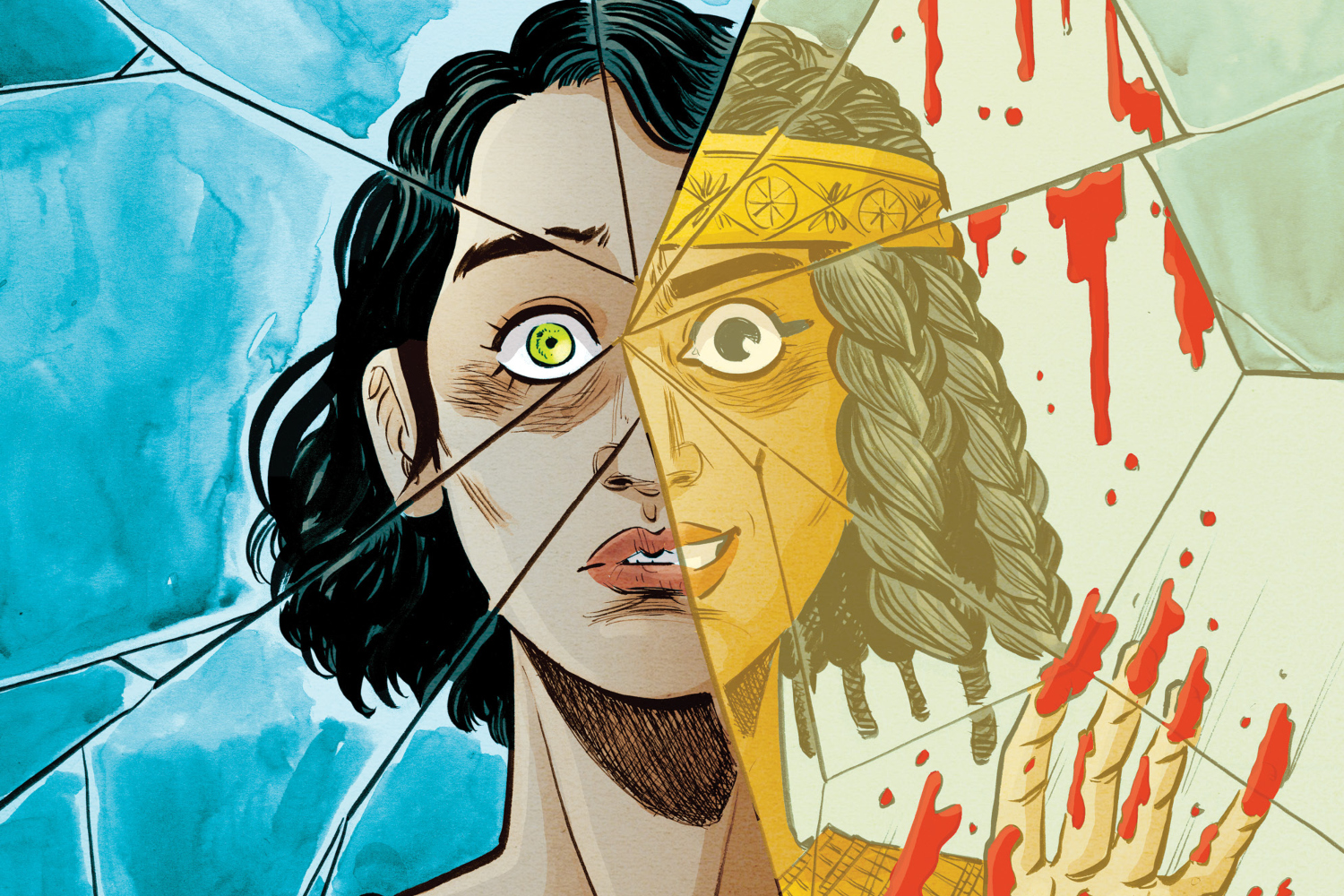
Given that condensed story pacing, some of the big moments of this issue just don’t land with their intended emotional heft. For instance, there’s a moment where Ankh reveals her plans, and Helen smashes a mirror out of anger and disgust following this sudden betrayal by a lifelong friend. Sure, we see that rage play out visually — there’s an intensity and expert line work in this scene that shows the snarling desperation that has overtaken Helen in that moment.
Only, this instance just happened too quickly, and is pivoted from as to maximize efficiency, for us to really sit with it for a few more minutes. It’s instead onto the next thing, and we’re left to feel Helen’s complicated emotions in a way that’s surface-level and/or only generally but never truly satisfactory.

Variant cover by Guillem March. Courtesy of Image/Skybound.
There’s more in this issue that then complicates those concerns. Take, for instance, the scene toward the intro where Helen basically “falls” into remembering her past life as Ankh. It’s a neat visual trick that accomplishes what more of this issue should have achieved: Standing out with its starkness, facilitating some passage of time or the movement between barriers, and adding just a touch more mysticism to make us see how this moment stands out. The disconnect between these moments, then, is proof that you can streamline a story the right way, but only if the art or the narrative picks up the slack for the other. Too often in The Mummy #3, it felt like some moments were stripped down while feeling full, while others just lost too much of that heart and magic. The end result is an issue that worked but didn’t exactly flourish.
Which isn’t to say this was a bad issue at all; we got some big moments, and they landed with just enough significance and charm to feel important. But if this book is going to really achieve its lofty expectations — to weave a story so much bigger and more emotional resonant than a mere retelling of The Mummy — then “good enough” doesn’t really cut it. The first two issues swung big enough, with an aw-shucks emotionality married brilliantly with horror and 1920s vibes to feel novel and alive in the best way.

Variant cover by Sweeney Boo. Courtesy of Image/Skybound.
In this issue, just when everything really needed to pop off, we weren’t dazzled by the reveals but instead allowed to see them happen in a mostly entertaining fashion. It’s as if too much story and time got condensed down, or that we saw the turn coming, had big hopes, and only got something capable of sweeping just one foot off the ground. I needed big-time fire and passion, and instead only got enough to keep my fingers steadily flipping through the pages.
Even with this seemingly imperfect issue, I still have high hopes for The Mummy. Hicks and company have all the right skills/tools to complete a meaningful dash toward the end, and really let Helen soar as she chooses her fate or acquiesces total control. No matter where she winds up, though, if the story can really make us feel it all that much more (and not just generally see it), then The Mummy‘s daring plan and identity will have been more shiny than a million bits of the Pharoah’s gold. Otherwise, I might have more cutting things to say than making simple Disney movie comparisons.




You must be logged in to post a comment.