


“She is a little girl because men are dismissive of little girls, and thus she will be unseen. She is the kindest human being we could possibly conceive of because that, above everything else, is what monsters do not understand.”
Something that I’ve always loved about Wonder Woman is her sense of vulnerability. For decades, Wonder Woman was the face of emotion; she would fight for love and compassion and do so without any judgment. It differentiates her compared to her DC compatriots Batman and Superman, as their moral compasses point in different emotional directions. It’s likely that Wonder Woman would want to fight for you and let you have a moment to cry.
So you’re probably thinking, why open up a review like that? Well, that detail specifically is somewhat missing in modern interpretations of the character. Wonder Woman has evolved in ways that often seem that she’s fighting for the thrill the fight rather than as a compassionate champion of the people. Kelly Thompson and Hayden Sherman, however, bring back the compassion and moral maturity in this week’s Absolute Wonder Woman.
Continuing off of last month’s installment, readers are trapped deep within Area 41, a government facility that’s built to reflect old mythological mazes.
Not a problem for Wonder Woman, right?
Well, kinda.

DC
Diana struggles to protect Petra, a Naiad Nymph and occasional judge to the Muses, and Ferdinand, a valiant Minotaur. Off the bat, these new characters are wonderful and their traditional mythological tales, in a way, uplift the struggles that follow Diana and the flashbacks that follow dive deep into the burden that is being a warrior to Hecate and her mother while trying to save as much as she can. It’s a psychological and emotional dissection that hasn’t been seen with the character since Post Crisis and is overall refreshing to see.
Thompson understands a core component of any version of Wonder Woman is her need to be a knight or hand on someone’s shoulder, even when she needs that herself. It’s a much-needed dissection for the character in this modern era and Thompson continues to show that throughout.
However, if there were any issues with Thompson’s writing this time around, it has to do with the panel by panel blocking within her script. During flashback sequences, Thompson shines as she gets to utilize the mythological aspects of Diana’s upbringing perfectly but when we tend to return to present time, it tends to sometimes feel a bit off after the flashbacks almost as if Thompson has lost a bit of her speed.
This doesn’t truly impact the story, but is more a minor error that can be seen in many comic books. After that, Thompson’s script is clean and allows Sherman to continue to have some of the best experimental paneling in the Absolute Universe.

DC
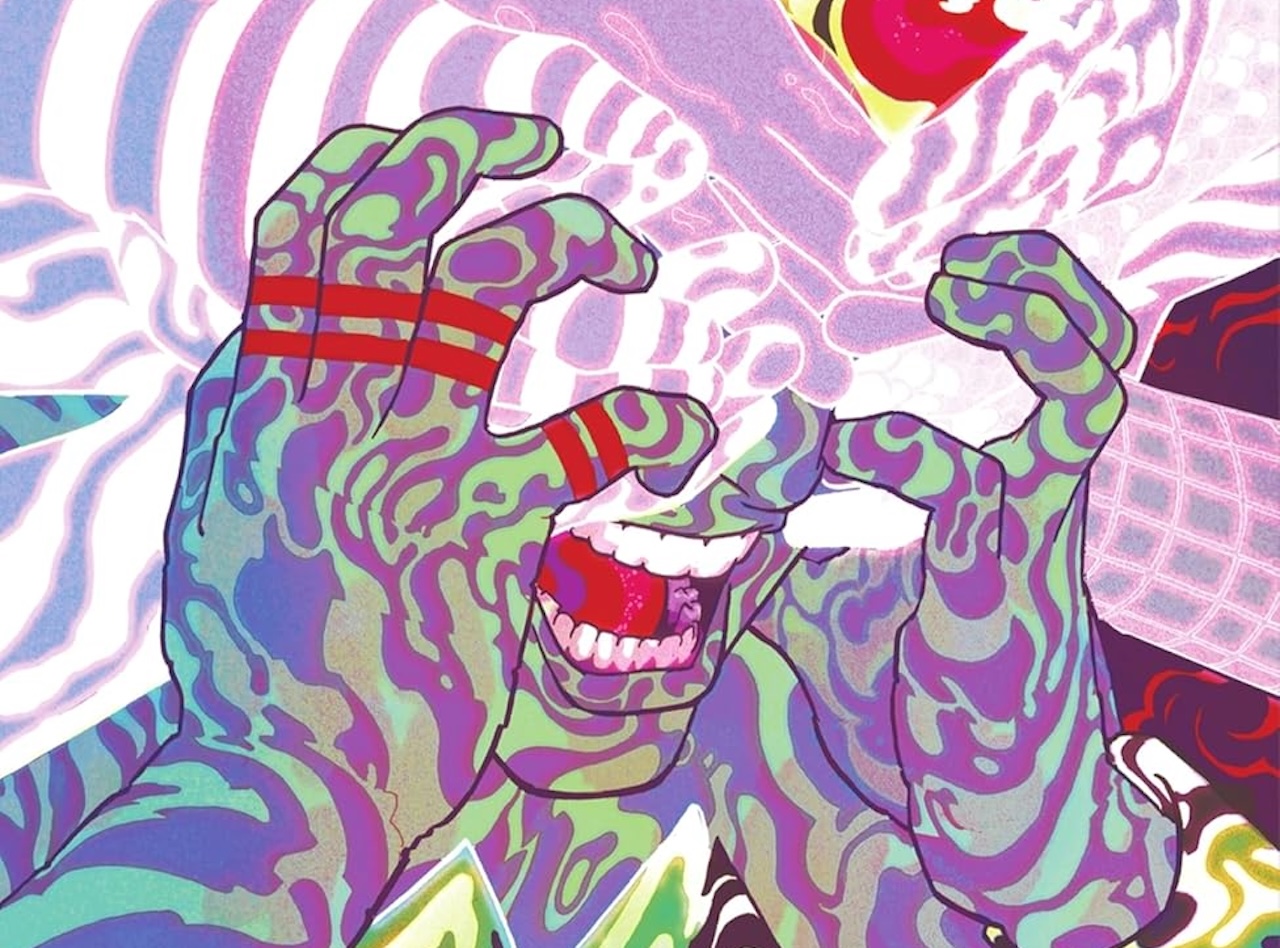
Speaking of Hayden Sherman, they’re quickly running up the chain to be the third superstar artist of the Modern Era and rightfully so as their design work and action is continuously breathtaking. It also shows that the future of comics lies within experimental creators such as Sherman. The flashback sequences especially highlight the beauty of Sherman’s design work as every glimpse of Diana’s past is a bold love letter to Greek mythology.
Overall, Absolute Wonder Woman #10 is a fantastic issue. Minor issues aside, this continues to be a strong series and honestly my favorite Absolute title to read. As a reader, it’s a fun and crazy ride. As a reviewer, I can’t help but admire how much the series is a love letter to Wonder Woman and superhero comics as a whole. I can’t wait for more.




You must be logged in to post a comment.