


At the start of the past decade, Dwayne Johnson achieved his status as a movie star when he first played arguably his most iconic turn as Luke Hobbs in Fast Five. As well as continuing that role with every subsequent Fast & Furious installment, Johnson would use his stardom to produce his own works that would not only create brand awareness for his own liquor company but also this on-screen persona that is self-aware of the ridiculous spectacle his blockbusters present. However, from Black Adam to Red One where he was creatively involved with his company Seven Bucks Productions, Johnson’s star power came under scrutiny.
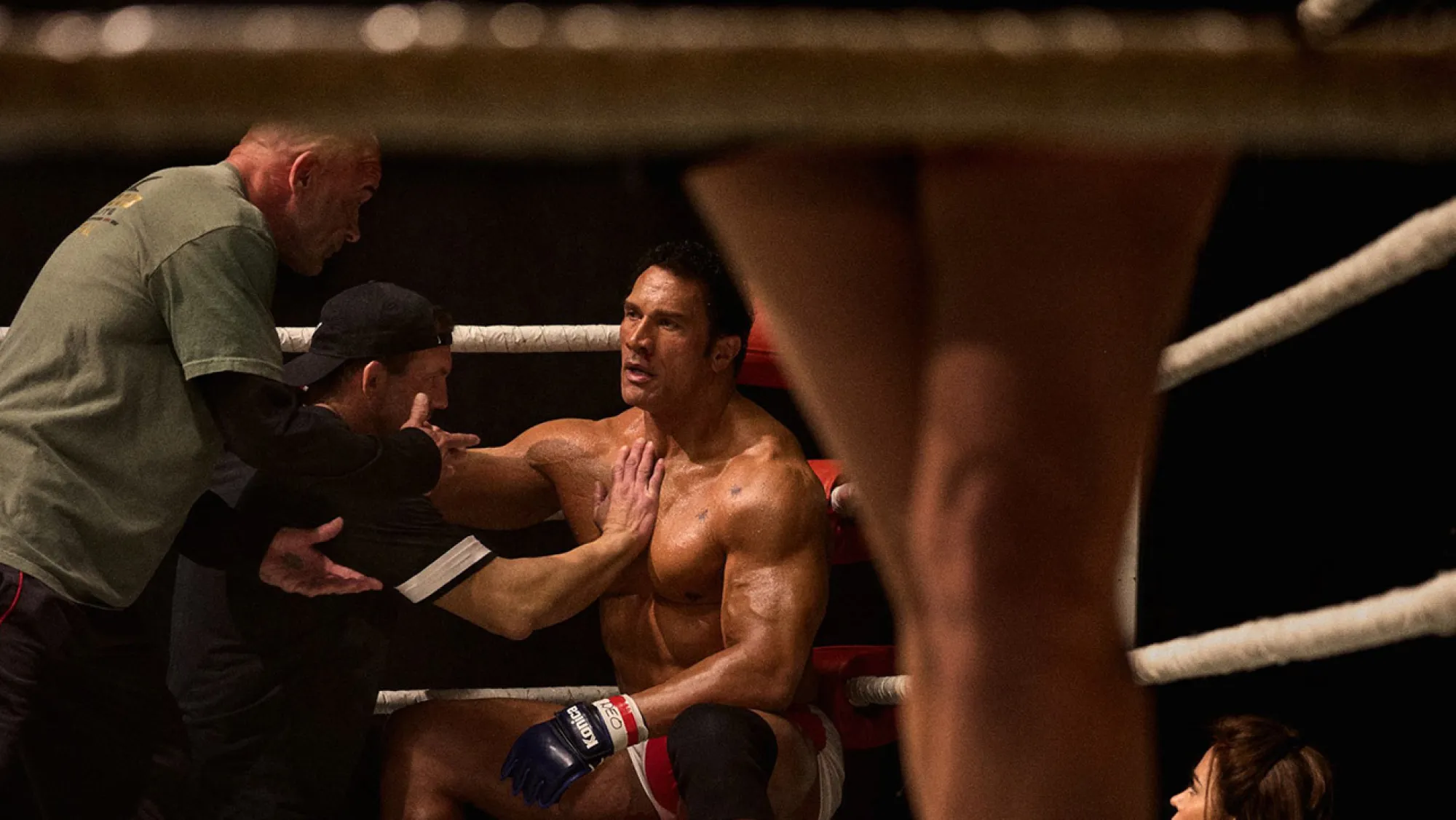
Watching The Smashing Machine – based on the 2002 documentary of the same name – not only could this be seen as a way for Johnson to change his public image when it comes to acting in movie, but also the chance at making his Raging Bull by playing real-life former amateur wrestler and MMA fighter Mark Kerr. Set between 1997 and 2000, we see how Kerr rise through the MMA world, which was unfortunately derailed by his opioid addiction, which had an impact on his personal life including his relationship with then-girlfriend Dawn Staples (Emily Blunt).
Making his solo debut as writer-director after previously collaborating with his brother Josh on recent classics like Good Time and Uncut Gems, Benny Safdie is telling a similar story about a man trying to achieve greatness, even if it means to compromise their morals. In the case of Mark Kerr, he is about winning every match, which leads to an addiction to painkillers. Usually when it comes to biopics, substance abuse tends to be a major factor in the story and while you can see the horrible effect it has on the Kerr household, it is a conflict that gets halfway through The Smashing Machine.
Whereas you can appreciate Safdie’s decision to focus on just three years of Kerr’s life, which has been explored in the aforementioned HBO documentary, he shoots the film like a documentary, albeit one that doesn’t quite know where the emotional anchor is. Shot predominantly on 16mm film, there is a rawness in Safdie’s direction, especially when it comes to the MMA matches which are brutal and impactful to watch. However, from a writing standpoint, the storytelling is rather directionless, despite the various touchstones from the toxic relationship between Mark and Dawn, to his friendship and potential rivalry with Mark Coleman (Ryan Bader). Once again, there is an appreciation towards maintaining authenticity, even if the drama is surprisingly inert.
What ultimately saves The Smashing Machine are the performances, starting with The Rock who is built to physical perfection, but plays a character who is not without his unlikeable and vulnerable moments, especially in one heartbreaking sequence where he experiences his first loss and as he tries to maintain his tough persona, he breaks down quietly in the waiting room. Whatever physical harm you see in the ring, the emotional harm is more intense as seen in the scenes between Johnson and his Jungle Cruise co-star Emily Blunt, who is great is a somewhat underwritten role.




