

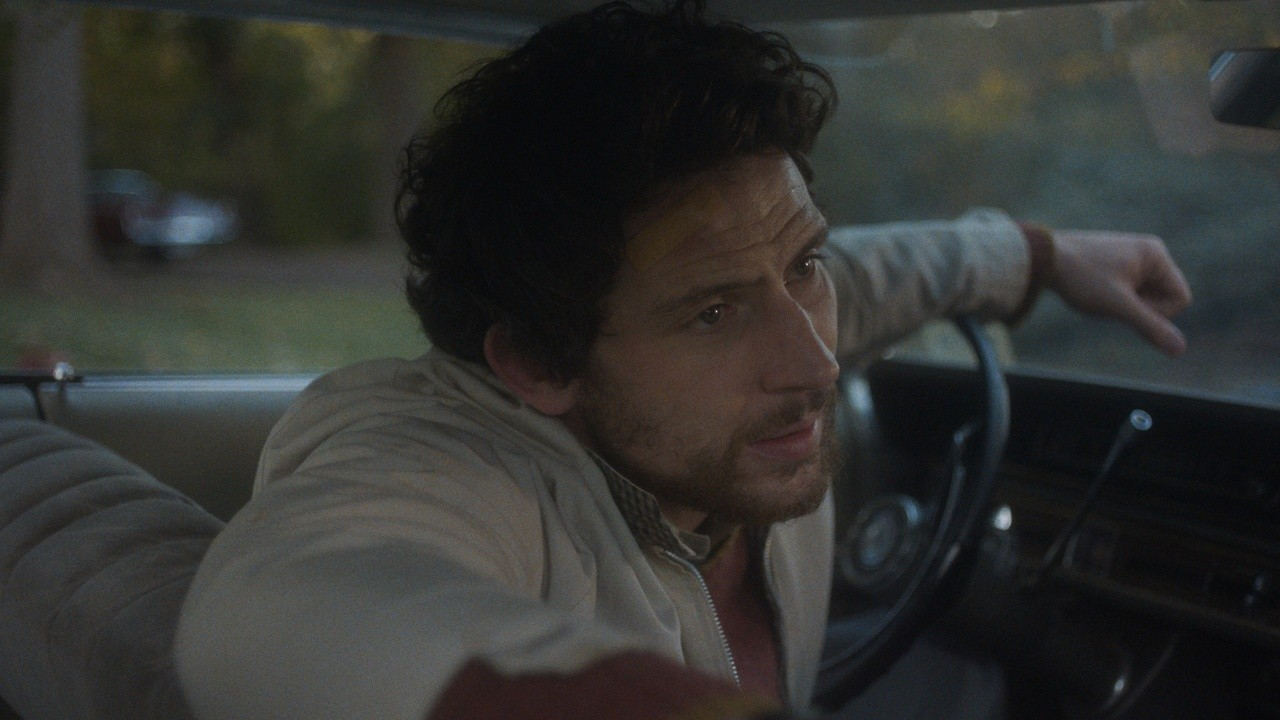

Writer/Director Kelly Reichardt’s new film The Mastermind (which opened October 24th) continues her exploration of drifters and those who don’t quite fit into a society that has no room for their hopes and dreams. Set in 1970, the film focuses on J.B. Mooney (played by Josh O’Connor), who’s made doing nothing into an art form. Unemployed and stuck with an art degree that he doesn’t even use, he’s frustrated by the rut his life’s in, especially since everyone else around him is successful. His wife Terri (Alaina Haim) has a great white-collar office job and his father William (Bill Camp) is an esteemed judge of 30+ years.
Wanting to do something other than sit around and gather moss, he decides to steal four rare paintings from the local art museum and sell them for big cash. Gathering three acquaintances to help him, he plans the “perfect heist”. When the day of the robbery arrives though, mishaps and bad timing alter J.B.’s life forever.
J.B. reminded me of Jerry Lundegaard, William H. Macy’s jittery car lot sales manager from the film Fargo. Both men turn to crime to improve their lives and both quickly get in over their heads when things get out of control. I felt more sympathy for J.B. because he’s genuinely trying to make his family’s life better, where Lundegaard’s motives seemed incredibly selfish. Had Lundegaard’s plan worked perfectly, I imagine he would’ve quickly dropped his wife and kid and become a real estate mogul and playboy, terrorizing a lot of young women across North Dakota.

The bulk of The Mastermind takes place after the heist, as J.B. deals with the ramifications of what he’s done. It’s alternately sad and hilarious as we watch J.B. try to salvage his life, heading out on the road and encountering various people and situations on the road as his prospects and cash dwindle.
The hippie movement was still in full swing in 1970 and the various young and old hippies that appear in the film are a great counterpoint to J.B. and his plight. The hopefulness and optimism of the hippies is a stark counterpoint to J.B.’s downward spiral.
The film’s period detail is impeccable. Much like Tarantino’s Once Upon a Time in Hollywood, Ms. Reichardt recreates 1970 perfectly, from the fashion to the cars to the buildings. The film’s muted color scheme and slight graininess give it a wonderfully retro look throughout.
In one moody scene, J.B. smokes a cigarette in front of a store with a skewed sign dangling above him blazing the old-fashioned Pepsi logo (right down to the red and blue swirls flowing like fish around the lettering) and it genuinely felt like I was watching some lost film that was buried in the 70’s and recently brought to light. It transported me back to a simpler but far more colorful time that I didn’t want to leave when the end credits rolled.




You must be logged in to post a comment.