

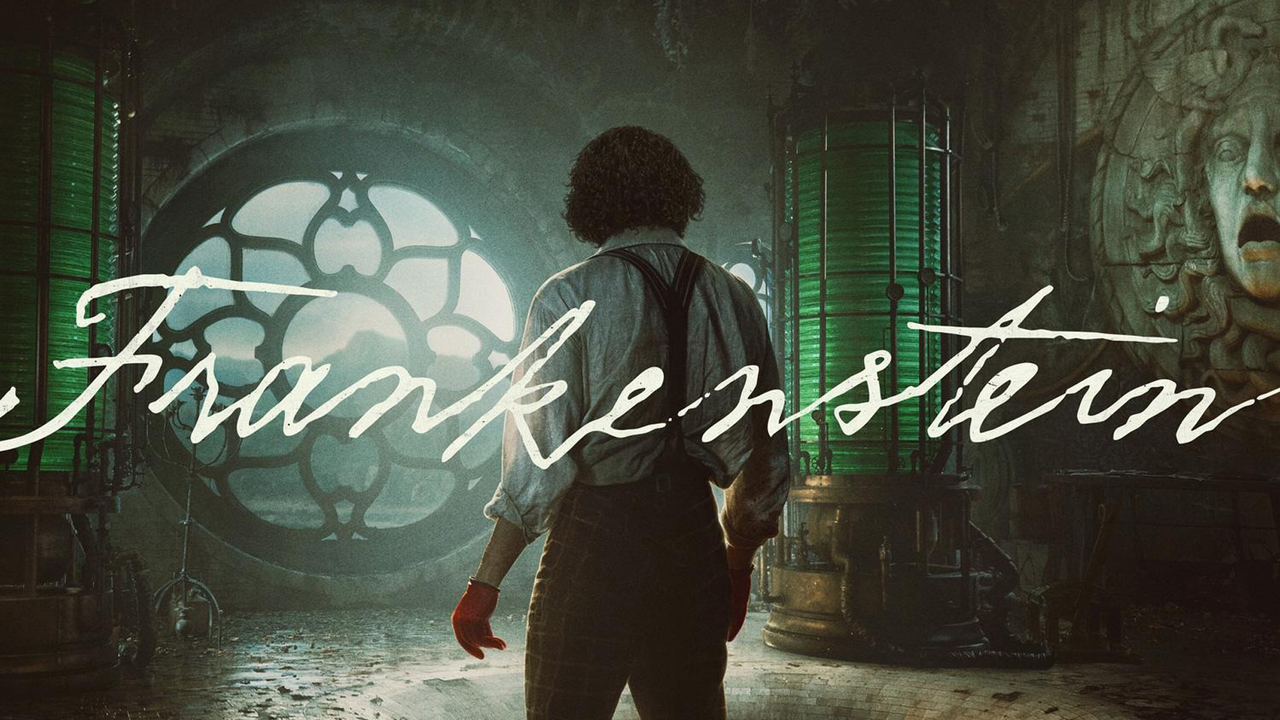

To capitalize on the success of Bram Stoker’s Dracula in 1992, there was a cycle of prestige monster movies with big stars and name directors, as well as high production values and lavish costumes during the 1990s. Among them was Mary Shelley’s Frankenstein and much like Francis Ford Coppola’s film, its main inspiration was the original source material as opposed to the cinematic influence of James Whale’s Universal adaptation in the 1930s. Much has been said about that 1994 version from its two screenwriters Steph Lady and Frank Darabont disappointed by the execution at the hands of director Kenneth Branagh, who is all noise and lack of quietness.
Watching Guillermo del Toro’s long-awaited adaptation of Mary Shelley’s novel, I was reminded of Branagh’s film which fails in a way that del Toro’s succeeds. To set the record straight, there is no definitive version of the Frankenstein story, which has been an intellectual property, much like the Creature himself, has been pulled apart and put back together, only many, many times for over a century, spawning countless movies and other media. In the case of del Toro’s adaptation, which went through multiple iterations for the years, it may be faithful to the original text, but also a continuation of the many ideas that the director has explored throughout his filmography.
If you are familiar with the broad strokes of Shelley’s narrative, del Toro follows them as Frankenstein opens with the crew of a ship on an expedition to the North Pole discovering the gravely injured Baron Victor Frankenstein (Oscar Isaac). Being pursued by the very thing he created (Jacob Elordi), Victor recounts the events leading to its creation, starting with his upbringing where he was disillusioned by his abusive father and grieving over the death of his beloved mother, which motivates him from a young age to overcome death.
Throughout his films, del Toro has always been interested in the complicated relationships between sons and fathers and with Frankenstein, the abusive influence of Victor’s strict, oppressive father (Charles Dance) would be passed onto the relationship between Victor and the Creature.
For del Toro, the monsters may show their nastiness, but when he strips away from them being figures of horror, they are something more beautiful and human than the people that either hunt or control them, as previously explored in The Shape of Water. That approach applies to Jacob Elordi’s incredible turn as the Creature who is introduced as a monstrous figure whose immense strength is enough to shatter a man’s body, but from his origin to understanding of the outside world that is both dark and light, we get a performance that balances an impressive physical stature and a way of speaking that is oddly cold and warming at the same time.
When we get to see the Creature’s side of the story, this is where we see a clear love towards Shelley’s material, not just from the Frankenstein’s fascination of John Milton’s Paradise Lost, but how it depicts a deformed but tragic figure who yearns for that human connection and can find beauty in the simplest things, such as gazing at the moon.
However, like the Creature, much of the principal cast are outsiders in their own way, with the charismatic Oscar Isaac capturing that manic drive to achieve his goal of overcoming death, deeming himself as a mad scientist negated by the world of academia, though his knowledge and research attract the attention of arms merchant Henrich Harlander (Christoph Waltz). Even Mia Goth as Elizabeth, who could have been the love interest drenched in Gothic beauty, has more layers as a woman with her scientific interests, particularly towards insects, which makes her an outsider, despite her romance with Victor’s younger brother William (Felix Kammerer), who is more in line with establishment.
When it comes to Gothic storytelling, there is a tendency to just embrace the theatricality, and you see that throughout the numerous montages of Victor delving deeper into his science, culminating in the final experiment of re-animation in the midst of a storm. From Tamara Deverell’s lavish production design and Dan Laustsen’s striking cinematography, you can tell that del Toro is feeling gleeful towards these moments of grandeur, but knows when to calm things down, especially when Frankenstein and/or his creation start to feel introspective, beautifully enhanced by Alexandre Desplat’s lyrical score.




