

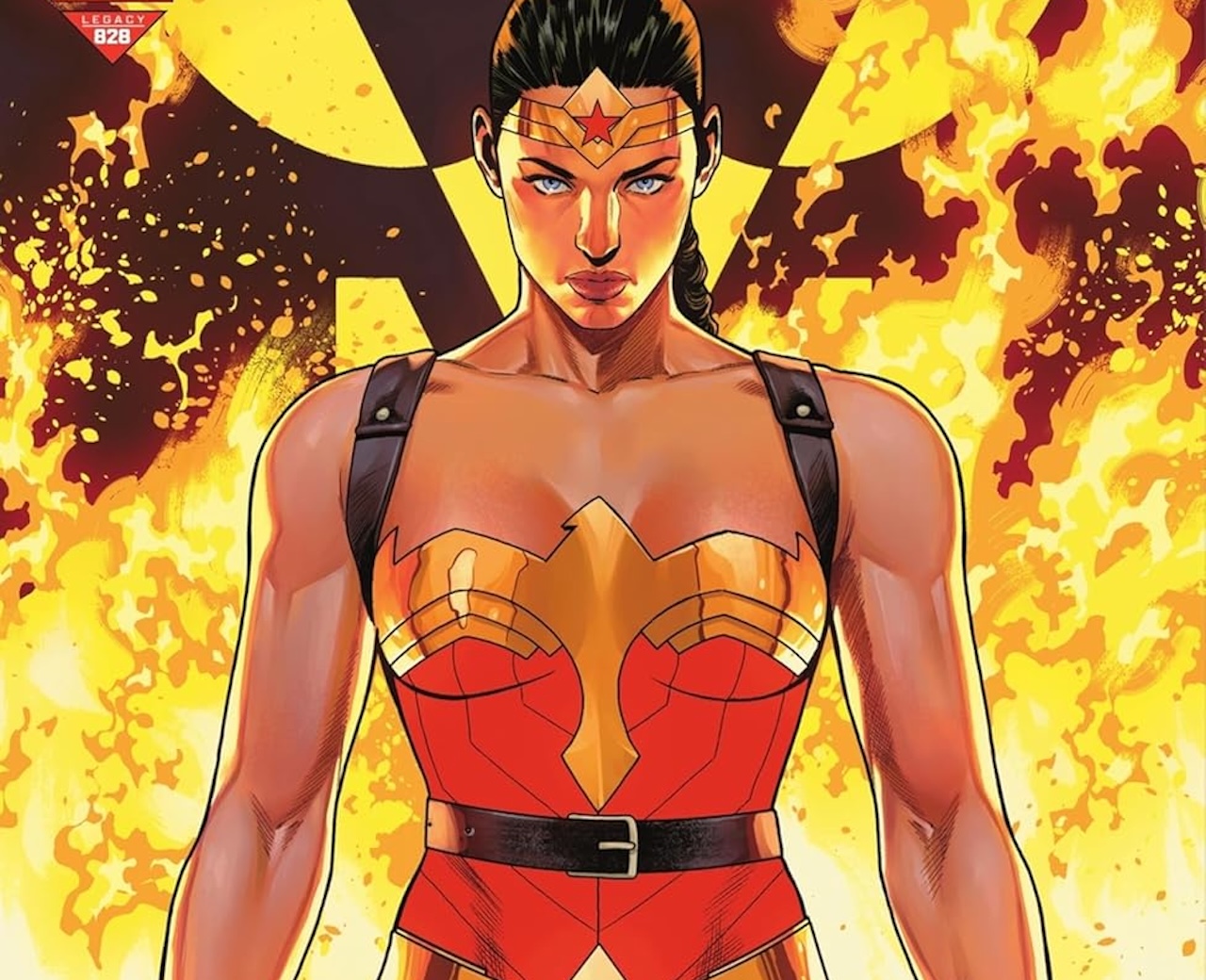

“The Island of Mice and Men” is the latest story arc in Wonder Woman that comes to an end this week. Wonder Woman #28 also serves as the last issue for Tom King and Daniel Sampere before a break, so it has to accomplish two things. One, wrap up Mouse Man’s reign, and two, set up the future threat already teased in Wonder Woman #25: The Matriarch. The two-pronged approach makes today’s issue feel like both an epilogue and the start of something much bigger, all in one.
If you’re unaware, the latest story arc has seen Wonder Woman free a nation from the fascist Mouse Man. She’s done this with Superman and other Justice League members telling her not to mess with a nation’s politics. I say fascist, as Mouse Man controlled what they could say and do, while under heavy militarized control. It had to be done, but it was done with a vigilante hero, and repercussions are possible. She’s already messed with The Sovereign after all, and fought through White House guards. Writer Tom King has certainly pushed Wonder Woman to go beyond usual norms.
Wonder Woman #28 opens with someone spray painting a wall that reads “Mouse Man knows,” blacking out the “knows” and replacing it with “falls.” The nation is healing, and it’s time for people to move on. The key scene shows Wonder Woman speaking to Mouse Man, giving the young girl she first encountered advice, and packing her baby on the invisible jet, knowing repercussions are coming. It’s a slower, solemn issue that reflects how a nation heals in the wake of newfound freedom. Much of your own reflections will be the meat of what’s here, as the scenes are rather thin and obtuse.

The people are free.
Credit: DC Comics
Intercut with Wonder Woman scenes is the Matriarch, who fights all of Wonder Woman’s greatest foes in an arena. Years from now, it’s some kind of proof that she can defeat villain after villain easily, even when Wonder Woman had trouble going solo with these villains. This supplies the issue with much-needed action, though, without the context of why these fights are happening or what it means, it’s a somewhat toothless subplot. That said, Jorge Fornes does a great job making these clashes short and impactful, especially with his use of silhouette.
Meanwhile, Daniel Sampere draws a strong main story, with Wonder Woman looking fabulous and a blue-costumed Batman making an appearance. There’s even a nine-panel grid Sampere draws wonderfully, showing so much emotion and acting in Wonder Woman’s body language.
Wonder Woman #28 functions as both an epilogue and a warning, closing the book on Mouse Man’s fascist regime while quietly laying the groundwork for a much larger reckoning to come. Tom King leans into restraint and reflection, allowing the weight of Wonder Woman’s choices to linger rather than offering easy catharsis. While the Matriarch subplot feels intentionally under-explained, the emotional resonance of the main story, elevated by Daniel Sampere’s expressive, confident art, makes this a thoughtful and fitting pause point before the next chapter.




You must be logged in to post a comment.