

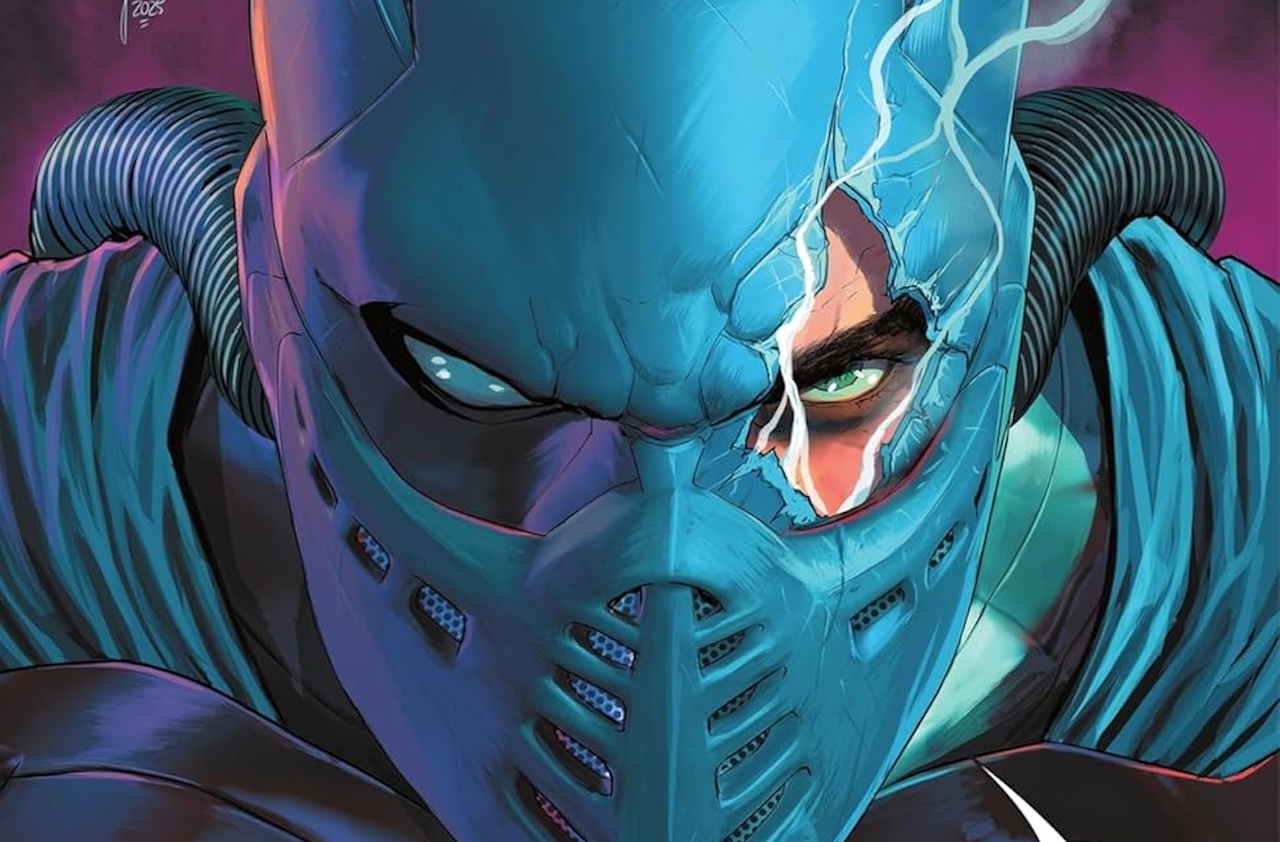

Detective Comics #1106 works because one of the strengths of a Tom Taylor written book is the appearance of simplicity. Even when crazy things are happening in the plot and the themes are heavy and complex, there’s a logic that backs up each element of the story. You can trace every insane thing that happens in a clear and concise way back to its source. It also works because one of the strengths of Mikel Janín on art, color, and cover duties, is that he is so, extremely, impressively, and stupidly good at his job I want to cry.
These two bring their respective strengths together to close out the most philosophically provocative and narratively ambitious arc of their Detective Comics run to date.
The “Courage That Kills” arc introduces one of the more interesting villains to join the Bat-mythos in recent years. As we learned last issue, Leo the Lion is the son of a Falcone hired gun that Batman busted early in his career and he was left traumatized by the experience. Years later, Bruce Wayne was the one to reach out, offering Leo a scholarship to continue his young but promising scientific career.

DC
Now all that’s left of him is a brilliant chemist who developed a toxin that stops the brains ability to feel fear on a biological level… who was also taught by Ted Grant (AKA Wildcat) and Black Canary how to fight. He hates Batman but absolutely idolizes Bruce Wayne for not letting his parents loss seem to affect him. With the toxin, he hopes to remove the fear he believes everyone has already poisoned everyone in Gotham.
This story cut to the core of what makes Batman Batman. What use is a persona to scare a superstitious and cowardly lot if no one in the city can experience fear? What use is a Batman who can’t fear his own actions, his own mortality, or that of his family?
Turns out, fearing nothing isn’t great. For Batman, but really for Gotham at large. Taylor and Janín open Detective Comics #1106 showing the perks of living without fear: someone quitting a job they don’t like, a couple getting engaged, a teenager coming out to their parents. That’s quickly juxtaposed with images of children playing on the top of a moving train, a scientist not noticing a menacing Killer Croc, or an unconscious Robin on a cement floor. The beauty of letting go cut by the consequences of not thinking ahead. Again, the appearance of simplicity.

DC
While a final showdown is being set up between Leo and Batman, there’s a group of Gotham citizens ready to take back their lives from the city that’s stolen so much from them. On the other side, there’s a police force led by Vandal Savage that no longer fears the consequences of brutalizing the very people they’re supposed to protect.
To counter the fearlessness he’s been poisoned with, Batman finally uses the modified fear toxin from Scarecrow that he was working on in previous issues. This cocktail isn’t a permanent fix but it allows him to see and act clearly for the first time since the beginning of the arc and allows him the clarity to focus on what needs to be done to save the day.

DC
Though the arc stared off small, contained (literally on a yacht off Gotham Harbor), and maybe even a little too slow for my liking, the back half just kept. Ramping. Up.
“The Courage that Kills” ends on such a strong note that it feels like it should be part 16 of a Bats-wide crossover that took two months. Every issue of this arc was dripping with cameos, twists, ironies, touching character beats, and absolutely stunning, event-level art. I read comics for biting dialogue and gorgeous visuals. Ideally, they synthesize in moments that make me go ,“damn that’s cool,” and it feels like that happens so much in this book I couldn’t turn the pages fast enough. I would read these two on Detective Comics for years to come.




You must be logged in to post a comment.