

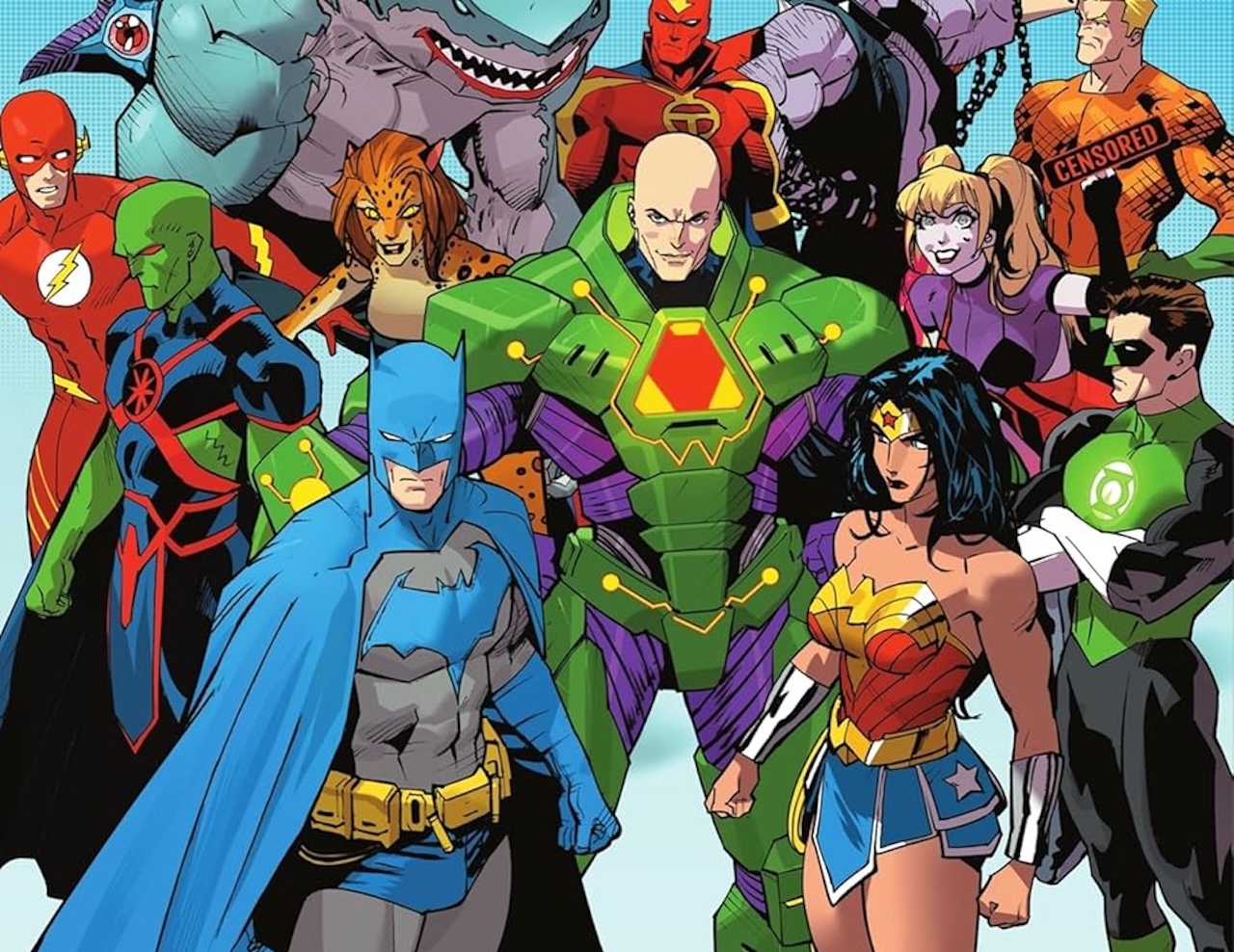

We did win, right?
Once upon a time, there was a comic book event. Following the event was an issue from the flagship ongoing that would explain every little thing in the aftermath of that event, which usually makes for solid reading even if it’s packed with lore-dumping word soup. Today, Justice League Unlimited follows that time-honored tradition as it follows up the climactic finale of DC K.O., to the best of its ability.
The Terrific Ten are no more, and Earth is safe from Darkseid and Neron. Even though the apocalypse has been undone, a dark sense of foreboding lingers over the Leaguers’ heads, strengthened by a feeling of uneasiness that tells them that Darkseid’s influence is far from gone. What remains is a shaken team that must make a desperate sweeping play to prepare itself for an unknown yet inevitable threat.

DC
So far, JLU has not had much luck with its crossover stories, with “We Are Yesterday” being a particularly bloated mess. Terrific Ten was a step in the right direction however, tying up loose threads left by the Legion of Doom’s attack and retaining a contained story, even if it fell flat in other areas. Like “We Are Yesterday”, this current arc features a status quo shifting expository epilogue, and much like that epilogue, this one is also just a serviceable scene setter for what is to come. Now, that is not to say the issue is bad, it simply feels average.
Yes, the premise of villain amnesty is fulfilled. Kind of. Much like any issue, you need to build up to the main point or reveal of the story, and they definitely do that, but this is more like twenty pages of setting the table and then asking what’s for dinner on the last page. No exploration of the question we’ve been presented with, and then they just ask it again anyway. But on the flip side, the villains’ reactions to DC K.O. present an interesting reason for the dilemma. Even though the world was fixed, it does add a lingering sense of post-apocalyptic potential.

DC
It is a big task to point the direction of a universe-wide story initiative, and it’s a role that Justice League Unlimited was designed to fill. Unfortunately, although it does its job well, it also suffers for it, with very little characterization to carry a wordy transition into what is to come for the universe. This makes it an absolute boon for lore buffs, which has always been a big point of appeal in Waid’s writing, however the tradeoff is losing the character drama he thrives at.
Clayton Henry longs to have his work adapted into a cartoon with how simplistic he aims to be. While there are many benefits to his style, much of it being his dynamic posing and action-heavy set pieces, he doesn’t exactly know how to make an environment pop as well as series regular Dan Mora. His best set piece in the entire issue happens to be Keystone City where Kid Flash, Air Wave, and Stargirl fight two villains who claim to be redeemed, yet set pieces with the Watchtower feel much emptier in comparison. In Grant Morrison and Waid’s JLA, artist Howard Porter took a simplistic approach to the stylization of the home base, imbuing it with a sense of personality from the heroes while they’re inhabiting it.
Now, to throw Henry a bone, this is not a standalone issue with him, this can also be seen as a larger issue in modern comic books and demanding deadlines. Despite that minor bump in the road, Henry knocks it out of the park with the character design in this issue, particularly with Lex Luthor’s fancy new armor as he pretends to be a hero for the billionth time in his publication history. His inking techniques and dynamic posing often reminds me of comic artist and character designer Cory Walker.
Justice League Unlimited #17 is neither stellar nor terrible. It does its job effectively, and boasts work from a guest artist that really pops, but it raises the question of just how well a book designed to set up spinoffs can fare with long term quality. There’s a certain enthusiasm to worldbuilding in World’s Finest that is simply missing here, and lacking that could inevitably impact momentum in the stretches between the big universe ending events. The last thing we need is for the fast-paced action hub book to be bogged down by its own ambitious design.




You must be logged in to post a comment.