


Stop me if you’ve heard this one before: Machines gain sentience and deduce that mankind is the root of the Earth’s problems or that they’re the superior beings. Conflict breaks out, usually leading to decimation on one or both sides. In the end, the planet is left scorched, and the machines are often the victor. If Destruction Be Our Lot #1 flips the script, as it features an artificial intelligence that actually misses the human race.
That artificial intelligence takes the form of an animatronic Abraham Lincoln, who’s become consumed with one question in the years since mankind’s extinction: What else is left? This has earned him the scorn of other machines, particularly because he resembles a human, and puzzled the few robots he’s actually befriended. But it turns out Abe’s questions are about to be answered, once he starts to explore what lies beyond the dome encasing him and his fellow robots.
What makes If Destruction Be Our Lot #1 stand out from other tales about artificial intelligence and the end of the world is in how Matthew and Mark Rosenberg write the robots. Most artificial intelligences often develop a god complex, like Brainiac, or a homicidal rage, like Ultron, but the robots in this comic are far simpler. They curse, they joke, they follow routines, and they often think about what the future holds. Perhaps my favorite scene in the entire issue is a discussion between Abe and a robot meant to serve people breakfast. When Abe asks the Breakfast Bot how long it’s been since it actually had to cook for someone, it launches into a rather wistful monologue about the family it used to serve. This poignant, heartfelt moment is essentially the Rosenbergs’ mission statement for If Destruction Be Our Lot.

Image
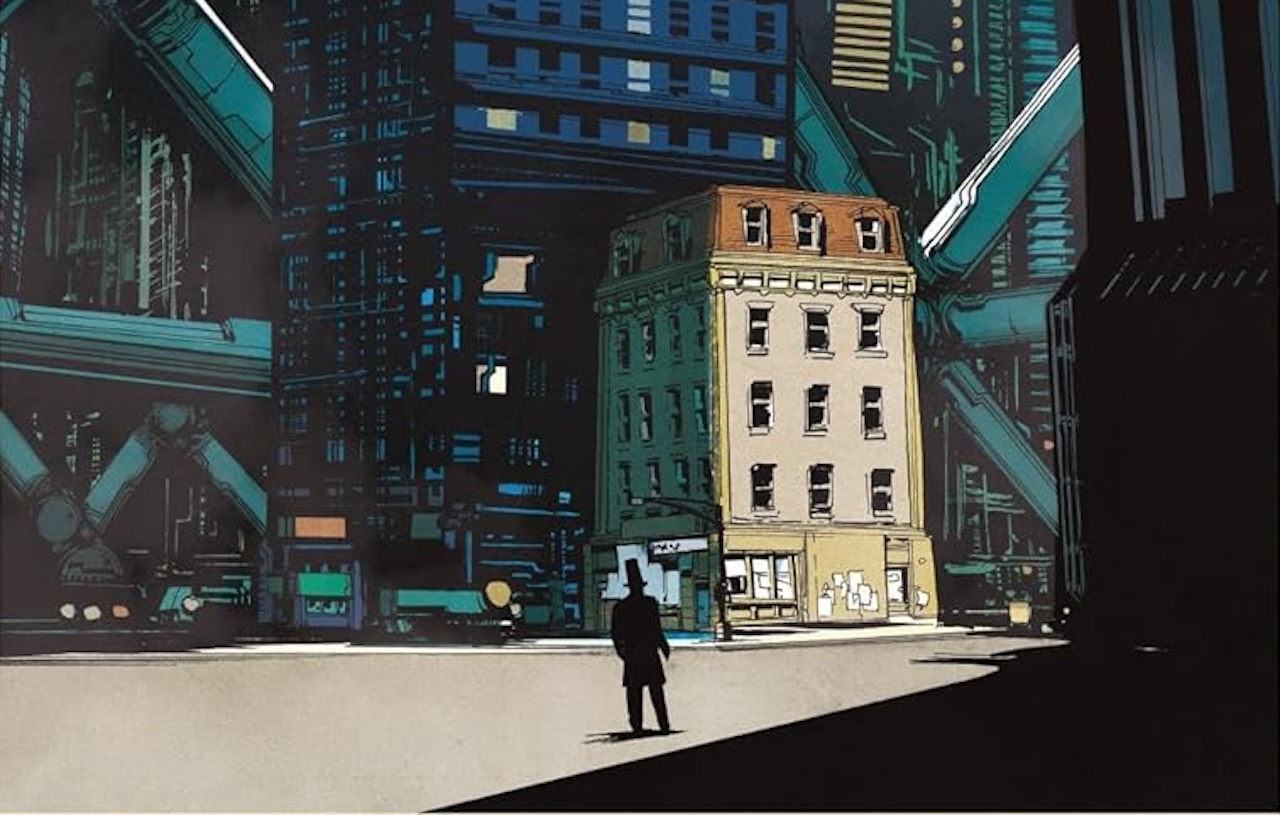
Readers will also be drawn to If Destruction Be Our Lot #1 on the strength of Andy MacDonald’s art alone. MacDonald populates each page with robots of different shapes and sizes; the Breakfast Bot is a sleek chrome kitchen on wheels, and an automated bus Abe befriends has a variety of screens lining its windows that light up with happy or sad faces, depending on its mood. Roaming the streets are massive machines that swallow “defective” robots whole; their skull-shaped visages and massive red bodies feel practically Lovecraftian. Most robots in a sci-fi series often carry the same look, but MacDonald has crafted a world of steel and circuits that rivals Star Wars’ droids.
Francesco Segala also deserves plenty of credit for bringing life to the world through his colorful art, as does Hassan Otsmane-Elhaou for his lettering. Segala bathes the pages in a warm blue glow whenever the robots walk through their shared city space, shifted to more muted tones as Abe embarks on his journey. Otsmane-Elhaou is a major reason most robots sound different, since his lettering gives each one a unique electronic voice. My favorite part? When they swear, literal nuts and bolts replace certain curse words.
Another thing to love about If Destruction Be Our Lot #1 is that it follows the current Image trend of delivering a massive-sized debut issue. Not only are you getting 52 pages worth of story, but it’s a story that actually feels worth that page count and price, which is fairly rare these days. If Destruction Be Our Lot #1 presents a truly unique angle on the idea of artificial intelligence with a story that’s witty, wise, and well-crafted, and might provide Image Comics with yet another fan-favorite series.




You must be logged in to post a comment.