


Near the end of his life in 2001, the Belgian-French zoologist Bernard Heuvelmans (b. 1916) began work on a final book, The Natural History of Hidden Animals (Routledge, 2007). This short text, largely assembled from articles originally published in the International Society of Cryptozoology’s journal, sought to chronicle the history of cryptozoology before Heuvelmans’s own mid-to-late 20th century work on the subject.
Kean University historian of science Brian Regal takes his own look at that history in Darwin and the Monsters: The Long History of Cryptozoology (Routledge, 2026). Like Heuvelmans’s posthumous treatise, Regal’s book is brief, at 151 pages, and chiefly composed of repurposed articles: two from the UK paranormal periodical Fortean Times, and one from the history of science journal Endeavour. That’s where the similarities end.
Part of the challenge in writing a history of cryptozoology is that, as an unstandardized discipline, it lacks an agreed upon definition, scope, or methodology. Each scholar must therefore decide what cryptozoology is for themselves. Heuvelmans’ understanding, as outlined in Natural History, is long, complicated, and at times contradictory, but ultimately amounts to a kind of euhemerism — the belief that all mythical monsters must be based on real animals.
As a result, Heuvelmans traced cryptozoology’s development through a number of eccentric figures who subscribed to this same basic assumption, including Dutch zoologist A.C. Oudemans, English geologist Charles Gould, German science popularizer Wilhelm Bölsche, Swedish ethnologist Gunnar Olof Hyltén-Cavallius, and America’s third president Thomas Jefferson, who speculated about the survival of mammoths and Megalonyx in the North American interior.

In contrast, Regal’s definition of cryptozoology is reductively simple — it’s just “monster hunting.” This broad definition only appears in the final pages of Darwin and the Monsters, but it’s evident from many of Regal’s examples, including sea serpents, sasquatches, and chupacabras, but also werewolves, witches, and ghosts, in addition to a notable preoccupation with humans and animals born with congenital birth defects.
As a result of these differing conceptions of what cryptozoology is, none of the historical individuals highlighted by Heuvelmans receive even a passing mention in Darwin and the Monsters, aside from Oudemans. Jefferson is mentioned, but only as a collector of Native American artifacts, with absolutely no discussion of his interest in cryptids.
This discrepancy also reflects the authors’ opposing aims. Heuvelmans argued for cryptozoology’s legitimacy as a way of understanding the natural world, while Regal’s Darwin and the Monsters treats cryptozoology as “an inconsequential, even suspect, form of inquiry.” Regal is drawn to thinkers whose work seems to invalidate cryptozoological assumptions, so he begins with the Roman writer Lucretius, who denied the existence of centaurs based on a lack of physical evidence, while omitting the Roman naturalist Pliny’s claim to have seen a dead centaur preserved in honey.
One figure both writers consider at length is Sir Richard Owen, the celebrated English paleontologist who was skeptical of sea serpents because no evidence existed beyond eyewitness accounts. As you might imagine, Heuvelmans’ and Regal’s assessment of Owen diverges sharply. Knowing that eyewitness accounts are cryptozoology’s bedrock, Heuvelmans villainizes Owen as a closed-minded authoritarian, while Regal valorizes him for favoring empirical evidence over testimony. Both views are likely caricatures; as author Boria Sax has shown, Owen may have been skeptical of sea serpents while still entertaining the possibility that pterosaurs inspired dragon legends.
When Regal wants to highlight someone from the pro-cryptozoology camp, he shockingly chooses the turn of the century occult writer Montague Summers, best known for work on witchcraft, vampires, and werewolves. Indeed, Darwin and the Monsters devotes a disproportionate amount of time to werewolves, contending that Darwin’s theory of evolution banished them from public belief, even though Darwin never wrote about lycanthropes, and “Dogmen” are some of the most popular contemporary cryptids.
Regal’s interest in werewolves and Summers reveals his own, largely unarticulated assumptions about monsters — that they’re best understood as supernatural, rather than biological. Summers, unlike Heuvelmans or the proto-cryptozoologists he cites, rejected naturalistic and euhemerist explanations, insisting instead on an esoteric, Christian framework. This suits Regal who, like marine biologist Robert L. France, views cryptozoology as less of a pseudoscience and more of an intellectual anachronism, repeatedly arguing throughout Darwin and the Monsters that cryptids are a subject best studied by folklorists rather than zoologists.
I agree with that contention, but I find this latest book from the author of the otherwise excellent Searching for Sasquatch and the laudable The Secret History of the Jersey Devil difficult to recommend. Beyond the shortcomings already noted, Darwin and the Monsters is poorly edited, with numerous typos (cryptozoologist Roy Mackal’s last name is repeatedly spelled “MacKal”) and grammatical errors (missing quotation marks chief among them), in addition to, at times, being poorly constructed. Darwin’s Monsters repeatedly restates information already adequately explained as if padding for length, and will often quote a historical figure in one paragraph before properly introducing them in the following paragraph. In Chapter 5, Regal manages the feat of discussing and quoting Sabine Baring-Gould’s The Book of Were-Wolves without ever mentioning the name of the book.
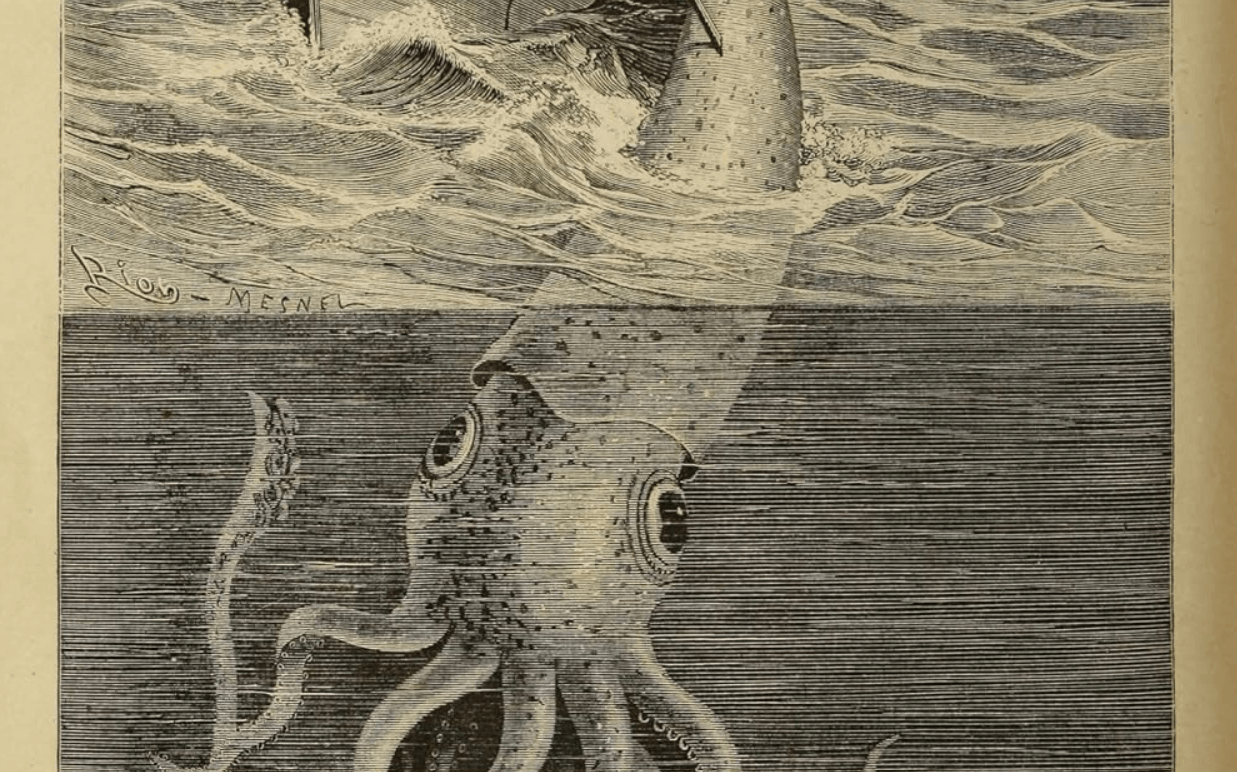
Most troubling, however, is Darwin and the Monsters: The Long History of Cryptozoology’s superficial research. In Chapter 4, Regal uncritically accepts the common claim that the Norse kraken was the giant squid, despite folklorist Michel Meurger and paleobiologist Darren Naish both having assiduously demonstrated otherwise. He also calls cryptozoology an exclusively Euro-American phenomenon, ignoring its long history in China, Vietnam, and Japan, and even mistakes “yokai” for the Japanese term for a Blemmyae. Most disappointing of all is that Heuvelmans’s The Natural History of Hidden Animals is absent from Regal’s bibliography. To put it simply, one cannot honestly claim to have written a history of cryptozoology without having read and referenced the father of cryptozoology’s own history of the field.
AIPT Science is co-presented by AIPT and the New York City Skeptics.



You must be logged in to post a comment.