

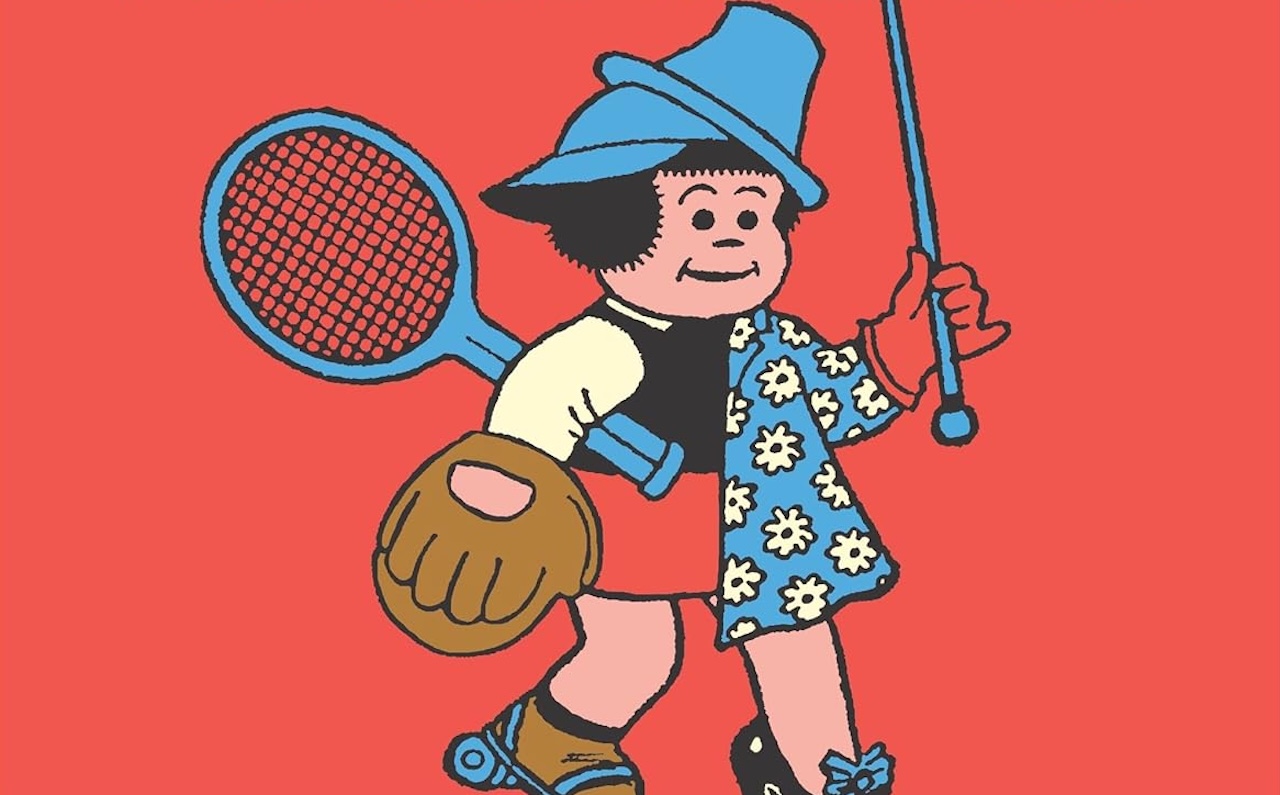

In 1925, cartoonist Ernie Bushmiller took over Fritzi Ritz from creator Larry Whittington, a comic centered around a flapper as she went about her daily chaotic life. In 1933, Bushmiller introduced Fritzi’s plucky young niece Nancy, a character he claimed he was only intent on using for a week’s worth of strips. Lo and behold, by 1938, Nancy stole the show on the daily strip and relegated her Aunt Fritzi to the Sunday weeklies. The strip is still going strong even after its creator’s passing, with a number of succeeding cartoonists over years, notably Olivia Jaimies and her ongoing successor Caroline Cash, the latter who started her tenure in January of this year.
Nancy is special. She’s not some obscure diamond in the rough that magically appeared to change comic books; she’s just Nancy, which alone laid the groundwork for one of the very few comic strips in current times that just refuses to die, and for good reason. In the recently released Nancy for All Seasons, Fantagraphics takes readers back to the classic Ernie Bushmiller days, where we’re greeted with childish glee and wonder, whether it be Sluggo being Sluggo, or Nancy thinking the riots and rumps of the local zoo will cure her tooth ache.
With that chaos in mind, the release is timed perfectly with the somewhat controversial continuation of the comic by Cash. What better than to celebrate Olivia Jaimes finally escaping her shackles as a newspaper cartoonist than to go back to the classic years of Bushmiller drawing some strangely charming nonsense?

Fantagraphics
The humor itself is a mixture of your typical comic strip with a much more experimental edge thanks to Bushmiller’s down to earth style. Nancy captures a very relaxed sense of humor that, for the time, wasn’t seen in many other strips. There would usually be some sort of crazy gimmick that followed a strip protagonist, but for Nancy the mundane everyday life was more than enough to channel that absurdity.
One could argue comics like Archie followed in its footsteps in how it emphasized the American bore. Nancy would spend her days getting into trouble with her on/off boyfriend Sluggo and then go back home to see how Aunt Fritzi was fairing as a single young guardian in the 1950s, whose own comic strip was on the verge of ending. Bushmiller took what was already a decently popular comic strip and made something rather special as he got to hone his craft with this cast of characters for a total of sixty years with Supergirl’s very own Al Plastino coming in as a buffer occasionally.
While Bushmiller didn’t create the comic strip format, he did revolutionize it so characters like Garfield (or Maxwell the Magic Cat from Alan Moore, if you want to get obscure) could exist in an easier to digest formula. Every panel, joke, and minuscule plot line reminds the average comic cartoonist that comic strips aren’t easy and they take a great amount of care to say something in their daily brevity. You could create something comedic like Nancy, Little Lulu, or even Popeye, or you could make an adventurous drama like Doc Savage, but the formula has to be exact for it to make an impact.

Fantagraphics
Moving on, the art of a cartoon is, undoubtedly, the most important factor in its creation and overall existence. You have to create a design so memorable but simple that it can be replicated and revitalized for years to come in new styles, and Bushmiller’s uniquely identifiable style made this possible for Nancy. Our titular girl’s design highlights his rather childish approach to how everyone is drawn, making it so you could easily stamp Nancy and Sluggo on paper without overt detail. Even as the characters evolved past Ernie Bushmiller, the characters still remain remarkably the same when translated to other styles.
All of that said, Nancy For All Seasons is exactly as the title says. Bushmiller’s anecdotes range from simple to absurd, and here we get a great look at how versatile and various her stories are, with emphasis on various. Packed with over 300 cartoons from the early 1950s, there’s more than enough to satisfy those looking for cutesy gags, nostalgia for a childlike worldview, or simply just want a hearty chuckle at each flip of the page. Her stories are lighthearted and lively, and perfectly reflect the joys and pitfalls of growing up in this turbulent life, which lends itself to the staying power it still has. And with the recent development of Aunt Fritzi’s newfound bisexuality putting the limelight back on the strip, there could not have been a better time for Fantagraphics to put this collection out.




You must be logged in to post a comment.