

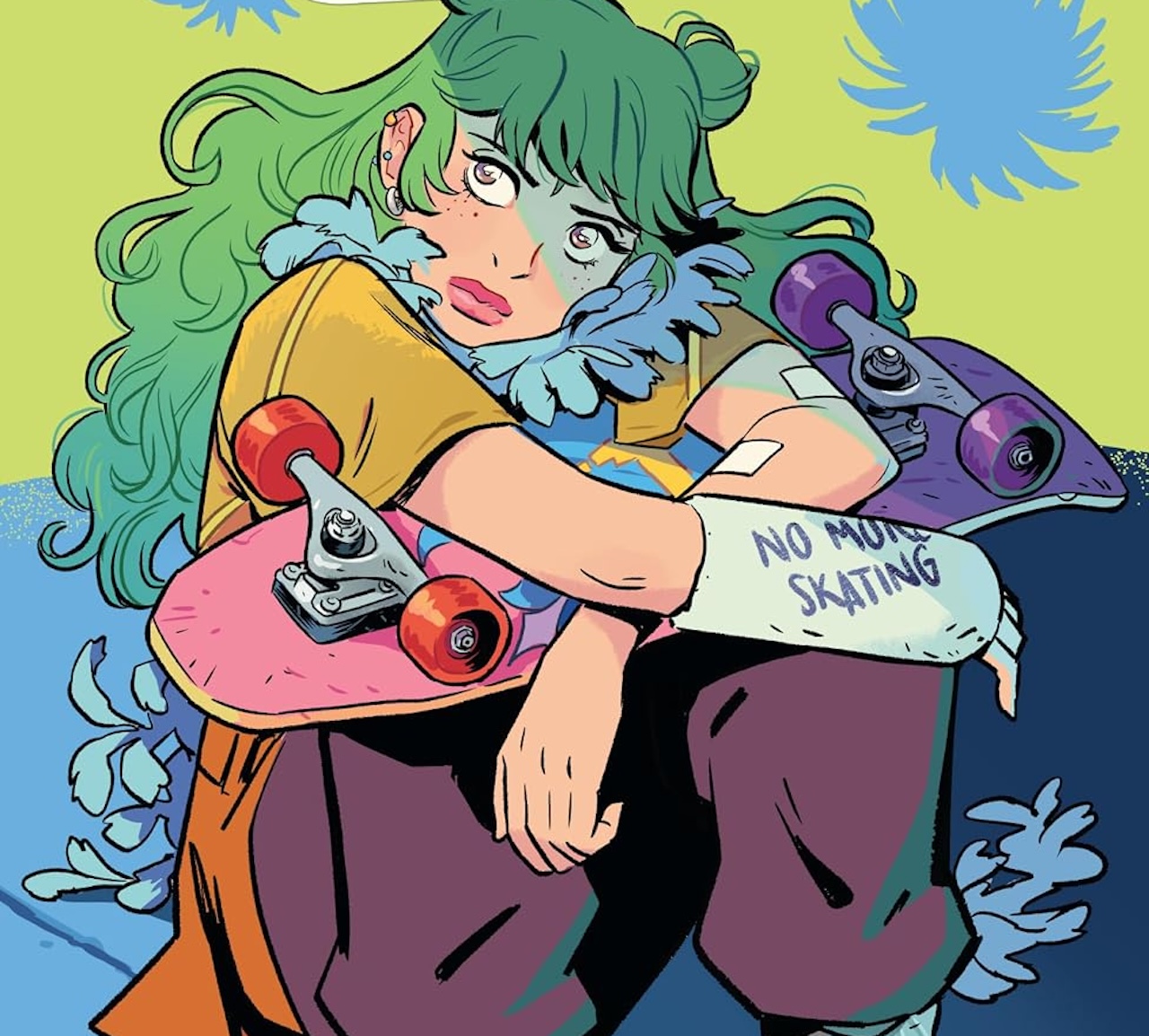

Skate Ali is the kind of comic that has such a clear identity, it’s hard to believe it’s an original property. Sam Humphries, Kelly Sue DeConnick, and Natacha Bustos’ years-long work builds out a fascist future where skateboarding is illegal. The first issue introduced “the rush,” a kind of superpower skaters have, as well as a rich world of skate gangs. Now aware of a whole world of skate culture, Ali must decide whether to remain a loner or open up to it. Oh, and she needs to avoid getting arrested by the fascist goon squad!
Skate Ali #2 opens where we left off, as armored men with glowing sticks are chasing Ali. They’re cracking down on all the skaters, but we soon see they’re using the Rush to escape by flipping, flying, and zipping away. Ali doesn’t know how to use or tap into it, and thus is captured. This leads her to reconnect with the skaters she met last issue and to make a hard decision to befriend these well-meaning strangers.
As far as second issues go, the creative team gives us some answers, like whether Ali has the ability to use the Rush, but also the mysterious talking skateboard. I wasn’t expecting the skateboard bit, and while it’s even more fantastical than a skater superpower, it does open up the story to explore the careful worldbuilding. This issue also hints at a possible romance, further complicating Ali’s already tricky life. That includes her father, who gets another check-in, and a reminder that Ali and her dad can’t move, or else her mom will never find them.

Run!
Credit: Dark Horse
This issue feels like it’s going in circles a bit, reminding us of things that were just established last issue. The father, for instance, is here more of a reminder of his near catatonic state. Ali also gets a reintroduction to the skate gang, including a second chance, even though she has already used up the first. I wouldn’t say the plotting is spinning its wheels, but it’s certainly slowed down to further establish key aspects.
Bustos’s art continues to be a huge selling point for the series. The colors, the kinetic energy, the use of sound effects, and the page layout all come together for a bright and hugely optimistic read. Bustos doesn’t skimp on details in backgrounds, yet maintains a cartoony vibe.
Skate Ali #2 deepens its imaginative world while strengthening Ali’s relationships and introducing a few compelling elements. The slower pace occasionally feels repetitive, but the series never loses its personality. Humphries and DeConnick continue to build a setting that feels fully realized, while Bustos delivers another visually exhilarating issue filled with motion, style, and charm. Even with a quieter chapter, there’s plenty here to keep readers invested in where Ali’s journey heads next.




You must be logged in to post a comment.