

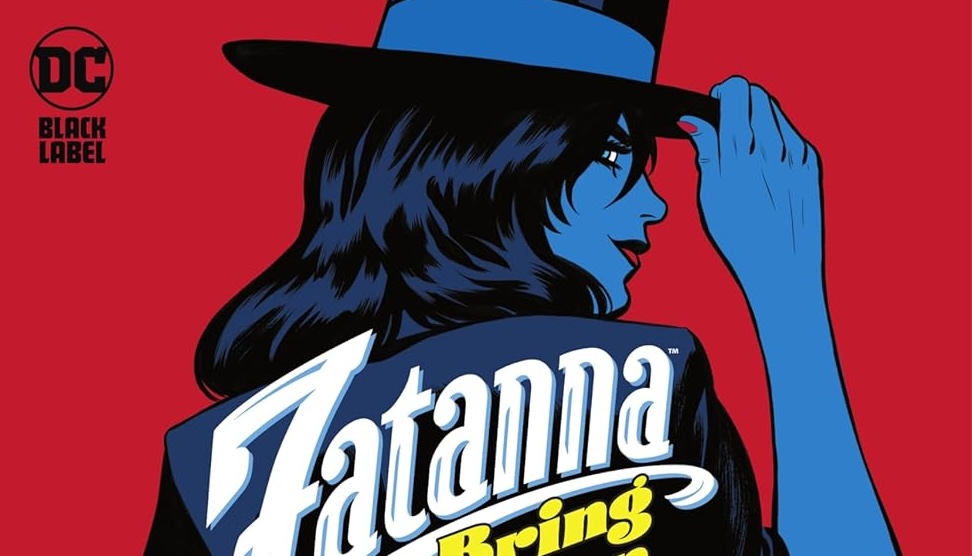

Are you familiar with Zatanna Zatara, the daughter of John Zatara? If not, here are some of her accolades: she served as a member of the Justice League of America, the Justice League, and Justice League Dark. She was created by writer Gardner Fox, artist Murphy Anderson, and through editor Julius Schwartz. Some of her most well-known appearances come from varying media, such as Zatanna by Paul Dini, the Young Justice cartoon, and most recently through various iterations of Justice League: Dark as one of the team’s main members.
So, what does any of this have to do with Zatanna: Bring Down the House? Well, not much. Except for the fact that this version of Zatanna, as depicted by writer Mariko Tamaki and artist Javier Rodríguez, is a bit different than the one readers may be familiar with. In fact, she’s very different because she lacks the confidence and charm readers may be accustomed to. That said, the issue is very strong for several reasons.

DC Comics
Black Label as a format seems to be gaining more popularity lately, with several titles released under this umbrella. Here, I think it works out rather well given the ominous nature and added intensity it’s able to contain. While the story is focused on Zatanna’s big break when she finally becomes a magician who can…well, bring down the house. So, the character is a bit different; she’s unsure of herself, and a bit of a loner, while having a bit of snark to her at times. Tamaki draws to her strengths here and gives readers her own twist on Zatanna.

DC Comics
As the narrative progresses, the focus of the story becomes clearer. Zatanna is okay. Like, she’s just adequate in life right now; and she’s happy with that! But, when danger comes bursting out, she’s going to have to change from just another trickster in Vegas to a hero who’s considered one of the most powerful magicians. While this sets up issue #2 rather well, it does leave this one as more of a prelude. While this might seem like it makes for a lackluster story, it takes an opportunity and pivots to introduce readers to a version of Zatanna that people may not be familiar with by giving insight into her psyche. This makes for an interesting story nonetheless by spending the majority of its time on why Zatanna is comfortable remaining invisible.

DC Comics
Another notable strength is the page count and wider format. Once again, Black Label appears to be providing more creative freedom. Here, Javier Rodríguez both pencils and colors the story which certainly works to the story’s advantage. While the pages are wider and longer, it’s given the narrative a notable boost. While this opens room for a more detailed environment, it also provides a bit of a psychedelic element. Even his softer penciling strategy works wonders in this story. In a style similar to Darwyn Cooke, Chris Samnee, and Leonardo Romero, Rodríguez is excellent at presenting wildly expressive art with simple line work. This makes for a bit of an animated story built off the ability to have things pop out and catch one’s attention; like someone’s reflection in a pair of sunglasses or someone being sawed in half. Additionally, the soft tones provided by the colors present a calm atmosphere to any flashbacks while also contrasting the more eerie scenes with a false sense of security.
Altogether, this is a fun introductory issue. A lot of things go right, and very few miss the mark. While it’s a bit of a slower buildup, it does feel like the payoff will be worth it. The double mystery for its cliffhanger similarly makes the story seem worth it already, as its hook for continuing is rather powerful. Additionally, the art in the story is beautiful from cover to cover, including its cover, and fits the theme perfectly. Altogether, this is a great first issue in Zatanna’s newest big story.




You must be logged in to post a comment Login