

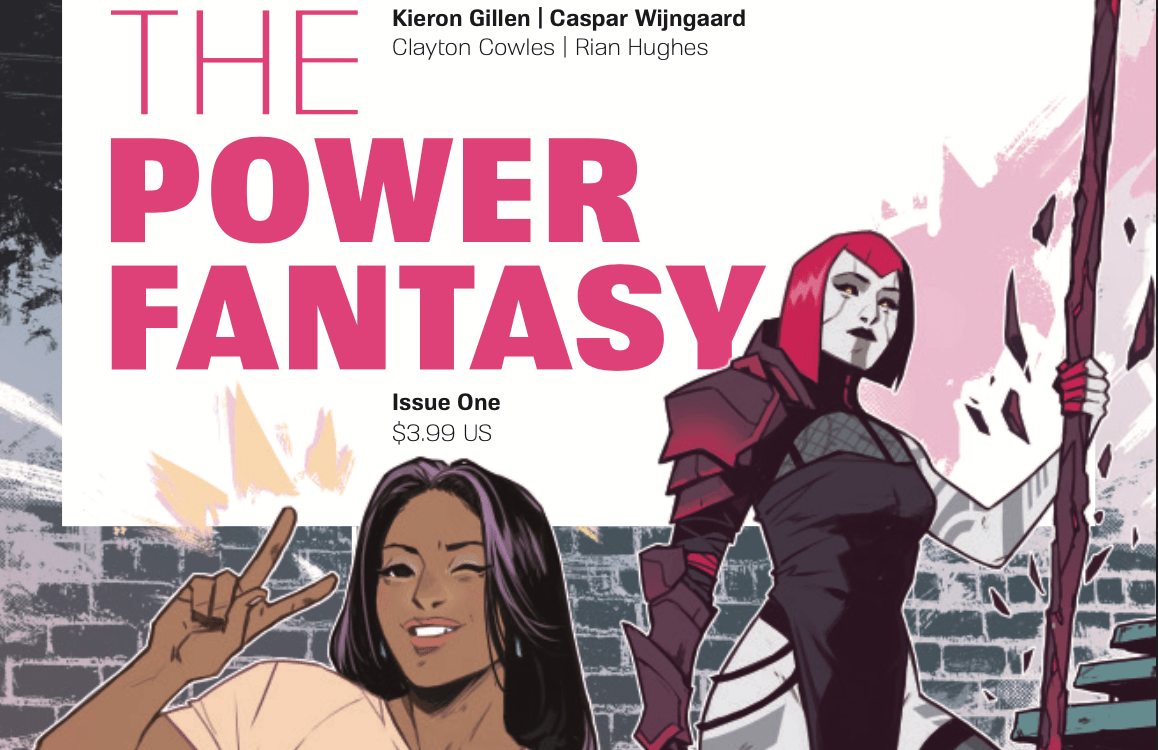

Characters like Superman, Wonder Woman, and Iron Man epitomize power fantasies with their extraordinary abilities and heroic deeds, but what if their powers could get us all killed? It’s a concept explored in Kieron Gillen and Caspar Wijngaard’s The Power Fantasy, a new series launching on August 7th. In a world where six superheroes could end everything if they simply fight, fighting is the scariest thing imaginable. It’s what happens when they’re not fighting that could save us.
The philosophical nature of The Power Fantasy can be compared to The Watchmen, as it elevates the superhero tropes to something relatable in a world where nuclear war always looms. The first issue digs deeply into complex themes and existential questions, exploring the nature of morality, power, identity, and the human condition. We get that via careful worldbuilding, well-written dialogue, and different dynamics between the super-powered people.
The first issue opens by introducing readers to two of the six super-powered people known as “the Nuclear Family.” Through conversation and the expression of their powers we get a sense of the complexity of each as they aren’t simply saving everyone just because, or abusing the powers either. It’s set in an alternate Earth similar to ours but had a huge shift after World War II. It makes the world familiar but different enough to allow the creators to play in a creative sandbox. By the end of the issue, they’re all quite different, with some concerned with keeping the peace, while others want to control or act in ways that could overflow it.

Courtesy Image
One of the key characters is Etienne Lux, a wise hero with incredible telepathic abilities. As Gillen told AIPT, he’s a “prime mover” and one of the most important characters in the issue. He comes off as kind, intelligent, and with the greater good in mind. Whether that means he’s purely good is for the reader to decide, which is part of the fun of this series right off the bat. Like average people, there are complexities at work here that allow them to make decisions that could end or save lives. You’ll ponder whether the decisions made on this issue were right and what the implications could mean going forward.
Wijngaard is impeccable at drawing you into each character’s perspective and worldview. They’re easy to relate to and see as human beings, even the bad ones. Some characters may not look like normal humans, and Wijngaard leans into their weirdness. There’s also a nice balance of types of characters. They’re not all white men, and each seems to have a different perspective. It’s clear a lot of attention was paid to character design.
Ultimately, what characters say and do in this first issue has psychological dimensions. Multiple heroes act or don’t, and that matters. Gillen and Wijngaard set up a narrative that allows them to explore what it means to make decisions that could end the world, save a few lives, or kill many for the greater good. The characters feel fully realized and complex in their own right, making it easy to commiserate with them or hate them.
It’s also not all talking, though there is plenty, as Wijngaard shows off the might of some of these characters. He also shows what they can stand, with some gory visuals thrown in that’ll have you gritting your teeth. When characters use their powers, it’s awe-inspiring. Take, for instance, Etienne, who has interesting white shapes floating about when his powers are doing their thing. It separates these super powered folks from common superhero tropes.
Power Fantasy is a rich and rewarding story about existential questions when super powered gods walk amongst us. The first issue engages your mind while dazzling you with incredible visuals. It prompts you to reflect on complex moral and existential questions while enjoying its nuanced characters. In a world where nuclear war is still possible and war rages overseas, The Power Fantasy feels well-timed and apt.
For more on The Power Fantasy, don’t miss our exclusive interview with Gillen and Wijngaard.




You must be logged in to post a comment Login