

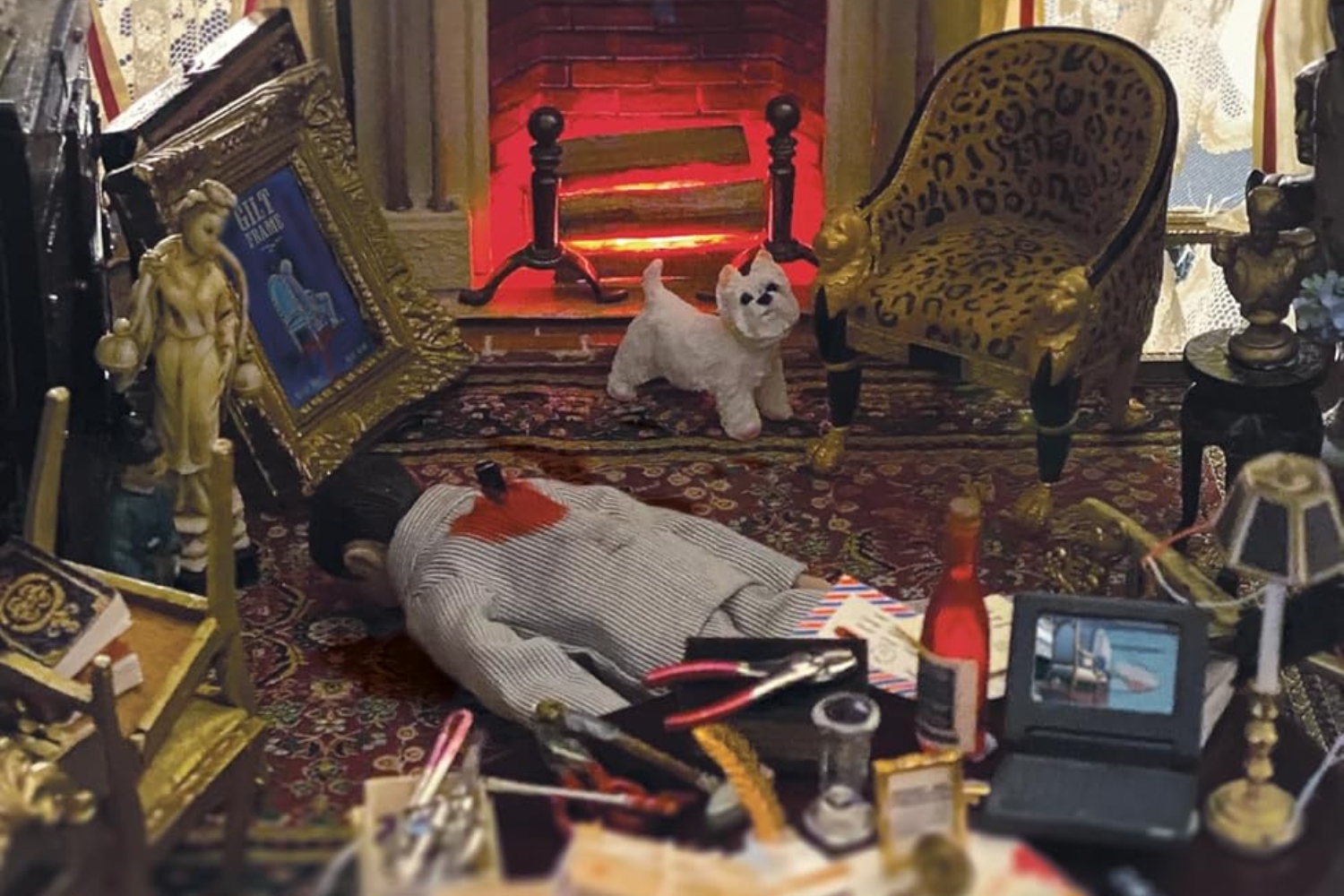

With issue #1, I thought Gilt Frame was a true work of art. Coming together the way only family can, Matt and Margie Kindt had crafted this endearing and multifaceted murder mystery involving a crime-solving aunt-nephew and a mystery surrounding a dead art dealer. But as we enter Gilt Frame #2, I see this series may actually be one of those Magic Eye photos.
Because as we’re seeing deeper and deeper into Gilt Frame, it may not have been what I initially thought. Sure, there’s still the murder of Louis Anouilh to solve, but a lot of what made Gilt Frame‘s debut so endearing — the Wes Anderson-ian charm and influence, the greater focus on Sam and Merry, the general playfulness — seems to have been diminished or removed outright. What we get in Gilt Frame #2, then, is a very involved police procedural, with Sam and Merry joining a series of other suspects as they’re interrogated by the Paris PD.

Courtesy of Dark Horse Comics.
And, sure, I can embrace the “sudden” shift to an extent because that’s where we were seemingly always headed. The larger issue, then, is two-fold. One, it’s a rather involved procedural, and the bulk of this 64-page issue is devoted to individual interrogations — so expect a slower, especially deliberate pace and tone than the wonderfully breezy tendencies of issue #1. The second issue obviously stems from this core approach: not everyone is all that interesting. It’s one thing to take the spotlight away from Sam and Merry, especially as they were just developing this wonderful dynamic. It’s another, then, when the suspects can be hit or miss.
Because Lauren, Louis’ great-niece, feels a little stereotypical, cast as some brat who likely did it as a means of securing her inheritance from Louis’ estate. (Her fiancé, Aldo, is similarly kind of bland and/or one-dimensional as “whimpering idiot.”) On the upside, Pam, Louis’ assistant, is both really textured and has some great layers and levels involved. (She has a family connection that really plays well with the book’s larger themes and casts her suspect status in a really interesting light.) Similarly, the man leading the case, Inspector Alois Vaillant, is like Sherlock Holmes meets Hercule Poirot, and that kind of big personality makes latching on very easy and makes the methodical pacing feel a touch more compelling.

Courtesy of Dark Horse Comics.
And so given the kind of “meh” connection you’ll likely share with some of these characters, issue #2 feels a bit like a slog and a generous enough uptick in other parts. And the whole thing’s complicated by other issues, too. Like, the way Sam and Merry are regarded as cracking the case, but not in a way that helps further that mystery or even our still-developing connection with the pair.
And there were parts where the case was trying to seem both simple and oddly complicated, and rather than stoking any interest, it just felt a little confusing and a touch convoluted. It was all a representation of the violent turn that this series took, and how we were in one speed and suddenly dropped to another with very little of what worked from issue #1. It almost felt like we skipped an issue, or that we’d jumped into another book entirely, and that disorientation was less novel and more irksome.
The only way I really knew this was still Gilt Frame was the art. As many issues as the Kindts had in #2, Matt Kindt’s art really felt like a massive step up from issue #2 in a few key ways. (That’s saying something.) For one, despite the slower turn and slightly bottle episode-esque feel, Kindt managed to give us lots of great moments that centered around the people. The way he uses these characters to interact and emote is truly unmatched, and even the characters that felt irksome (like Aldo) felt more dynamic and sincere when you considered how they physically existed in the world (and not so much their personality).

Courtesy of Dark Horse Comics.
Be it the stuff with the Inspector, where you could feel the drama associated with cop stories, or the way Sam and Merry’s dynamic is very much in their presentation, it was the art where the thing I really wanted (that purer, more direct connection) happened in spades. It’s a testament to Kindt’s skills, yeah, but also what happens when this book simplifies itself even further and lets the humanity sing without the gimmicks and whatnot.
But we also got some really great “gimmicks” here to boot. The breakdown of the crime scene toward the issue’s beginning, for instance, was where that Anderson-ian charm really existed in all its charming splendor. It’s a way for Kindt to use that which he does best (his unique approach to art) to explore these ideas and even inspirations.
I also love that the actual interrogations were treated differently. (Even documents that everyone signed hummed with their respective personalities.) So, while Aldo had brief flashbacks, for instance, Pam’s interrogation had more robust flashbacks. That could mean a few things, but it felt like the art’s way of showing who we should connect with (and maybe why) as well as using space and time and even memory to help us explore these characters in compelling enough ways (even if the “results” weren’t always so compelling). It’s good to see an approach that countered or balanced the slower procedural, and that Kindt was doing something to keep us engaged even as things often felt a little too methodical at times.

Courtesy of Dark Horse Comics.
And that may ultimately explain the bulk of Gilt Frame #2: the pivot just felt sluggish. Sure, the art gave us what we needed to explore and understand this cast, but the storyline “skeleton” wasn’t done in a way to mirror or keep pace with the art. What we got, then, was something that felt charming and interesting, and hinted at things and ideas the way art can, but just felt half-cocked in almost every other aspect. An issue that had big dreams in mind but not the cohesiveness and follow-through necessary to achieve these in a more meaningful sense.
Don’t get me wrong, I’m mostly still interested in Gilt Frame as a whole, as there’s still some beauty and tragedy here for us to better explore. But with only one issue left, the book needs to align things in a way to bring back that liveliness and charm and still capitalize on a big mystery. Otherwise, I’ll be better left looking to other works of art for my various emotional needs.




You must be logged in to post a comment Login