


Some stories enter the world and find a home/audience right away. Meanwhile, other stories need a little more time to develop or finds their legs. In the case of The Weakest Fish, while it’s taken some two decades and a couple mediums for the story to (nearly) enter the world, the wait should be more than worth it.
Written by filmmaker Bryan Wizemann (About Sunny), and with art by Edgar Camacho (Onion Skin), The Weakest Fish is a “coming-of-age thriller” set in 1961 Texas. In it, we follow Tim, who after witnessing his mother having an affair, departs his family’s home in Texas for Mexico in a journey of “self-discovery that explores themes of love and jealousy, loss and fear, escape and redemption, superstition and the natural world.” (There’s a reason it’s likened to both Walkabout and No Country for Old Men.) With Wizemann drawing on his own background, and Camacho crafting a lush world that balances grit and child-like innocence, The Weakest Fish is a profound story about facing life when you may not be ready for its many hills and valleys.
The Weakest Fish is currently crowdfunding via Zoop — the campaign, which runs through Friday, December 6, has already raised the bulk of its $1,500 goal. (Head here to contribute.) To get a better understanding of The Weakest Fish, both Wizemann and Camacho were kind enough to field some recent questions via email. That includes the story’s development cycle, the drama and emotionality of this narrative, their collaborative process, and the development of Tim the lead.
AIPT: The screenplay apparently came about circa 1999. How does this final graphic novel version compare to the original script?
Bryan Wizemann: I originally wrote this script in 1999 while living in Ithaca, New York. At the time, it was a dark fantasy, but it never quite came together the way I envisioned. I was always captivated by the central idea, so kept returning to it over the years. Gradually I began stripping away the fantasy elements until only the core of the story was left. While it still carries some of the lyrical qualities of those early drafts, everything in the narrative is now grounded in reality — everything you’re introduced to in the narrative happens.
AIPT: Similarly, what’s it like for this story to come to life after some 20-plus years?
BW: Scripts are just an idea for a film, a blueprint, and for that reason not the most entertaining thing to read. Or at least reading a script requires a lot of performance and imagination. Given that, it’s satisfying to have a script turn into a tangible finished product. Many people over the years said they thought this would make a good graphic novel, so I finally pulled the trigger on making that happen.
AIPT: What’s some of the advantages of moving from film to comics? What about any disadvantages?
BW: Up to this point, I’ve mainly focused on writing for the screen. I certainly needed help with the transition for this project, and the illustrator Edgar Camacho was able to do a lot of the heavy lifting in the adaptation in terms of layout and sequential storytelling.

AIPT: This story obviously mines your personal life, Bryan — is there any hesitation in doing so? Or, does that whole process stir up old feelings?
BW: All my work, for better or worse, seems to mine my personal life, or at least some aspect of it that’s not always fun to talk about. It does stir up old feelings but helps excise some demons as well. I’m not sure if one can write without eventually revealing something personal, whether they want to or not.
AIPT: Edgar, what was the collaborative process like for Bryan, who comes from that film background? Did you find it easier than some other comics projects maybe?
Edgar Camacho: With Bryan, who comes from the world of cinema, it was a very open collaboration. Like comics, the basis of his medium is the image, so by showing him my sketches of the scenes and the pages, I think he was able to understand me better than with words. What was interesting for me, and fun, was interpreting his film script and putting it into comic pages with his narrative. Bryan gave me free rein to propose and interpret his work in comic format, so I am infinitely grateful to him for giving me this opportunity.
AIPT: Why that specific place in Texas (Nacogdoches) and that era — what about it felt significant or interesting?
BW: I have a good friend who lives in Marfa (Texas), and I grew up in Las Vegas, so the American West has always interested me. It seems to hold a lot of contradictions easily. I also practically needed to set it in a place where it’s conceivable that a young boy could make his way on foot over a week or so to Mexico.
AIPT: This story also explores/combines Southern Gothic folklore and Mexican culture. How do these traditions compare, and what do you think they offer or add to the core story?
BW: Growing up in Las Vegas, I’ve had many friends from Mexico, including my first love, and it’s always held a kind of otherworldly fascination for me. They certainly know how to honor death and dying better than our culture, and given the themes of the story, that inclusion made sense to me.

AIPT: I like that the family life in the early book isn’t obviously bad (until it is…), and there’s some magic there (literally). Why is that important — is it about setting expectations and/or really challenging your readers?
BW: Well, the story implies the backstory of the father, that he was a Vaudevillian-type magician, and his wife his assistant who was spun around the target wheel while knives were thrown all around her. There’s no actual magic in the film, in fact, the father Jackson goes out of his way to dispel his son any notions of a belief in real magic. It does however lean on a kind of lyrical realism, where things like fate or guides or premonitions factor into how the story unfolds. That’s something I’ve always been attracted to in any medium.
AIPT: Tim is a really interesting lead — I sense a lot of energy and curiosity but he’s clearly at a crossroads. How do you describe or engage with him?
BW: I like Tim, though it was work to find a way into that character. He’s not initially that active until he’s called upon to be, and there are moments where he is deluding himself regarding the trauma he experienced. I think both he and his father through the course of the story are both figuring out how to confront death and loss, albeit in very different ways.
AIPT: I’m interested in the theme of magic/trickery/etc. Why is that an interesting device leading into the story and what happens later on in the story?
BW: Yeah, I wanted the reality of the film to be about magic, but magic as fakery and entertainment, and still have the feel of the story feel magical in a sense that it’s almost a dreamlike journey. Setting it in the past certainly helps the themes on tones on that front.

AIPT: Do you have a favorite scene/moment from the story, something that speaks to the larger themes emotions or premise?
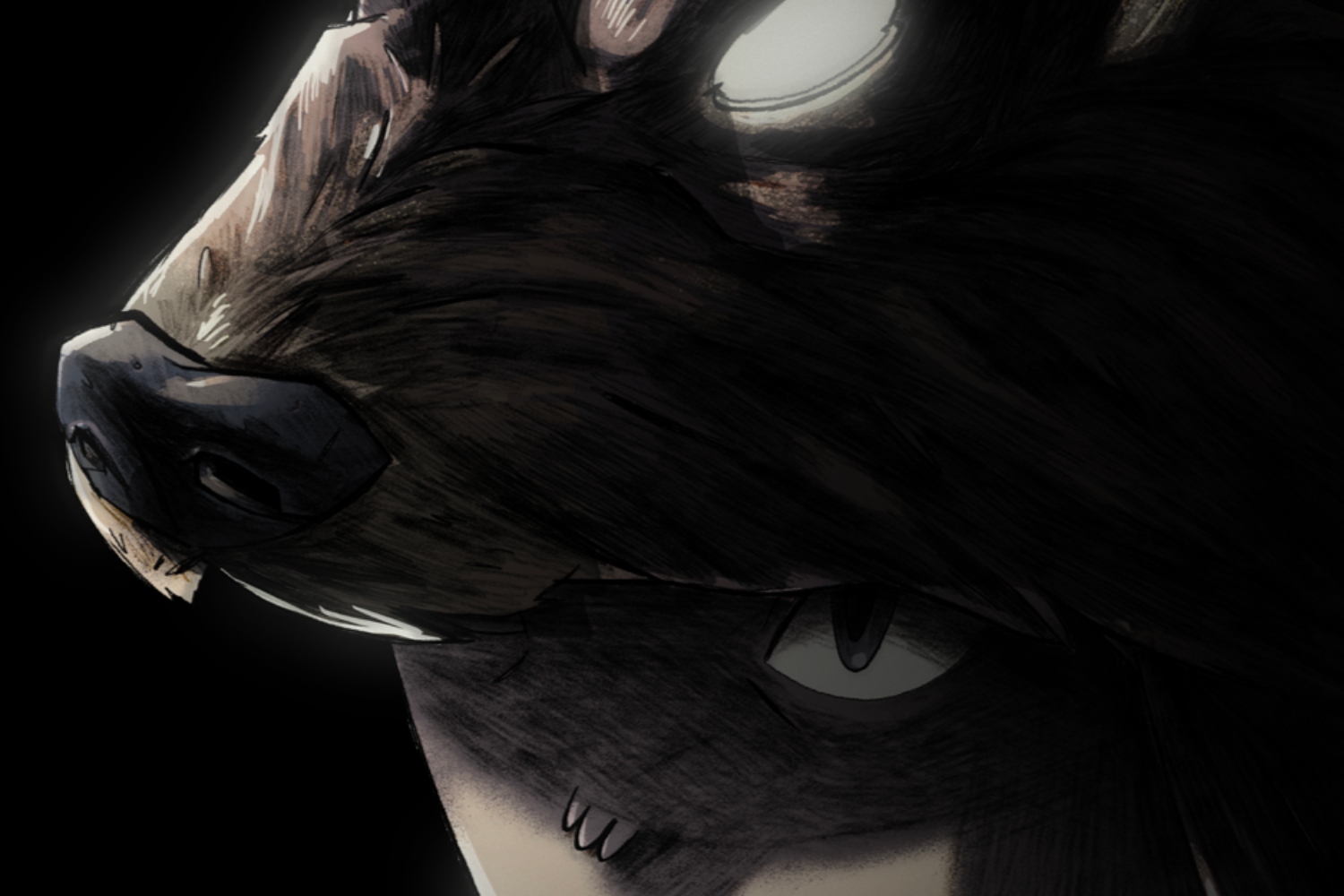
BW: I think the end of the film is effective when Tim and his father both have to face the truth about their situation. There’s real love there, even though the events that transpired mean they will live separate lives. As far as moments, there’s a nice scene where Tim finds a captured coywolf, and has to use its expired body for warmth. He ends up skinning the animal to make a kind of coat of hide, and that gives him a kind of unique armor that he wears for security while alone. It’s where the cover image comes from.
AIPT: Is there anything else we should know about this story, film, comics, art, life, etc.?
BW: Well, if your readers have gotten this far, it’s appreciated. I should say my film work can be found at bryanwizemann.com. And, of course, if you’d like to support our campaign and order a copy of the graphic novel, just visit [the Zoop page].



You must be logged in to post a comment.