

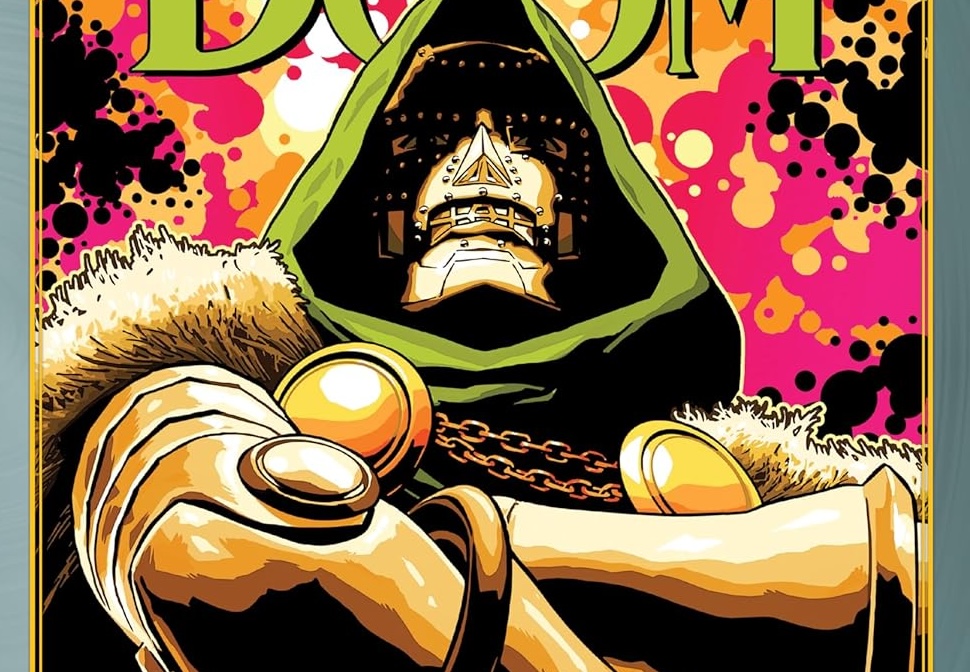

We are about to get Doctor Doom on everything, with the character getting its MCU screen debut with Robert Downey Jr. returning to put his own spin on the iconic villain. The comic universe is getting its fair share of Victor related content, with the upcoming One World Under Doom crossover about to drop. So, it seems like a good time to get some noteworthy Doom story arcs reprinted and on bookshelves, starting with the 2019 self-titled run by Christopher Cantwell. Doctor Doom by Cantwell & Larroca is not the character’s greatest storyline, but it is an enjoyable modern interpretation of the character that is likely closer to what Marvel plans to adapt to the screen than his classic ’60s and ’70s variations.
Collected in this trade are all ten issues of the 2019-2020 series by Cantwell and Salvador Larroca, along with additional material from various crossovers from that time. Plot wise, it begins with Victor Von Doom grappling with visions of an alternate life — a simpler existence as a family man — before being accused of orchestrating a catastrophic terrorist attack on the Earth’s first artificial black hole. Stripped of his title, exiled from Latveria, and hunted as a fugitive, Doom embarks on a dark journey to clear his name and uncover the truth. Along the way, he encounters allies and adversaries, including Kang the Conqueror, Taskmaster, and M.O.D.O.K., while navigating a complex web of intrigue that forces him to confront both his ideals and his flaws. The series blends political intrigue, philosophical reflection, and moments of over-the-top action, delivering a narrative that reexamines Doom’s identity as both a villain and a leader.

Marvel
I’m a fan of Christopher Cantwell’s writing; his Iron Man run was highly underrated in my opinion. His interpretation of Doom reflects the same depth and introspection seen in his other works, exploring flawed, complex characters. Doctor Doom excels when it humanizes the megalomaniacal dictator, treating him as both an imposing figure and a man grappling with existential questions. Additionally, the dialogue captures Doom’s razor-sharp intellect and arrogance while also revealing glimpses of his vulnerability.
However, unlike his Iron Man run, this Doom title occasionally falters in its narrative structure. The pacing can feel uneven, with some plot threads rushed and others lingering without resolution. Additionally, the tonal shifts between Doom’s introspection and the larger-than-life superhero drama are more jarring than in Cantwell’s more grounded works. Still, the series demonstrates his skill at crafting morally ambiguous characters, even if it doesn’t always reach the quality of his other works.

Marvel Comics
The art is a mixed bag. Love him or hate him, Salvador Larroca’s line work is competent when the script calls for representations of Doom’s regal and imposing presence or detailed illustrations of armor, technology, and Latverian landscapes. However, his handling of human characters often lacks the same level of nuance, with stiff, overly smoothed facial expressions that can feel disconnected from the emotional weight of the narrative. This inconsistency is especially noticeable in quieter, dialogue-driven scenes. I did appreciate the vibrant colors, although they didn’t always gel with the narrative tone. While the art serves the story well during action-heavy sequences and Doom-centric moments, it feels like his contributions were not fitting for the intimate and grounded elements of Cantwell’s script.
While not a necessary run to understand the beating, brutal heart under the armor, Doctor Doom by Cantwell & Larroca is an entirely competent modern version of the character that should interest readers looking for a fresh, introspective take on Marvel’s iconic villain. For readers willing to overlook its flaws, this run offers a modern perspective on one of comics’ most enduring antiheroes.




You must be logged in to post a comment.