

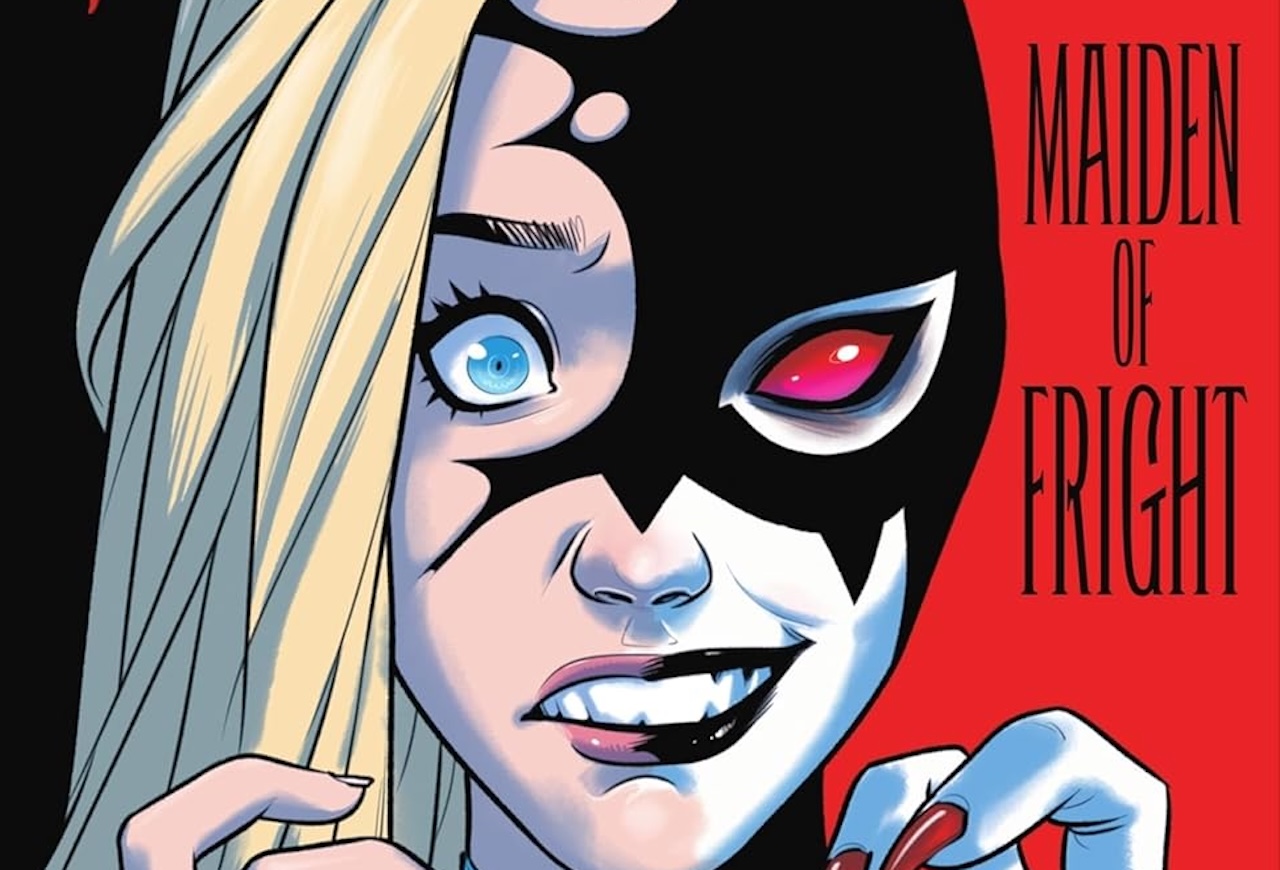

The Superman brand is enjoying a strong renaissance in 2025. Not only is James Gunn’s Superman film starring David Corenswet right around the corner, but even the Superman Family of comics is stepping up its game. DC Comics isn’t just promoting the Man of Steel with the Summer of Superman event, but the majority of books are getting their best stories told with talented creators.
Continuing that trend is Sophie Campbell’s Supergirl, with issue #3 still exceeding expectations. Continuing the “Misadventures in Midvale” storyline, Kara Zor-El now has an idea of what’s motivating Lesla-Lar to usurp both her identity and her adoptive family, the Danvers. Though Kara thinks Lesla is driven by loneliness, in reality, she’s craving validation. This has consistently been at the forefront of Lesla’s character arc, with Campbell depicting her attention-grabbing antics with child-like mischief.

DC Comics
This mischief is also best captured with the overall silliness of Lesla’s schemes, such as using black kryptonite to draw out Kara’s darker impulses as Satan Girl. Apart from Campbell exploring how a lack of validation has robbed Lesla of emotional growth as a person, Lesla’s Satan Girl gimmick serves another narrative purpose: it’s an opportunity to explore Kara’s own frustrations that she keeps bottled up – frustrations like always needing to be “good” because she’s Supergirl and therefore associated with Superman.
Kara’s brief stint as Satan Girl also shows her desire to be seen as her own person and not as an extension of her famous cousin. This is a trait she shares with Power Girl, her Earth-2 doppelgänger who chose a different name and costume for that same reason prior to Crisis on Infinite Earths destroying her world. The other thing that’s brilliant about this setup is that it also shows Kara’s conflicted feelings about wanting to be her authentic self, but also feeling a responsibility to use her Kryptonian powers for good.

DC Comics
In juxtaposition with Lesla, unleashing Kara’s darker impulses and how she deals with the aftermath of that shows how important relationships are to a young person’s emotional growth. Campbell captures this brilliantly by depicting Kara as not being angry and resentful towards Lesla, once she understands the true circumstances of her villainous actions. Rather than being driven by malice, Kara recognizes Lesla’s need for a friend.
Another way that Campbell succinctly explores the importance of relationships to emotional growth is through Kara’s own relationships with the Danvers and Lena Luthor. Not only has being accepted by the Danvers helped build Kara’s confidence in herself to the point of not needing validation from the public, but Kara being able to validate herself allows her to pursue a heroic lifestyle for honest reasons. Additionally, Campbell shows the Danvers are not pushovers. Once they become aware of what’s going on, they are shown to hold Lesla accountable for her actions – especially since she took away their choice to take her in.

DC Comics
In the case of Lena, Kara has every reason to be distrustful of a Luthor, which is acknowledged in this storyline. But rather than run on the assumption that every Luthor is a self-serving narcissist, the Kara and Lena relationship is used to show how much the Girl of Steel has grown since the first time she arrived on Earth. Whereas she was shown to be very distrustful of others at first (at least if her New 52 origin is still canon), Kara’s relationship with Lena shows how much she values friendship, and that she does give people a chance to get to know her.
Art-wise, Campbell continues to deliver pages that are both energetic and highly engaging. Every character is expressive, which allows each scene to speak for itself, even without the text to contextualize what’s going on. Not only does Campbell excel at conveying different states of emotion, but she also expertly drives the action through her panel layouts and character poses. As if things couldn’t get any better, Campbell ends issue #3 on a major cliffhanger that promises an even more exciting issue #4 – especially since it hints at a return to Kandor, and further exploration of Kryptonian culture and its justice system.
All in all, Campbell’s Supergirl continues to set a gold standard in comics storytelling. It’s a comic that honors the heroine’s Silver Age roots while still telling a modern story. Campbell also does an excellent job at balancing out the sillier aspects of the story’s Silver Age elements while still affording the characters depth.




You must be logged in to post a comment.