

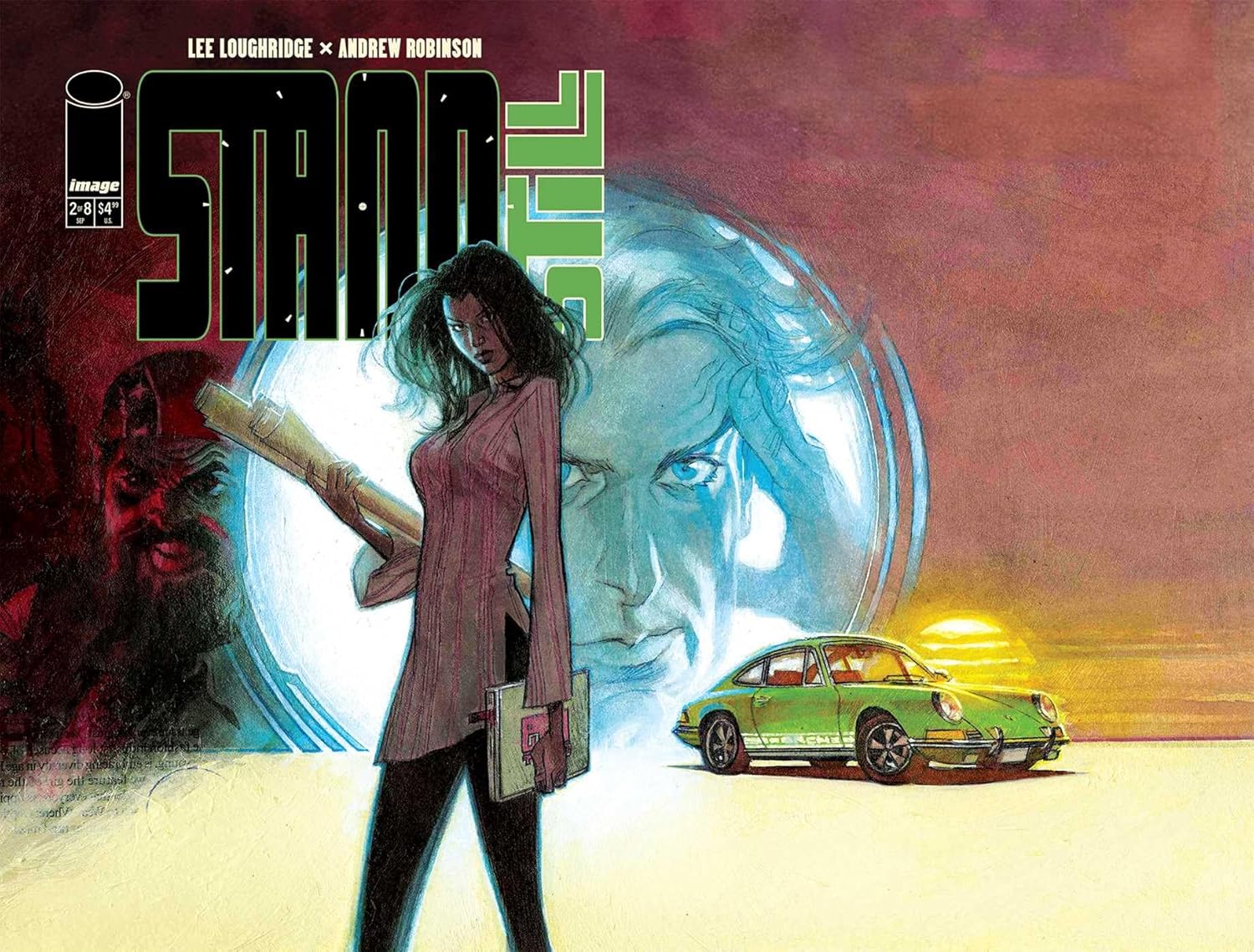

There’s a bit of a toxic masculinity fantasy going on in StandStill, an anti-machismo send-up in a Tyler Durden-like sociopathic central character, initially cast as villain, later cast as a sort of tragic anti-hero, who is fast-talking, philosophizing, and terrible.
In its opening sequence, Standstill sees perennial bad guy Ryker go up against a bar full of homophobic bikers. He does so in two ways: by utilizing the book’s central premise, a time-freezing wristband that makes our central character invincible, and by weaponizing the biker’s inherent biases against queer people. This sounds, at first blush, completely honorable. However, the tone with which Ryker flaunts his faux-sexuality at them reads close to intolerant itself. But hey, the guy isn’t our protagonist, right? The book spends its first half ensuring that we know that he is a sociopath, a cold-blooded murderer, a sort of ultra-commando who has gone off-book and is killing with extreme violence. The man kills a puppy, for god’s sake.

Image
The trouble is that the book never presents a counter to this snide, antisocial mouthpiece. The book’s other primary character, Colin, is ostensibly our “hero”: he invented the timepiece, and he sets out to stop Ryker by recreating the technology. But Colin is a vapid creature, morally pure by implication but voiceless in execution. As Ryker goes about belittling tattooed baristas and (violently) fame-shaming Paris Hilton analogues, Colin proceeds to have zero opinions at all; the smugly implied parody of the sociopath’s philosophies become the book’s only social commentary – implied to be detestable and toxic but mocked up to feel smart and cool. That’s a dangerous territory to exist in: it lends the book – and, by association, its creators – a morally bankrupt air.

Image
This isn’t to say that the creators set out to create a manifesto, but its antisocial central character seems to lose his Bad Guy casting somewhere midway through the eight-issue runtime. He becomes the book’s tragic hero, thus undermining the reader’s ability to shrug off his bad behavior. If this is our good guy, then shouldn’t we read his earlier atrocities as simply misunderstood?
Mission succeeded, burned out on ample drugs, women, and alcohol, Ryker becomes a tragic figure begging for redemption, and the book irresponsibly responds to that call: weak-willed Colin abandons his earlier zeal for halting the carnage and becomes Ryker’s redemption-wielding best friend. A montage of workouts and Tai Chi sessions exercises Ryker’s demons and, one hopes, washes out his vitriolic personality with soap. All this in time to face off against the sudden introduction of a likewise time-cuffed super assassin set upon the two by the vaguely threatening Government.

Image
Standstill is sloppily constructed; sequences play out in confusing order, characters make moral and social about-faces, and the plot interrupts and redirects itself midway through. There was no ill intent for the book’s swaggering antisocial stance; instead, it seems as if the creator’s narrative boredom interfered with their commitment to thematic tidiness. It has its impressive big swings: the book is made up completely of wide-screen, horizontal pages, and its central time-stopping conceit is compelling. But ultimately the book fails to lean into these strengths and, instead, becomes a questionable slush of intent.




You must be logged in to post a comment.