

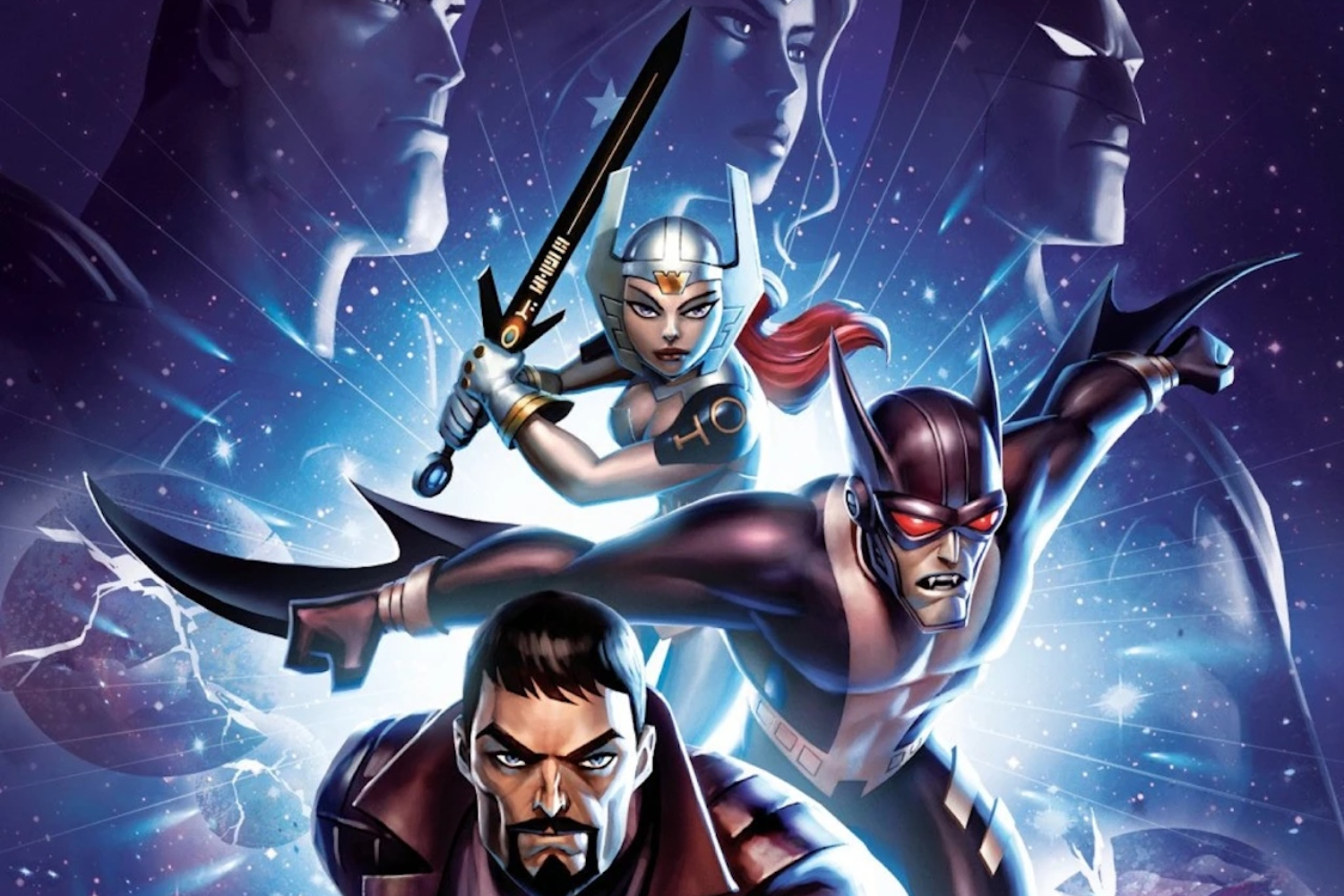

Ever since the Dawn of DC in 2023 and now the Absolute Universe, DC Comics has been leaning hard into reinvention. Whether from Joshua Williamson’s runs on both Green Arrow and Superman, to Tom King’s runs on The Penguin and Wonder Woman, the DC All-In initiative would only continue that quality. Absolute Batman #1 by Scott Snyder and Nick Dragotta became the best-selling comic of 2024, proving readers are hungry for bold new takes on classic heroes.
But long before the Absolute line, DC experimented with a different, even more radical reinvention: Bruce Timm’s Justice League: Gods and Monsters (2015).
A Universe Without Icons
Originally conceived by Bruce Timm, co-creator of Batman: The Animated Series, which spawned the DC Animated Universe, also known as the Timmverse, Gods and Monsters was made almost as a response to the New 52, DC’s soft-reboot that remains a divisive period with its various changes and retconning after years of a well-established continuity. They took inspiration from when the Flash and Green Lantern were transitioning from the Golden Age to the Silver Age (where they kept the name and the gimmick and chucked everything else away). Timm keenly felt that the same treatment could be applied to everyone in the DC universe, including its holy trinity.
These weren’t aspirational icons; they were brutal enforcers with blood on their hands.
It was shocking, deliberately so. The designs abandoned the familiar S-shield and Bat-symbols, forcing audiences to confront these heroes without the comfort of nostalgia.
Ahead of The Times
Looking back, Gods and Monsters anticipated much of what dominates superhero media today. Like The Boys, Invincible, or even Zack Snyder’s Superman, it asked: what if our heroes were feared instead of loved?
With only a direct-to-video animated film, a three-part series of shorts, and a series of one-shot comics, Justice League: Gods and Monsters never caught on as an ongoing franchise, and yet it was way ahead of its time.
It’s a story about rejecting cynicism as much as embracing it with gusto.
In this other universe where Superman, Batman, and Wonder Woman are not Clark Kent, Bruce Wayne, and Diana Prince, the Justice League is an autonomous, brutal force that maintains order on Earth and has a mixed public reception. The film begins with the origin of Herman Guerra/Superman (voiced by Benjamin Bratt), a genetically engineered child of General Zod and Lara Lor-Van who was rocketed to Earth as a child from Krypton, to being adopted and raised by a family of Mexican migrant farmers.
As the League is trying to investigate a murder mystery where they are being framed as the chief culprits, we get to explore the other origin stories in flashback. That means Batman (Michael C. Hall) as a vampiric Kirk Langstrom who maintains the alter ego’s detective skills to Wonder Woman (Tamara Taylor), a Fourth World princess that ran away from her tragic past. While there are some subtle visual nods to their original counterparts, the designs of this new League are so different that it initially surprises you that these are Superman, Batman, and Wonder Woman, albeit versions that don’t mind the bloodshed.
As adult-oriented superhero media has recently become an ongoing success, Justice League: Gods and Monsters was made before that time, and although it was well-received for its exploration of super-powered figures who are ridiculed for their brutal sense of justice, it never progressed as an ongoing property beyond 2015.
Why This Still Matters
Of the three Leaguers, Superman’s arc hits the hardest because it mirrors our own cultural tug-of-war over the character. For the last decade, from Zack Snyder’s brooding take to the Injustice franchise, audiences have been fascinated by a darker, more cynical Superman. Gods and Monsters anticipated that trend, giving us a version raised by migrant farmers who distrusts authority and carries the anger of his Kryptonian lineage.
What makes him stand out isn’t just the brutality; it’s the choice he makes when he finally discovers who he is. Instead of succumbing to bloodline or resentment, this Superman rejects destiny and chooses to become a hero on his own terms. That idea, that identity is forged, not inherited, feels just as relevant now, especially alongside James Gunn’s newly-released Superman, which similarly reframes the mythos while insisting on a core of hope.
What Can DC Learn Now?
In today’s multiverse-saturated moment, Gods and Monsters feels like a prototype for what the Absolute Universe is trying to achieve. Each Absolute title reimagines a classic hero for a new age — just as Timm did, only without the safety net of Elseworlds branding.
Gods and Monsters really had the potential to show how different its version of the DC universe can be, as evident not only through its feature film, but also the three Chronicles shorts that originally aired on the now-defunct Machinima. As each of these shorts explores the solo adventures of the Leaguers, it shows the different kinds of stories that this universe could feature.
Sometimes that’s Batman investigating a house of horrors. Or, it’s Wonder Woman battling an evil organization that unleashes a super-weapon in the shape of a giant battle robot. If Gods and Monsters had been an ongoing thing, who would be this universe’s Flash or Green Lantern? And if there’s already a Batman, would Bruce Wayne still exist, and what would be his role in this alternate reality?
If DC is serious about Absolute as a long-term imprint, Gods and Monsters offers a clear lesson: reimaginings must go beyond surface-level changes. They need to tell stories that are bold, deeply personal, and unafraid to challenge how we see these characters.

Courtesy of DC Comics.
In Closing
So, there’s Gunn’s cinematic universe, which is going through its initial phase that’s (quite ironically) titled “Gods and Monsters.” And, of course, the aforementioned Absolute Universe roaring mightily along. Between those two, we’ve seen vivid versions of DC characters that are leaps and bounds different from the original comic book conceptions — and yet there is that spark that exemplifies what each of these larger-than-life figures truly embody.
Still, no matter how many versions of the DC universe there are, there will always be gods and monsters, but most importantly, there will always be heroes. If Absolute wants to succeed, it should remember what Gods and Monsters proved a decade ago: Reinvention isn’t just about redesigning costumes, it’s about asking the hardest questions of our heroes, and letting the answers change them forever.



You must be logged in to post a comment.