


Humanity’s been fascinated by space settlement for generations, from the science fiction comic-loving kids who grew up to be (breathtakingly eccentric) key figures in the development of rocketry, to the creators of long-standing pop culture titans like Gundam and more recent projects like The Expanse. Soon, SpaceX CEO Elon Musk and his ilk proclaim, humanity shall make the stars our home.
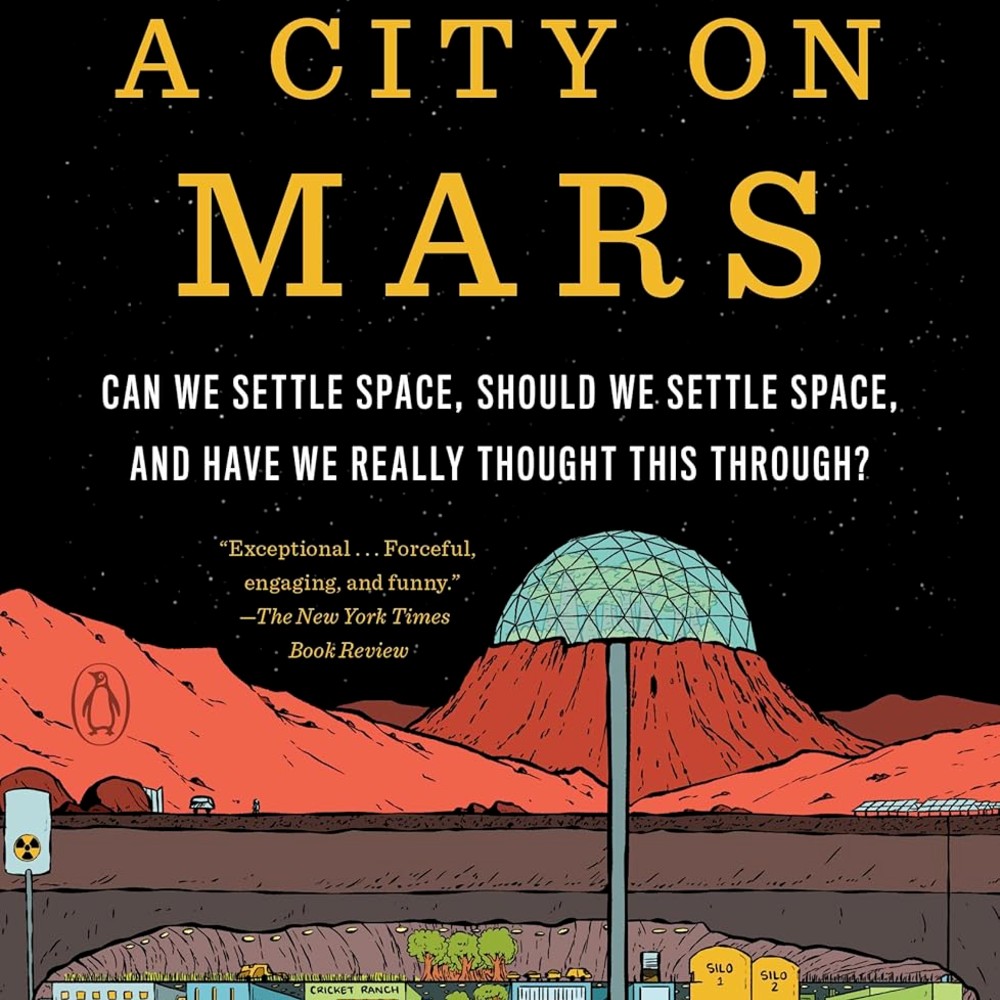
On its own, space settlement is a tremendously appealing, exciting idea. In practice, though, it’s far, far, far more complicated than the sales pitch. With A City on Mars: Can We Settle Space, Should We Settle Space, and Have We Really Thought This Through? (now out in paperback), authors Kelly and Zach Weinersmith (Soonish) dig into space settlement’s hows and whys, and in so doing interrogate the idea that, for example, permanent Martian settlement will be achieved in the next few decades.
Dr. (adjunct faculty in Biosciences at Rice University) and Mr. Weinersmith (long-running webcomic Saturday Morning Breakfast Cereal) consider the immediate practical challenges of space colonization, like toxic soil on Mars and lunar regolith’s uncanny ability to get everywhere. They ponder longer-term scientific and logistical imbroglios, like childbirth and how to build habitats that can survive radiation, meteor strikes, and, in Mars’ case, gargantuan dust storms. They explore key angles, like space law, that often get ignored, and they interrogate settlement advocates’ sales pitches, including the idea that settling space will be a transformative event akin to Dave Bowman’s rebirth as the Star Child in 2001: A Space Odyssey.

The Weinersmiths aren’t killjoys, out to stomp on space settlement for the sake of it, and A City on Mars is not a sneering harangue. No, the Weinersmiths love space travel and think the possibility of long-term space settlement could be species-changing, and A City on Mars is a propulsive, often hilarious read. It’s popular science in the best sense of the term, laying out its core subjects and the multidisciplinary work necessary for space settlement in accessible language that combines analysis, explanation, and humor, to consistently delightful results.
The humor in A City on Mars deserves special attention. The Weinersmiths wield observation (like proposals for safe sex in microgravity featuring velcro or a device called the “snuggle tunnel”), pop cultural association (a grandiloquent writer’s speech patterns are compared to Darth Vader), and repetition (hypothetical alcohol brewed on space settlements is always beet wine, similar to the banana-alcohol created in Biosphere 2). Zach is an excellent illustrator and a superb cartoonist, replicating and simplifying complex space equipment so that its purpose and function are easily comprehensible, and he deploys detail and dialogue with skill and precision.
The Weinersmiths take full advantage of the direct (space travel and settlement is massively complex) and indirect (the question of ownership and statehood in space) breadth of their subject to give Zach plenty of fun things to draw, whether plainly related to space — a potential regolith-blocking cloak for spacesuits sewn from banana leaves — or tangentially, as is the case with his recreation of the flummoxing moment when Nazis heiled Hitler to a group of unimpressed penguins.

The clarity and specificity of Zach’s cartoons are likewise present in A City on Mars‘ core argument. The Weinersmiths take space settlement not as a grand feat that will transform humanity through its mere act, but as an immensely complex undertaking whose intricacies and challenges have either been undersold or ignored by space settlement evangelists. The Weinersmiths take these arguments seriously and discuss counter-arguments to their own skepticism, which speaks to the care with which they’ve considered and crafted A City on Mars. They argue for their skepticism with extensive and well-organized evidence, and approach space settlement’s challenges on multiple levels.
“Compelling” is an appropriate word to describe A City on Mars: Can We Settle Space, Should We Settle Space, and Have We Really Thought This Through? Kelly and Zach Weinersmith have written a funny, insightful, and downright wise piece of popular science. It’s a delight.
AIPT Science is co-presented by AIPT and the New York City Skeptics.



You must be logged in to post a comment.