

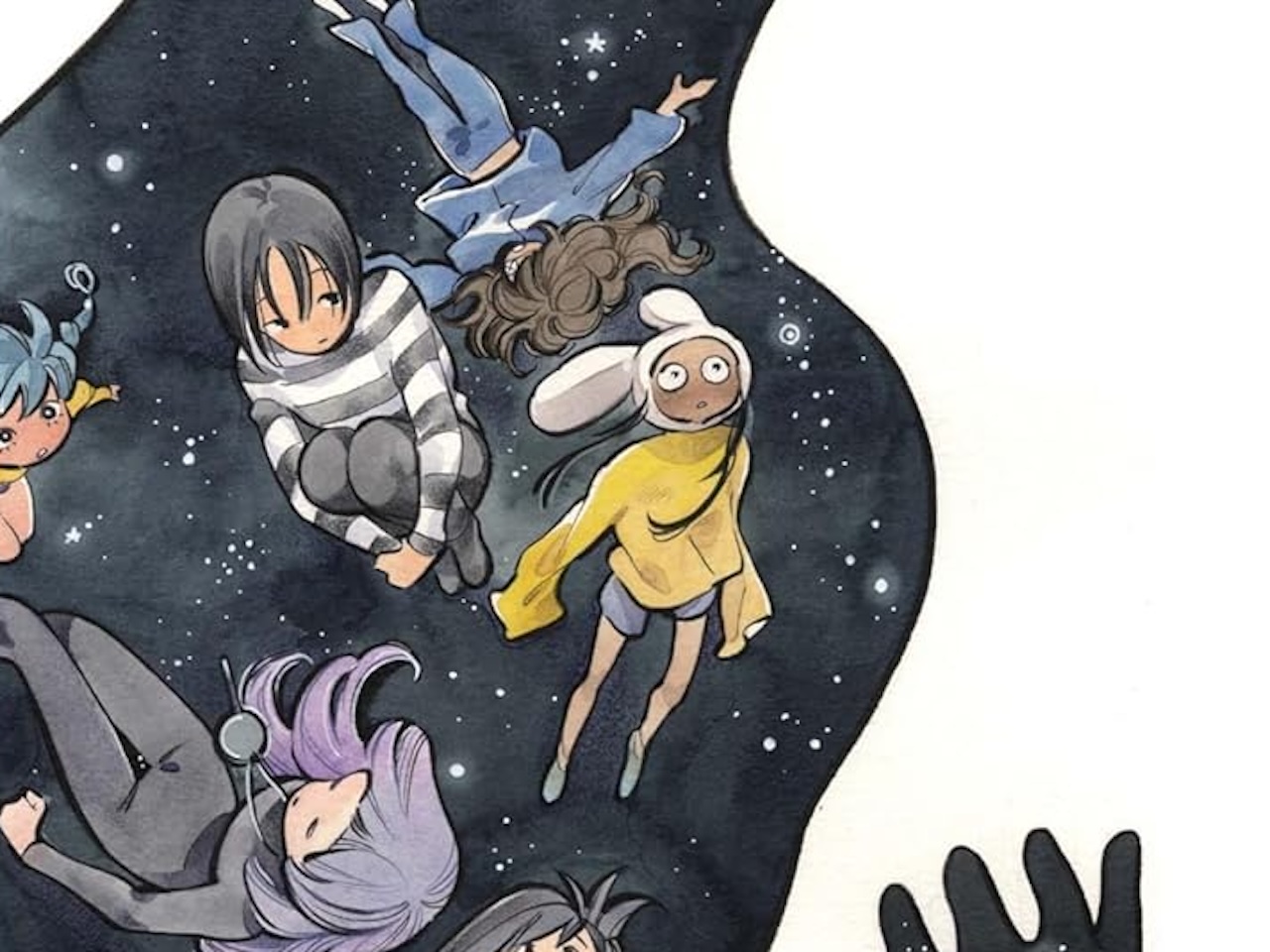

“I truly thought you would save Hisako.”
2026 already brings with it the penultimate installment of Peach Momoko and Zack Davisson’s Ultimate X-Men. Throughout the publication of this series we have seen fans and critics alike try to understand what exactly is going on in this story and how that affects the sovereign state of Hi no Kuni as it falls into political turmoil. Something that this series has done properly is quietly use the discussion of anarchy to impact the story, quiet moments are replaced with moments of fear and anger as our titular cast of heroes find themselves leading the politicized leftist youth of Kirisaki City.
To Maystorm (Mei Igarashi), it’s all as simple as cutting the head off the fascist beast controlling the minds and bodies of the youth and the young women inhabiting the state and city. However, as the Secret Society X-Men’s grand battle against the My-X and Kageyama go haywire, Armor (Hisako Ichiki) takes the sacrificial blow to supposedly eliminate the problem once and for all. However, as the series comes to close, Momoko and Davisson have been aware of how the audience since issue #1 hasn’t truly had the full story yet. The ongoing saga of Ultimate X-Men, following its month-by-month cadence, has caused the story to keep certain pieces of information hidden as we later see certain scenes at a later date. A good example of this would be issue #16, which reveals a scene to the audience that takes place four months prior to the present story.
So what about an entire issue that just flashes back between multiple issues just to do this?
If this was another book, I’d tell you that this is a ridiculous thing to do. However, Momoko and Davisson have thrown the traditional Marvel script pacing out the window and provided one of the most fascinating issues in this series thus far. For the sake of keeping things a surprise for readers, I won’t go too crazy into the reveals as this remains a dissection of the creative process and techniques provided by Momoko, Davisson, and co., but spoilers will still be sprinkled throughout.

Marvel
Coming hot off the heels of issue #1, readers are shown the life of Number #256, better known to audiences as Amano, the young mutant introduced two years back in issue #4. When readers first met Amano, it became clear that there was more to say about him especially during the discovery that he and his friends were responsible for the bullying of Tsubasa and the root cause of his eventual suicide. Tsubasa has haunted the series in a Laura Palmer-esque manner, initially being the stand-in for 616’s Edward Tancredi, codename Wing, who took his own life due to his loss of powers. However, Tsubasa and Amano play similar ghostly roles as they float in and out of the story when questions are close to being answered. It’s an effective use of character building but this time it truly shines particularly with Amano.
To put it bluntly, Amano has been the creepiest piece to the puzzle imaginable as Momoko creates the idea that he’s been here the whole time and no one has realized. His entire existence solves many of the mysteries about the series. A much needed addition but one that’s presented in one of the most unique manners I’ve seen from a newer Marvel comic. Momoko and Davisson opt to take the unconventional approach as they reveal two years worth of secrets through secret moments between Amano and the titular cast of rag-tag kids beginning with his urging to push Mei on the path of ‘saving’ Hisako. It creates the idea that he’s some sort of godly force pushing these characters together.

Marvel
He spends the comic appearing before most of the cast but keeps returning to watch Mei’s bond with Hisako grow, hoping that together they would be the force to kill Kageyama for good. What helps the pacing is that all of these are treated as smaller chunks of issues the audience has already gone through, essentially several “deleted scenes” as it were. We are seeing a broader picture, one that pushes the audience to understand these characters and their struggles more.
Amano, throughout the whole series, has been one giant pill for the X-Men to swallow. It’s terrifying and fantastic.
Furthermore, what helps Momoko achieve this manner of storytelling is naturally the beautiful artwork she provides with each monthly release. What spoke to me as someone who has followed her work for a long time is that this issue takes the most from her previous work at publications such Heavy Metal + her previously released short stories such as Shaman Himiko, essentially functioning as connected short stories to the overarching series as a whole. It all goes down to the small formatting with each page and its short story count allows for a comprehensive overview of everything the readers had missed. It is absolutely not Marvel’s usual M.O but it tells a strong a cohesive story.
Additionally, something must be said about her inking. Her work throughout the entire series has been stunning, even during the stints where Marvel is locking her in their basement to design something for their hero shooter, however there is always a certain dash Shigeru Mizuki and Hideshi Hino in how she handles certain watercolors and inking. Not to mention, there is always that clear love for the character designs of SEL’s (Serial Experiments Lain) Toshitoshi Abe and Ghibli’s legendary animator Hayao Miyazaki.
As the review comes to an end and we all await the scariness of the series finale of Ultimate X-Men, we can all at least take home the understanding that this series will be remembered fondly for its experimental approach to the Marvel method of storytelling and hopefully inspired the next wave of writer/artists who want to take a crack at a comic series that means something deep and raw for them. I can’t wait to see how these characters rush to the finish line.




You must be logged in to post a comment.