

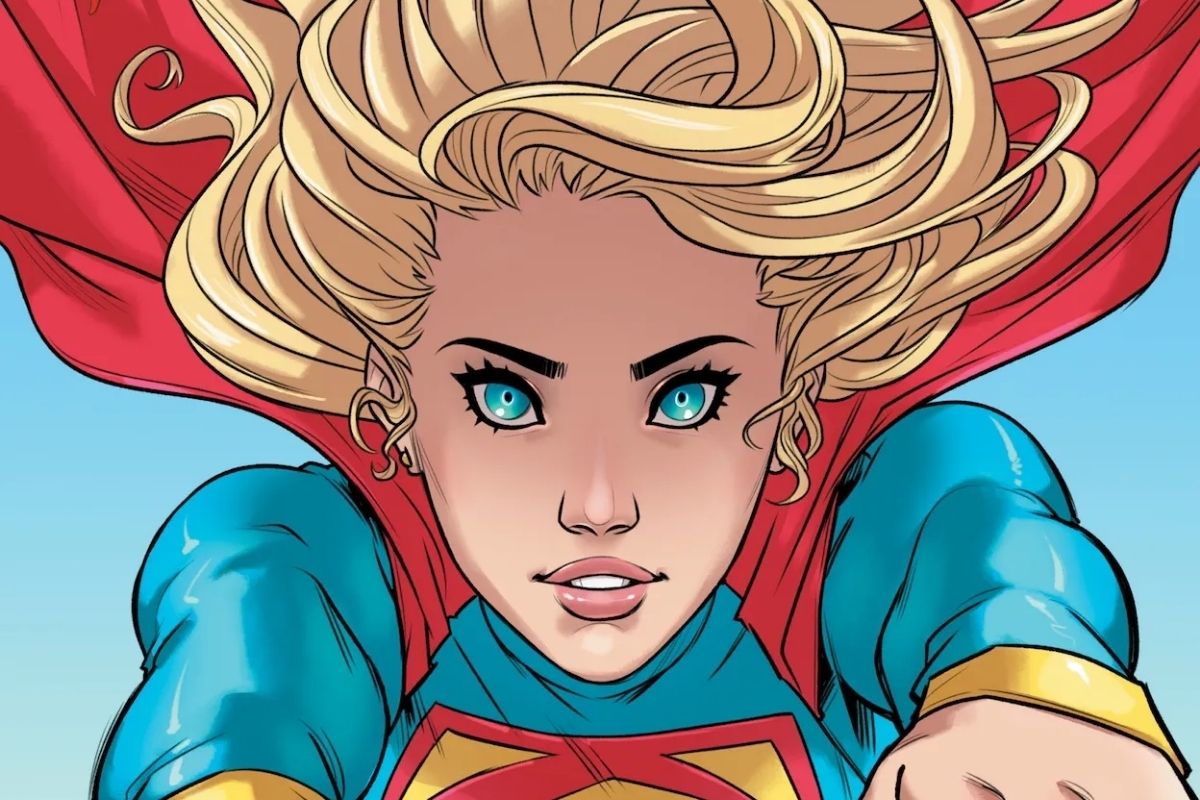

Since Supergirl #1, Kara Zor-El has been on a journey to find her place in the world outside of her cousin’s shadow. This saw the Girl of Steel return home to her adoptive parents in Midvale and made some new friends along the way, including Lena Luthor, fellow Kryptonian Lesla-Lar, and a young empath named Luna.
After enjoying a year of adventures alongside her friends and Super-pets, Kara got to sit back a bit to celebrate the holidays in completely different company. Her new friends were there for her when she revisited her past traumas on Halloween, and she helped Princess Shark come to terms with her traumatic transformation in a Disney-style Thanksgiving adventure. Kara’s friends were also present when she was experiencing the holiday blues on Christmas.

DC Comics
Given how far Kara has come to having some form of stability in her life, it’s hard to imagine things taking a hard nosedive. But that’s exactly what happens in Supergirl #9, when Kara, Lesla, Lena, and Luna attend an alcohol-free New Year’s Eve party. Normally, this would be a conflict-free day for Kara and her friends. But this being the DC Universe where trouble never sleeps, something goes catastrophically wrong, and the way Sophie Campbell and Joe Quiñonez explore that tugs at the heart strings.
Instead of giving Kara another monster or fellow Kryptonian to fight, Campbell and Quiñonez continue the theme of holiday blues – only this time, it’s Lena who’s solely experiencing them. Despite already being friends with other outsiders, Lena is still feeling out of place among her own group of friends, which captures the complexity of social isolation and mental health. This also cleverly ties into what motivates Lena to sabotage the alcohol-free New Year’s Eve party, though not with malicious intent.
At its core, Supergirl #9 is a story about the fragility of relationships and how a seemingly harmless prank can easily blow up into a costly mistake that shatters relationships. However, Campbell and Quiñonez don’t tell a simple story where the trouble-making character goes “whoops, sorry!” and everything is fine at the end of the day – or in this case, at the start of a new year. Instead, Campbell and Quiñonez show the negative impact of harmful mistakes on everyone involved.

DC Comics
One thing Campbell and Quiñonez do well throughout the issue is present each character as layered and emotionally complex. Despite being a “Girl of Steel,” Kara is still hurt by the actions of her friends and how Lena’s experimental concoction to lower Kryptonian inhibitions may have cost her “normie” friendships in Midvale. Campbell and Quiñonez do an excellent job at conveying Kara’s anger and feeling betrayed by the two friends she trusted most. But she’s not the only character who experiences anger and betrayal.
When Lesla learns that she is shrinking back to her original size from her time inside the Bottled City of Kandor, she pleads with Kara not to send her back to her parents, which the latter disregards. This is where Campbell’s writing tends to shine the most. Rather than presenting Kara as being sure of her actions, she is presented as being uncertain if she’s doing the right thing. On the one hand, she has to send Lesla back to Kandor to save her life after learning the real reason she was shrinking. But on the other hand, she’s also sending her back to Kandor, out of anger towards Lesla for ruining another friend’s New Year’s Eve party.
The latter problem is where Campbell and Quiñonez explore Lesla’s own feelings of anger and betrayal. As someone who never got to experience life outside of Kandor, Lesla found life in Midvale alongside Kara and her family very liberating. For Lesla to return to Kandor after having tasted true freedom for a couple of months is quite devastating and even traumatic. Campbell and Quiñonez understanding that sets up an exciting new character arc for Lesla – is she going to relapse and go back to being a villain after feeling betrayed by Kara? Or is she going to learn from her mistakes and make better decisions moving forward? Campbell and Quiñonez set this question up in a way that can be answered one of two ways, which builds intrigue.

DC Comics
The other character who could potentially relapse is Lena Luthor herself, especially after Kara compared her troubling behavior to Lex. Given that Lena already started Supergirl #9 feeling like an outsider in the company of Kara and Lesla, being compared to Lex could finally push her over the edge, and finally decide to live up to the Luthor legacy. There’s also a good chance that she’ll self-reflect on those words and decide to make better decisions moving forward. But the strength of Campbell’s writing and Quiñonez’s artwork is creating the uncertainty of which way her story could go, which invites readers to keep on reading.
On the whole, Sophie Campbell’s Supergirl is proving to be Kara’s best run yet. If the first year of Campbell’s run was spent building Supergirl and her relationships, it appears that her second year is going to focus on challenging those relationships, and whether or not she can truly maintain them. How this will impact Kara’s growth as a character moving forward seems to promise more internal conflicts for her this year than external ones, which will keep her story fresh.




You must be logged in to post a comment.