

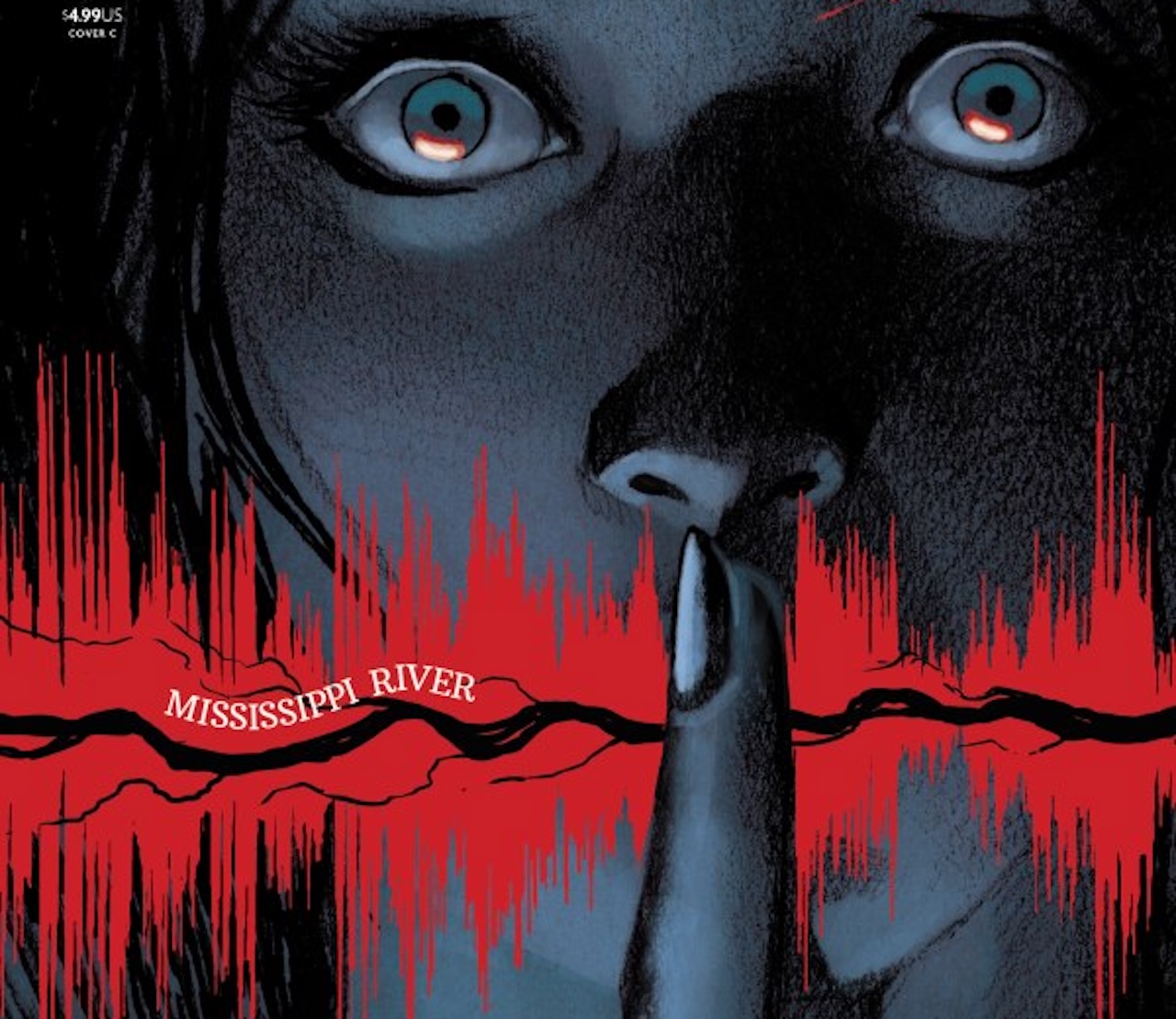

A new era of comics has already burst onto the scene via IDW Dark, covering licensed comics based on films like Smile and, on March 11th, A Quiet Place. With three Quiet Place films already released, the universe is ready to expand with A Quiet Place: Storm Warning #1. Armed with an advance copy, I’ve found the creative team shows there are many more angles to this alien-invasion horror than you might think.
A Quiet Place: Storm Warning #1 is an intriguing first step into unexplored territory for the franchise, not because it escalates the threat, but because it slows down long enough to examine human denial.
Set in Pearl, Iowa, a small island town on the Mississippi, the story centers on a community that knows something terrible is happening elsewhere, but believes geography and distance will spare them. Cities have fallen. The news is clear. But this isn’t their problem. At least, that’s what the mayor and townsfolk tell themselves. Fire chief Lonnie Fry sees the writing on the wall, and that tension between preparation and complacency becomes the issue’s emotional engine.
What’s refreshing here is that the horror doesn’t come from surprise. Unlike the films (and most apocalyptic horror), the characters aren’t blindsided by the existence of the creatures. They have time to prepare. That choice reframes the terror: instead of asking how do we survive?, the story asks why won’t we listen? The result is a quieter, more frustrating, and very human kind of dread, where bad decisions feel inevitable long before claws hit pavement. At least that’s the first half, as the second half jumps in time, putting readers in the thick of the dangers of this alien threat.

Main cover.
Credit: IDW
The island setting is used effectively. On one hand, Pearl offers a blueprint for survival, controlled access, isolation, and a chance to manage sound and movement. On the other hand, it’s potentially a death trap. Once you’re cut off, escape isn’t an option. That duality hangs over every scene and gives the setting real narrative weight rather than functioning as a simple backdrop.
Phil Hester’s script and layouts pair well with Ryan Kelly’s pencils and inks, especially in a standout sequence late in the issue involving multiple characters attempting to stay silent while danger closes in. The shift from a family unit (as seen in the films) to a larger group fundamentally changes the tension. Every extra person adds risk. Every movement compounds the stakes. The choreography of survival—how people coordinate, hesitate, or panic—creates a genuinely intense closing stretch that underscores how fragile silence really is.
Kelly’s character acting is another strength. Facial expressions and body language do a lot of the storytelling here, often communicating fear, doubt, or defiance without the need for dialogue. It’s a smart visual approach for a world where sound equals death.
Where the issue stumbles slightly is in the depiction of the creatures themselves. They’re recognizable, but less frightening than their cinematic counterparts. The designs feel simpler, with less texture and menace in the skin, which dulls their impact at a distance. That said, close-up moments show off their teeth, bone structure, and the sheer wrongness of their anatomy.
There’s also promising character drama seeded between the fire chief and the mayor, positioning future issues to explore leadership, responsibility, and the cost of being right when no one wants to hear it.
As a first issue, Storm Warning succeeds by resisting spectacle in favor of tension and theme. It understands that A Quiet Place isn’t just about monsters, but about people ignoring alarms until it’s too late. This opening chapter sets the stage thoughtfully, builds anxiety with purpose, and ends on a note that makes the silence feel anything but safe. A Quiet Place: Storm Warning proves that in a world where silence is survival, denial may be the loudest mistake of all.




You must be logged in to post a comment.