

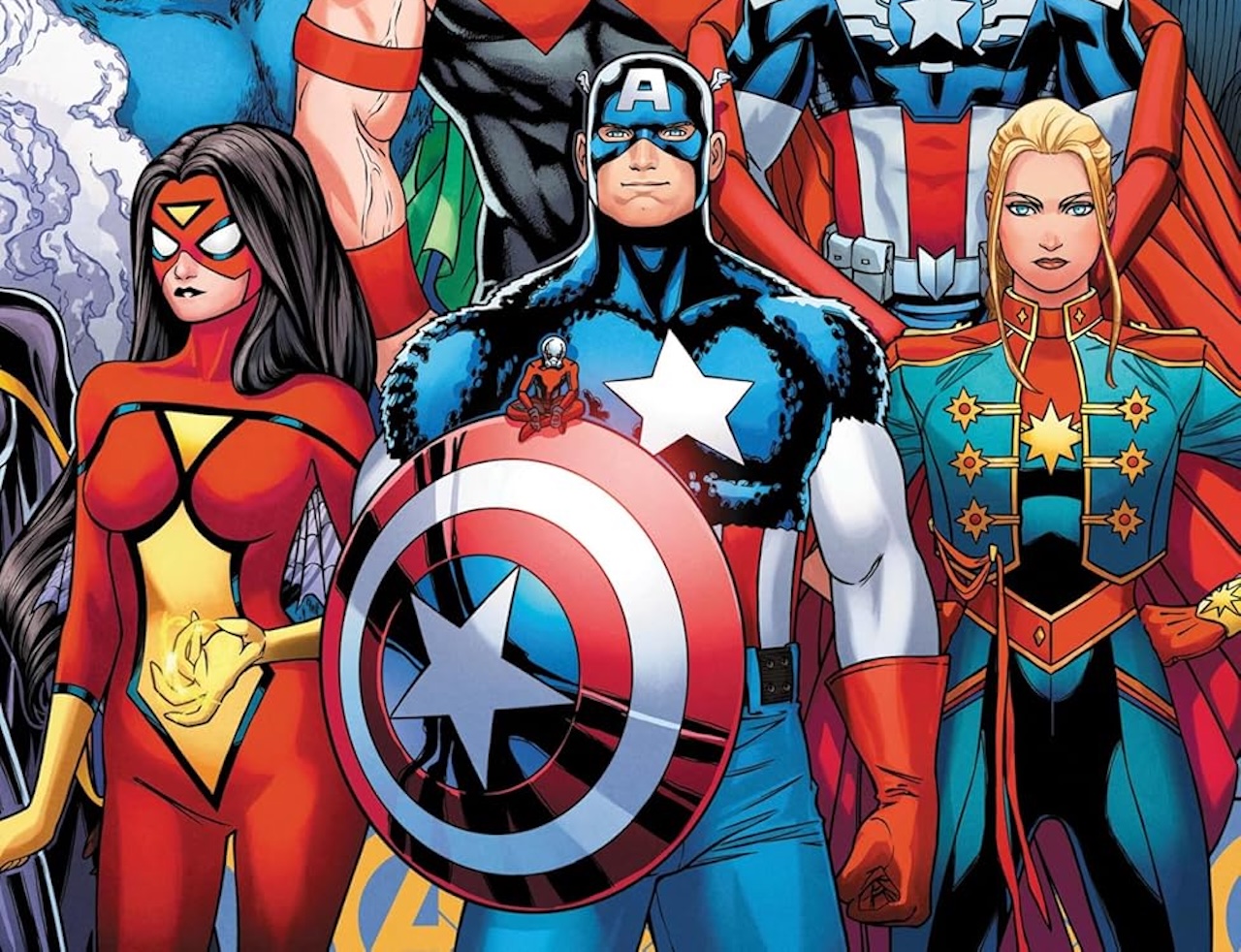

After three years, two blockbuster events, and one collection of all-star artists, Jed MacKay’s Avengers run is finally coming to an end. What might be surprising to some fans is how that ending unfolds. Rather than a big battle against one of their iconic foes or a race to save the world, it’s a quiet tale that finds Captain Marvel disbanding the Avengers following their battle against Kang the Conqueror. This might not seem like the way you’d expect an Avengers run to end, but MacKay and Farid Karami make it work.
Part of the reason Avengers #36 is low key lies in the previous issues. Said issues featured the Avengers traveling to the ruins of another universe, battling a horde of zombified superheroes, and stopping Kang from causing the end of existence. How can you top that? You can’t. The best thing MacKay does is go to a smaller, more character-driven story, reminding us what makes each member of this Avengers team special. He does this by having Captain Marvel talk to each Avenger about her decision, and the conversations that follow are both rich in character depth and subtext.
Black Panther’s duties as a king mean that he understands Captain Marvel’s duties as a leader. Captain America has a deep conversation with her about expectations, both that the world places on you and that you place on yourself. Storm says that no matter what, she’ll continue to protect mutantkind and saw her time with the Avengers as an extension of that mission. The Vision delivers a profound monologue on the inevitability of change. Even the Twilight Court gets a proper sendoff, as does Camelot; I won’t lie and say that I won’t miss the flying city, as it’s been both one of the best Avengers bases and a character in its own right.

Marvel
You’d think that people standing around and having profound monologues would make for a boring comic. That’s not the case with Karami, who continues to bring great detail to each and every page. Birnin Zana, the “Golden City” of Wakanda, truly looks like a shining oasis under his pen. New York City is still a bustling metropolis, and the Storm Sanctuary is teeming with life. I also appreciate that Karami keeps up with shifts in the status quo, as evidenced by Iron Man’s new Mark 75 armor and Scarlet Witch’s vestments reflecting her new position as the Sorceress Supreme. Federico Blee also deserves credit for making each sequence feel vibrant and thriving with his color work.
Speaking of Scarlet Witch, she and Captain Marvel are at the center of what’s arguably the book’s best sequence. It lets Karami and Blee bring plenty of action to the table since the two Avengers are fighting a Lovecraftian beast, and it also lets MacKay ruminate on the Avengers as a myth of sorts. You’d probably heard the idea that superhero stories are a modern mythology, but this run has used an actual mythology as its base and also explores how myths – much like the Avengers’ roster – can shift over the years while still keeping their core. It’s some good food for thought.
Avengers #36 acts as a character-driven epilogue to Jed MacKay’s run, wrapping up loose ends while also swinging for some big ideas. This obviously isn’t the end of Earth’s Mightiest Heroes, as Avengers: Armageddon will bring in a new team of Avengers. But for what it’s worth, MacKay and his team deliver.




You must be logged in to post a comment.