

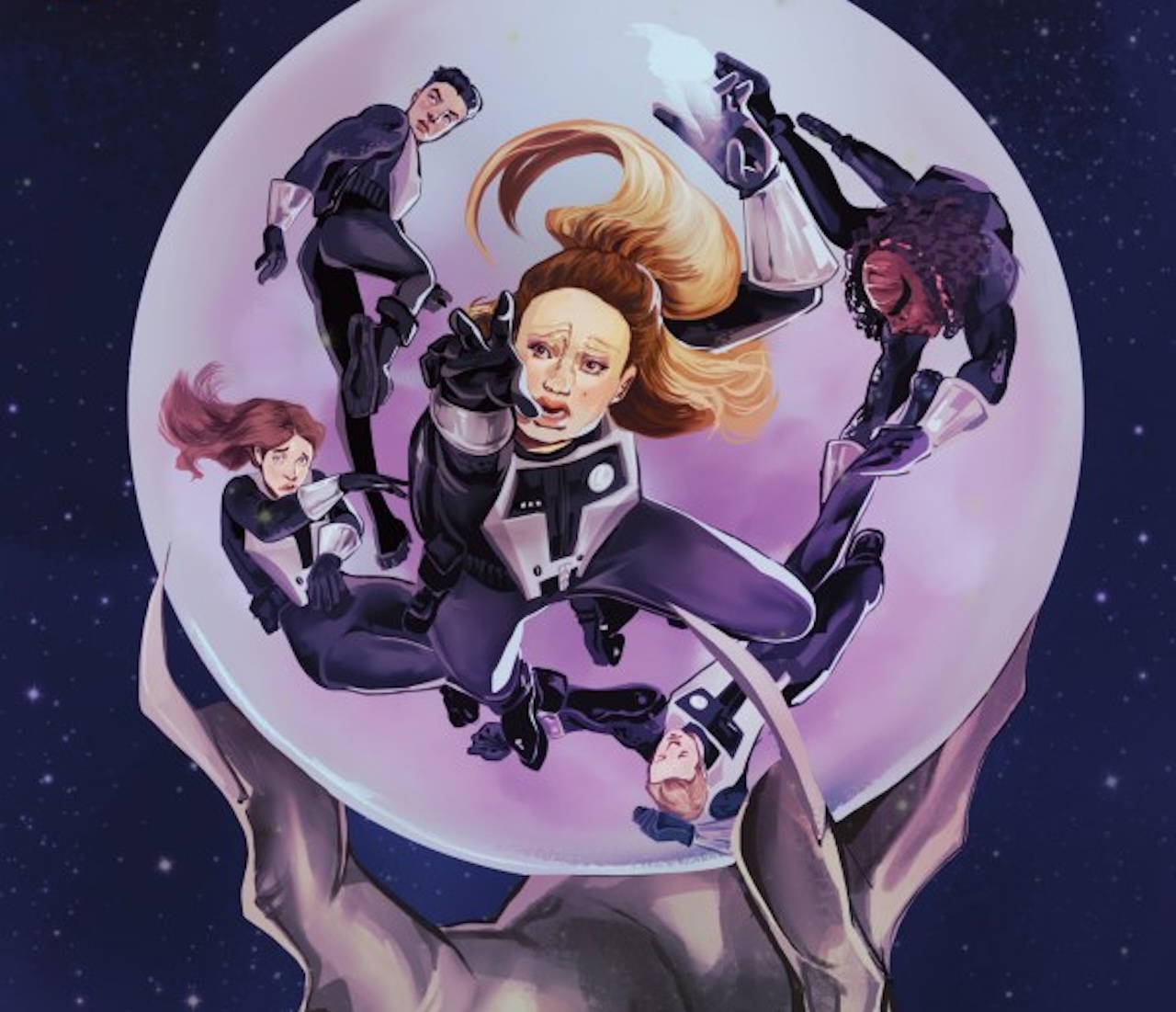

Certainly one of the most controversial Star Trek shows in some time, Star Trek: Starfleet Academy is getting a new lease on life thanks to IDW. The show may be canceled, with one more season yet to be released, but the characters live on thanks to Layne Morgan and artist Coralí Espuña, with the first issue out now. With the second issue in hand (and only until April 20th for folks to place preorders), I needed to reflect on how it captured the show and where it might fall off.
From a storytelling perspective, Star Trek: Starfleet Academy—Lost Contact #2 offers a classic Trek trope of a small crew trapped on a planet with a variety of dangers closing in. What was supposed to be a training mission has found five of our main character cadets stuck with limited oxygen, creatures that should not exist on the planet, and a storm above that is preventing them from being rescued. Given that the crew is made up of students, the threat level is extremely high, with the head of Starfleet and the War College differing in their opinions on the crew’s ability to survive. This setup allows Morgan to cut between the cadets and the differences Zeeren Kelrec and Nahla Ake have in keeping the young adults alive.
Morgan expertly cuts between the two in Star Trek: Starfleet Academy—Lost Contact #2, heightening tension on the planet, where the characters can’t audibly speak to each other, and the bickering we’ve come to love from Kelrec and Ake on the show. In fact, the bickering is one of the best parts of the issue, showing how stubborn they can be and how very different their approaches are. The dialogue feels just right for both, making this feel tuned into the show’s voice.
As for the cadets, without the ability to speak, Espuña has to do much of the heavy lifting of communicating with them through hand gestures. It’s a tricky thing to pull off, and mostly works. Readers might find they are zipping through the pages a little faster than usual, but it’s a different sort of reading experience. The art and colors by Nora Serrano have a dreamlike quality to them, making the on-planet scenes feel particularly weird and dangerous. Likenesses could use some work, though Espuña’s acting is quite good.
As far as the cadets, their personalities shine through in their actions. If you like the characters already, you’ll root for your favorites like you do with the show. As a fan of the show, this is an important piece I can appreciate.
On the reverse side, the alien threat on the planet gets little attention. Between that and the quicker read without dialogue, the issue feels a bit thin.
Star Trek: Starfleet Academy—Lost Contact #2 succeeds where it matters most by understanding the characters and the tone that made the show resonate. Layne Morgan keeps tension high through smart scene shifts, while Coralí Espuña handles the visual storytelling challenge with confidence. The issue does not break new ground, but it delivers a focused, character-driven survival story that fans will appreciate, even if it moves a bit too quickly in places.




