


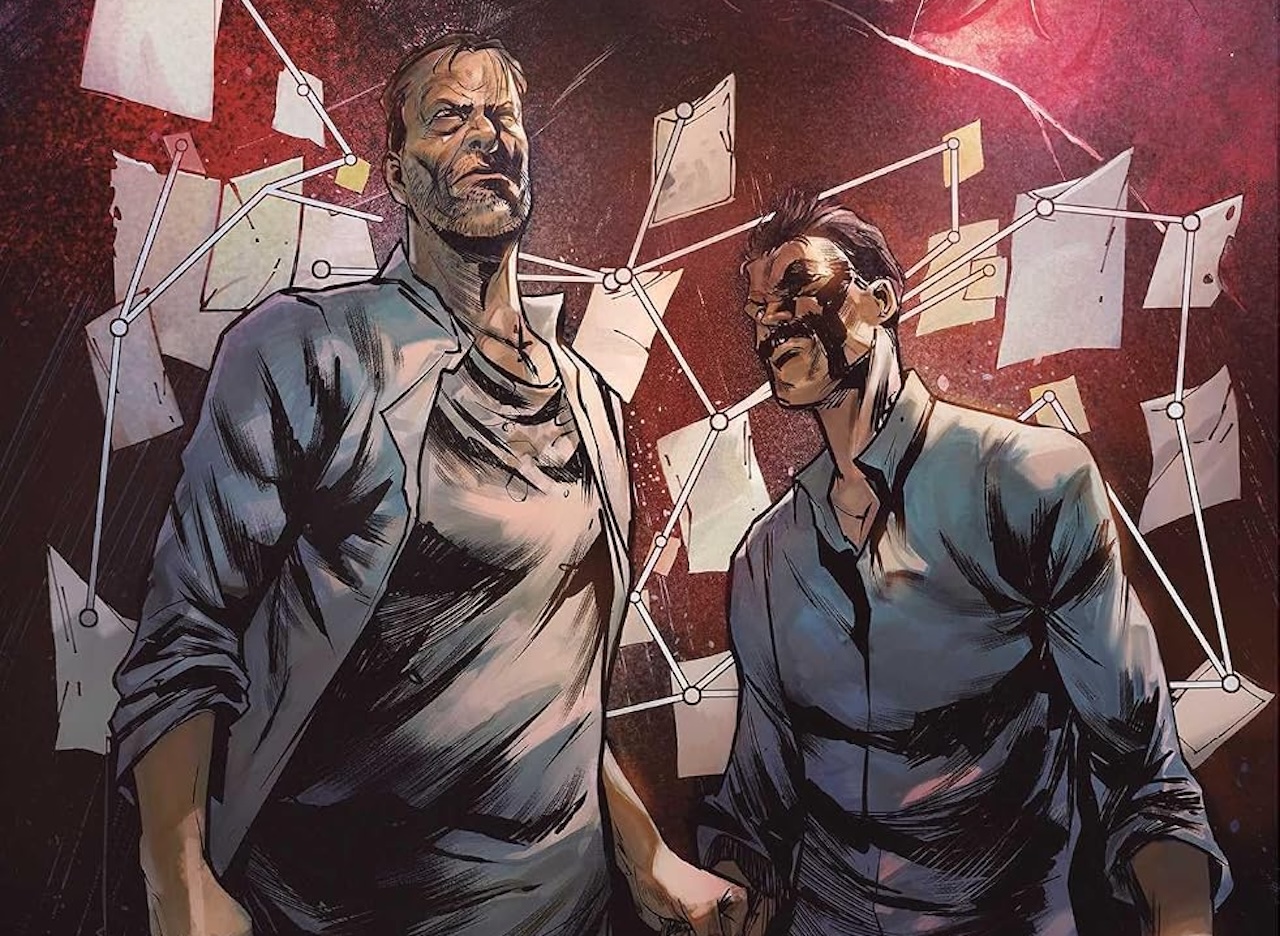

The debut issue of Land of Never upended the traditional story of Peter Pan, turning it into a chilling thriller that highlights how messed up certain parts of the original book are. So what do you do for an encore? If you’re Steve Orlando and Miguel Mora, you use Land of Never #2 as some strong commentary on the underlying themes of youth vs. adulthood that fueled Peter Pan’s myth. As Jim Hoke continues his search for his daughter Wendy, he stumbles upon a clue that leads to the identity of the “Floating Man,” with help from another father seeking his child. Meanwhile, Wendy attempts to keep herself and her fellow captives alive while avoiding the Floating Man’s wrath.

Orlando splits the narrative in two, flashing back to the time Wendy spends under the Floating Man’s thumb and Jim’s rapport with his new “partner,” Casey. Both of these stories resonate so well because they show how toxic a mindset it is to stay fixated on the past. In the case of the Floating Man – or as the others call him, “Peter” – he’s obsessed with breaking free from the rules of adulthood, explaining his fixation on kidnapping teens. With Jim and Casey, everyone they meet tells them that they need to move on, which they ignore. It comes to a head when they encounter another family who barely survived their own encounter with “Peter” targeting them, and Orlando doesn’t shy away from how Jim’s presence brings the trauma bubbling back up.
Mora’s artwork remains as creepy as ever, especially when “Peter” is on the page. His hulking figure, combined with his immensely disturbing mask, makes every page he’s on ripe with tension. It doesn’t help that he often lashes out whenever Wendy insults him, shattering walls with his blows. Jim also stands out on the page, thanks to Mora’s depiction of how disheveled he is; the man seems to carry a perpetual 5 o’clock shadow and rumpled clothes. It’s his eyes that have the most detail, as they burn with the fervor of someone who’s determined to see things through, no matter what obstacles he faces.

Mad Cave
Topping things off is Fares Maese, who gives each set of scenes a different palette and, therefore, a different vibe. The scenes with Jim and Casey are mostly lit brightly and take place during the day, which is a direct contrast to their desperate quest. In contrast, most of the scenes with Wendy and “Peter” are set in near-darkness – yet she continues to defy him at every turn, showcasing a metaphorical light in said darkness. It’s a clever creative decision by Maese that showcases how Jim and Wendy are in completely different predicaments, and that they share a seemingly unbreakable spirit in addition to blood.
There’s a major plot twist at the end that I’m left mixed on, mainly because it feels out of place with the horror vibes that Land of Never is bringing to the table. If the back half of the series can pull this twist off, then more power to the creators. Without spoilers, I’ll say that a good chunk of what makes horror work is an element of mystery; the more you don’t know, the scarier a character can be.
Land of Never #2 is a study in duality, featuring characters struggling to let go of the past. It also starts to peel back the mystery surrounding its “Floating Man,” with a hint that the answers might be even more frightening than readers expect.




You must be logged in to post a comment.