

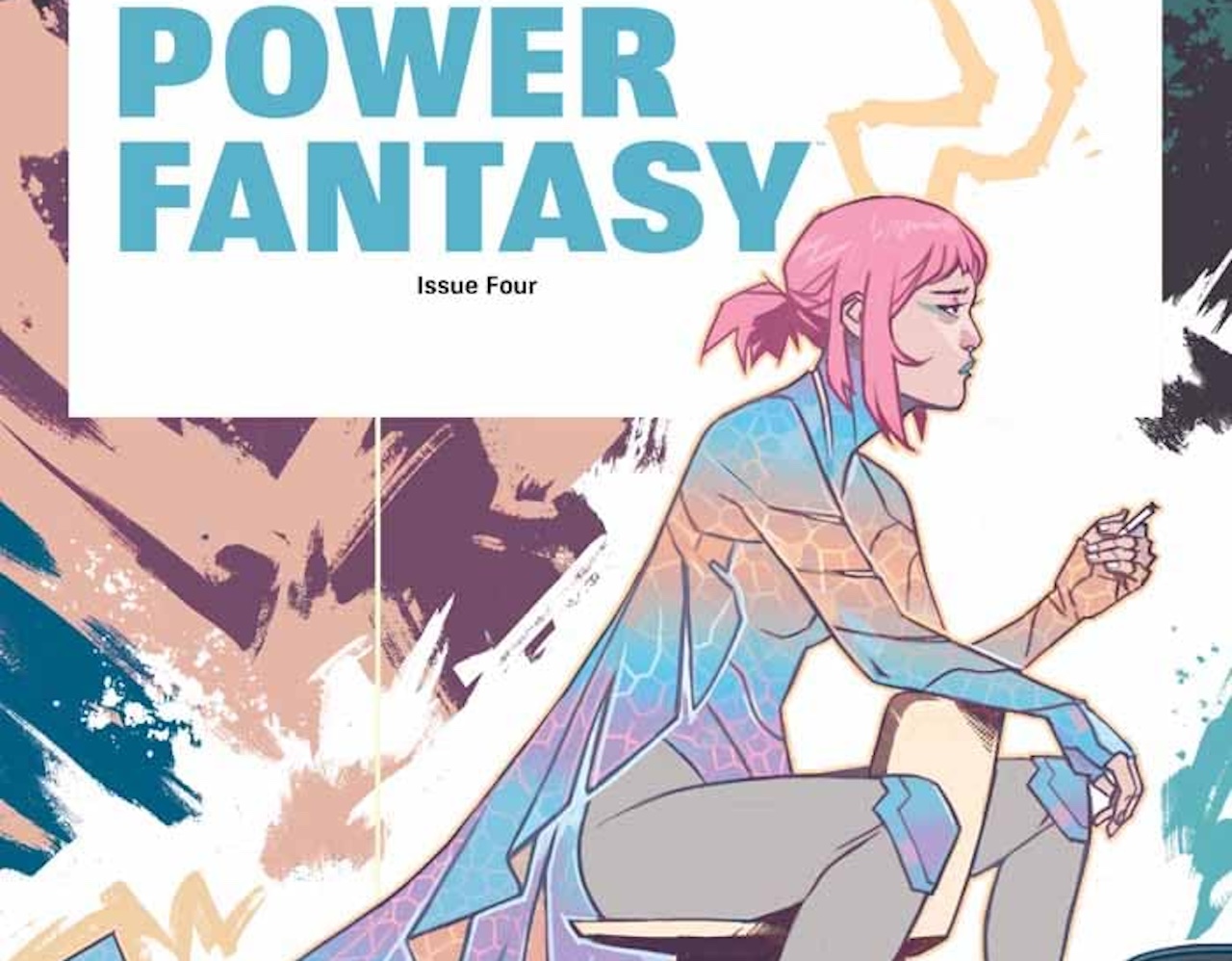

The Power Fantasy has been nothing short of enlightening as Keiron Gillen and Caspar Wijngaard unpack a new kind of superpower people world. It’s an alternate timeline where superpowers were given to six people post-World War II, and everything changed after that. Last issue, we learned all about Santa Valentina and now, with the fourth issue out this week, Masumi takes center stage.
After the enlightening worldbuilding issue, The Power Fantasy #4 takes a closer look at a single character while slowly simmering the growing tensions between characters. Frankly, though, given what Masumi is capable of, all the other supers should be far more afraid of her.
The issue opens in Tokyo in 1982. A black page with purple text reveals someone trying to connect with Masumi. Upon a page turn, we see a haunting kaiju-sized monster hovering over the city. It appears that Masumi’s powers when manifested, create a monstrous beast. We then see Masumi in the tub at the present time, 1999. Her girlfriend Isabella is letting her know one of the supers isn’t coming, and she looks fairly depressed. She begins to go translucent, and a horrible shadow starts to rise from the ocean. Something is not right with Masumi.

Quite a beast.
Credit: Image
This issue does a good job of giving the reader a good sense of what Etienne is further capable of while also arguing maybe some of his unethical choices are keeping the world from annihilation. I wouldn’t say this issue convinces you he shouldn’t murder for the greater good, but a case is made.
After the opening, there are three incredible scenes. The first involves Masumi’s gallery show, the other is Etienne attempting to enter Japan unscathed, and the final scene reveals the truth about Isabella. These scenes have great bits of cat-and-mouse psychological warfare going on through dialogue while further fleshing out character and context.
From a psychological perspective, Gillen makes you think about Masumi as a kind of broken person, but one to be feared even when, on the surface, she seems almost harmless. All of these scenes build towards a conclusion that puts the series on the razor’s edge of doom for everyone, even when you aren’t considering the growing conflict between Heavy, Etienne, and the world.
Wijngaard delivers spot-on acting, from Etienne’s cool and cold demeanor to Heavy’s loud personality. In a key moment when Masumi is upset, Wijngaard captures the true love and care these supes have for each other. They are people, and not just cold super, powered chess pieces in this story.
There are also interesting effects when it comes to powers, like Etienne visiting someone mentally, first as shards and then as a blue version of himself. Masumi’s monster form is also quite haunting at the start. The abusive nature of Masumi and Isabella’s relationship is emphasized by a rather tragic cliffhanger page that, without context, appears to be a happy ending when we know the truth.
The Power Fantasy #4 masterfully balances character-driven storytelling with broader narrative stakes, delivering an issue that is both intimate and monumental. This chapter deepens the series’ themes of morality, identity, and the fragile bonds between individuals with extraordinary abilities. The exploration of Masumi’s inner turmoil and the growing tension among the supes keeps the story unpredictable and thrilling. By the final page, The Power Fantasy has positioned itself as not just a tale of superhuman conflict but also a profound examination of the cost of power and connection.




You must be logged in to post a comment.