

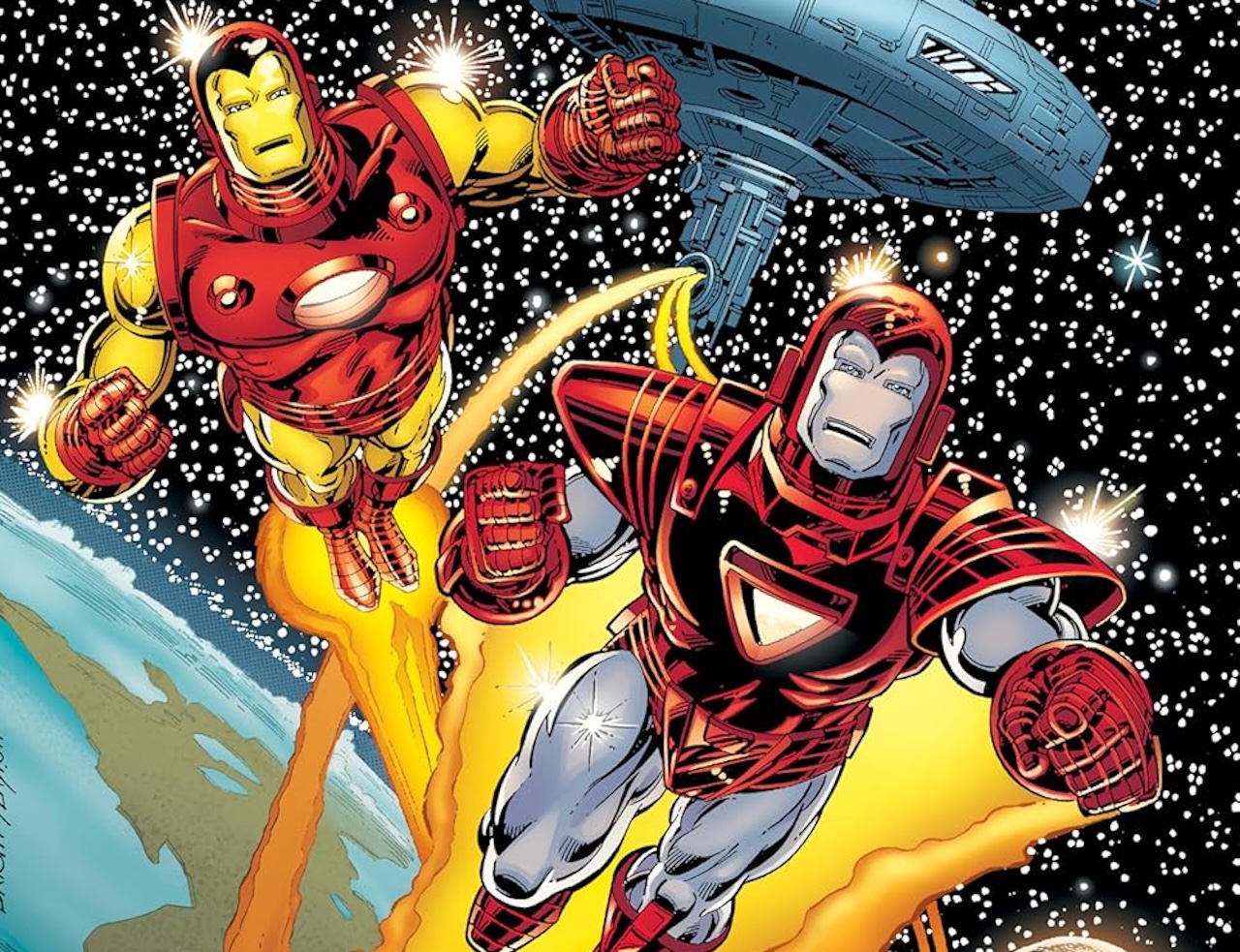

Coming into reading age when I did – as the workman-like, inspired boom times of the 1980s crossed over into the glitzy, celebrity-focused 1990s – there were comics stories that seemed to be regarded with an unimpeachable sense of reverence. Stories that happened just before I got into the medium, or that happened while I was reading but in comics that my older brother did not collect or did not bring home.
Armor Wars was one of those stories; it remained a reverently referenced Iron Man story I neglected to read my entire life. Friends recommended it based on hazy, fond memories. Comic book store owners prominently displayed the trade paperback alongside books like Dark Knight Returns and God Loves, Man Kills (at least they did before that shelf space was turned over to sleek Image titles). It was probably mentioned in Wizard a half-dozen times and stuck in my head.

Marvel
Reading the story as it’s collected in Iron Man Epic Collection: Stark Wars, I’m a little surprised at all that distantly remembered hype. What I expected was a bombastic, world-changing, character-reinventing story, one filled with knock-down, drag-out fights with some of Iron Man’s most iconic villains. I expected a sober Demon in a Bottle.

Marvel
While the story isn’t a slouch – those villains are in there, and Tony Stark does go through an ostensible shift in character – the truth of the matter is that it doesn’t stand up to the reverent tones in a way that any of the rest of the David Michelinie-written issues might. While not unified by narrative theme, the issues on the run-up to the event are just as solidly composed, filled with the same smug Tony and wisecracking Rhodey.
The story revolves around Tony’s technology being stolen and being put into the dangerous armors of a variety of his rogues gallery; what should feel like a palpable guilt over the pain and death caused by this technology feels somewhat clinical, as if Tony is more frustrated than burdened by the blood on his hands. What Armor Wars does have is that parade of baddies (and one goodie), but there are very few points in the story where Tony feels in any real danger; his checklist comes to feel chore-like and without true stakes.

Marvel
It isn’t surprising that the most powerful issue of the volume is Iron Man #232, co-written and illustrated by phenom Barry Windsor-Smith. It’s an issue that illustrates Tony’s guilt by way of horrific dream sequence, and it might have better served the series in its center rather at its conclusion; Windsor-Smith creates a gruesome landscape of bodies, makes the red-and-gold suit menacing, and creates a circuit-board Tony monster. He even sneaks in a little Shining homage.

Marvel
This isn’t to denigrate the work by Mark D Bright and Bob Layton in this volume – their pencils almost perfectly capture the style of mid-level Marvel Comics in the 1980s, books where your superstars like John Byrne rarely showed up but where the less stylistic tradesmen held sway. This is a book full of mullets and shoulder pads, sweat bands and Tony’s belly shirts. It all but screams New Coke.
That’s Iron Man Epic Collection: Stark Wars in a nutshell: tradesmen-made, emblematic of its time and place in the Marvel Universe. While Armor Wars is certainly noteworthy, it doesn’t hold a candle to some of the other more pressing stories going on in the Universe around the same time, but that’s somehow okay. This is a book that feels foundational and not flamboyant. These are the bones upon which a later superstar character is built.




You must be logged in to post a comment.