


“You somehow made everything seem better than it is. Hopeful.”
Keeping the momentum of the third issue, Absolute Wonder Woman continues to be a striking comic series both literarily and artistically with issue #4 in particular having some of the strongest imagery for this penultimate installment to first arc, “The Last Amazon”. Thompson uses this issue to introduce Wonder Woman’s best friend and occasional Holliday Girl, Etta Candy who appears as a private investigator and friend to Steve Trevor.
Etta and her sister Gia, a would-be magic dealer, are charmingly introduced through Steve and Diana politely waiting outside of the shop. Etta Candy is often changed throughout Wonder Woman retellings. Etta represents the classic William Moulton Marston’s creative tendencies, which was his underlying queer and BDSM subtext.
Etta was usually implied as a lesbian and the later concepts of the Holliday Girls fueled that as more current adaptations show them as such members of the community like in Leah Williams’ take on them in Power Girl. Simply put, if you’re writing Wonder Woman, you have to use Etta Candy.

DC
What makes Thompson’s usage of the classic Wonder Woman cast of characters is her ability to modernize and have them fit within the dark and twisted Absolute universe. Thompson pushes for the main cast to retain their classic sensibilities and morality which allows for the main cast to feel like the shining beacons of hope for this universe overall.
It also allows for readers to better understand the complicated backstory of these characters. As Thompson showcases every small detail of Diana’s last it creates a strong picture of who she is and how Circe raised her. Additionally, it allows for Thompson to push deeper into the ideology of Diana’s need to reconnect with her culture and deepen her connection to love.
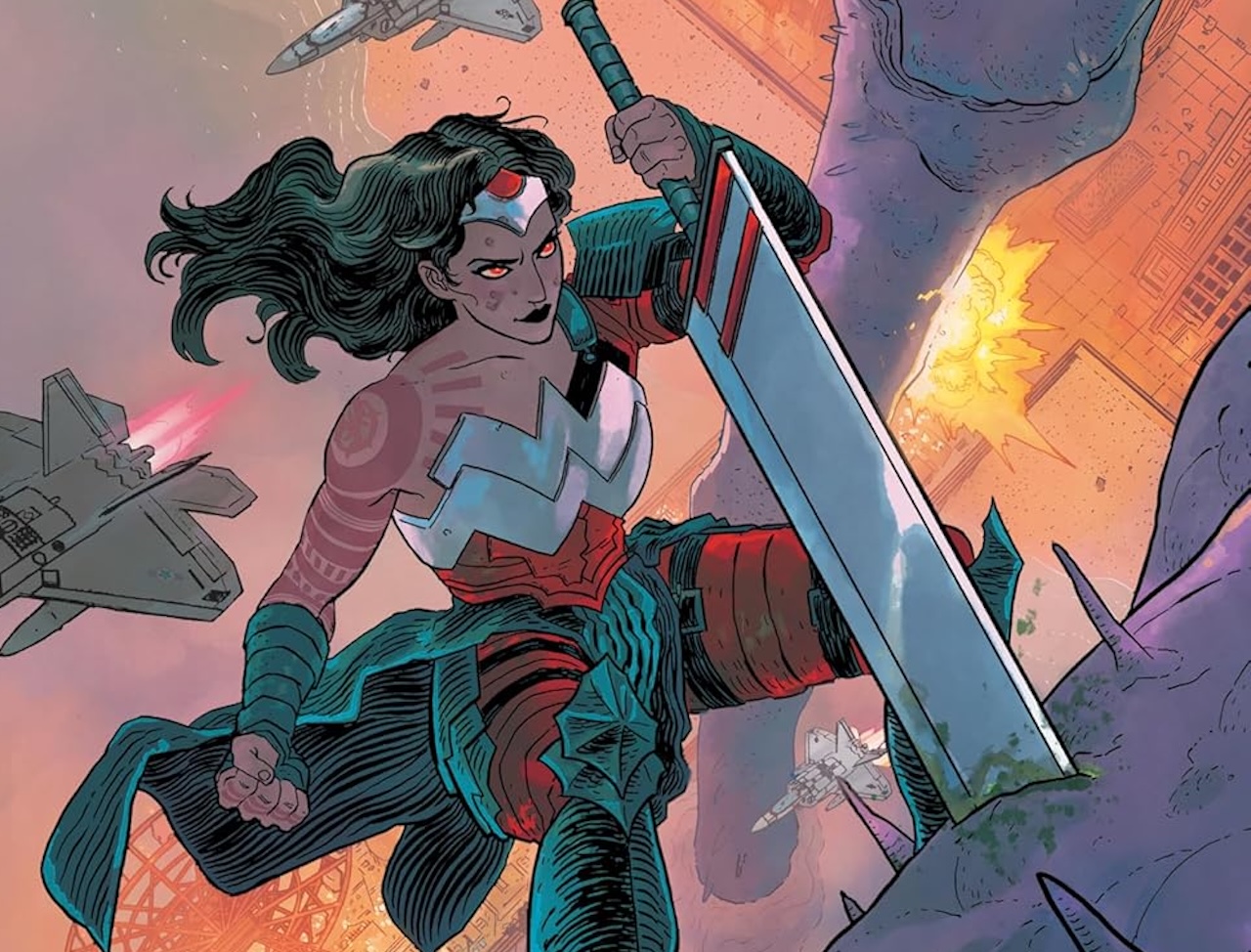
Thompson’s writing in Absolute Wonder Woman is consistently beautiful and engaging; however, this issue, the superstars are series artist Hayden Sherman and letterer Becca Carey. In terms of paneling, Sherman’s are still the best in the game, their striking depictions of action and the redesigns we see of Greek deities. What especially stands out for Sherman is their teamwork with Bellaire and Carey.
With Bellaire’s coloring the book is gorgeous. Whether it’s Diana’s usage of magic or the striking monster shots Sherman and Bellaire collaborate on, the book is wonderfully colorful while retaining the dark and moody feel consistent throughout the title thus far.

DC
As for Carey, the lettering is at its all-time best with the SFX being used in the most creative ways I’ve seen in a newer DC title. From Diana causing a distraction or summoning her sword, the SFX is appealing and fits the title’s aesthetic wonderfully (ha).
Ultimately, Absolute Wonder Woman #4 is another home-run issue for the book. I believe this book has the potential to be the leading title for the Absolute line of books as Peach Momoko’s Ultimate X-Men is for the Ultimate line over at Marvel. Both are creatively striking books and explore so much with their property’s prior adaptations.
Absolute Wonder Woman has the added benefit of not only introducing the character to newer readers as Thompson and Sherman lean on a more modern telling of Greek mythology and its monsters, but has the strength of remaining true to fans of the character. I feel that the future of superhero comics lies within creatively freeing titles such as this, and with a change in comics coming within the next few years, it is becoming more likely this series will be remembered for a while.




You must be logged in to post a comment.