

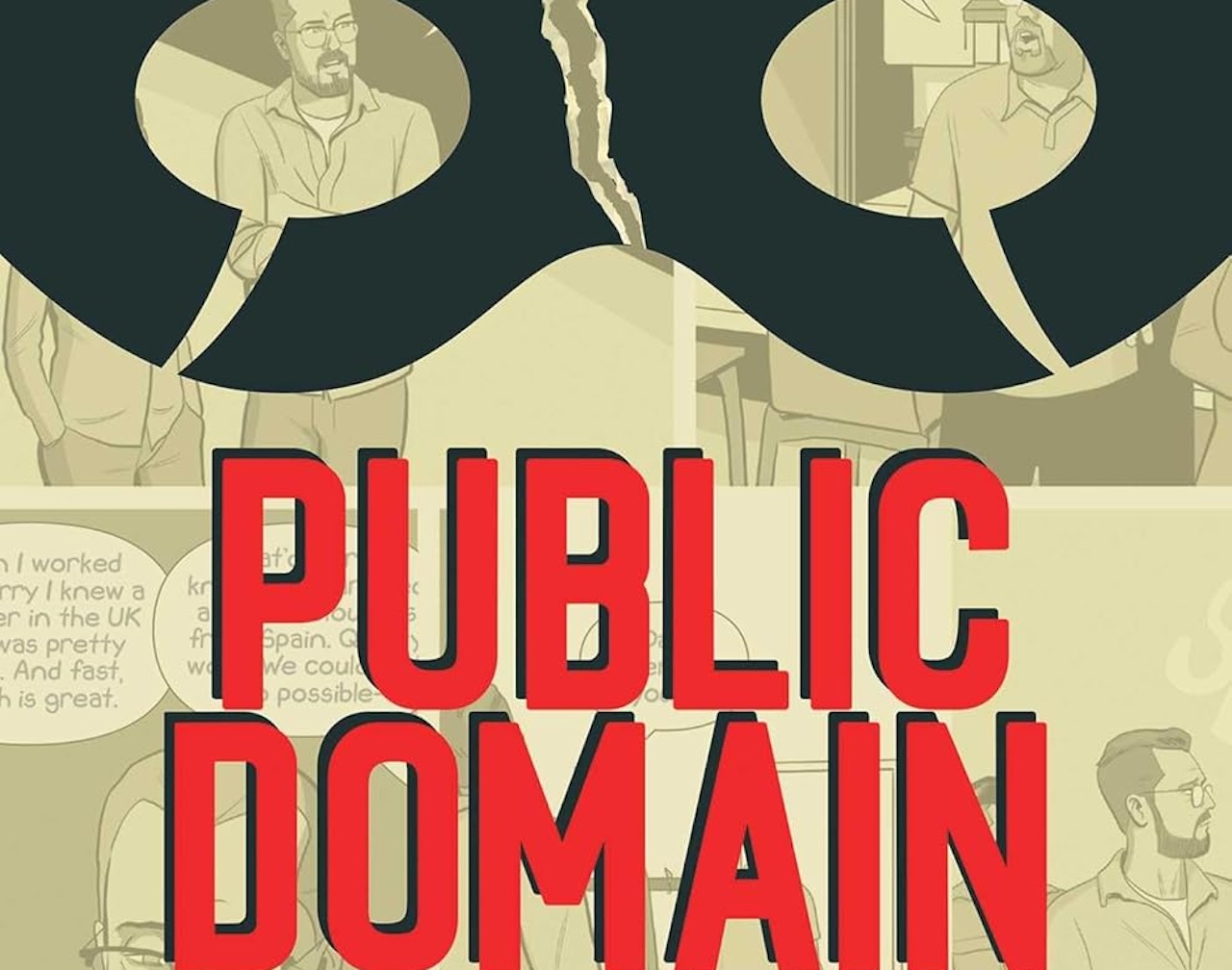

For those who are well-versed in the history of comics, you will know that it is an industry that has not been kind to creators, who are somewhat treated lesser than their own creations. That’s especially the case when a creator’s work will go on to be helmed by not only other creators but would spawn a franchise that stretches across multiple media. Without pointing to any one publisher, these stories are still going on today, and they are a key theme in Chip Zdarsky’s Public Domain, in which a family fights for their legacy when their father still technically owns the rights to his superhero creation “The Domain.”
As Jerry Jasper and his Singular Comics move ahead with their own franchising of “The Domain”, the Dallas family forms their own company, Dallas Comics, to start their own line of comics that would update “The Domain” for a new generation, much to the chagrin of Syd Dallas himself.
What is initially striking about the first issue in this collection is how Dallas and Jasper, former collaborators-turned-sworn enemies, are adjusting to a world where younger generations are having an effect on the characters that they created decades ago. As much as they want to go back to the way things were, their staff believe that they should reinvent “The Domain” to stay relevant for a modern audience, from Dallas Comics turning it into a trio of superheroes, to Singular Comics hiring a British emo writer and a musclebound artist to go the extreme route for the character.

Credit: Image Comics
There are deep cuts going on, evoking comic history from the British Invasion, the rockstar super artists, and Image Comics’ initial wave of “X-treme” superheroes. Zdarsky even comments on the mindset of creators and fans, some of which believe that comic book superheroes should not grow up, such as Mohammad Jameel, who finances Dallas Comics so that he can read more of the stuff he loved growing up reading. Feeling out of touch, this leads to a scene where Dallas and Jasper have a drink with each other in a bar, where they share their current dilemma, only for that peace to be disrupted by remembering their own history, which leads to their ongoing antagonism.
Zdarsky’s art has never been flashy. His quirky and expressive style fits well with very mundane visual storytelling, mixing drama and comedy well. Many of the funniest sequences come from Syd’s two sons, from the happy-go-lucky Dave being infatuated with his new no-bullshit editor Cynthia Dann to Miles going on a drunken rant during a panel at San Diego Comic-Con.
Zdarsky is perhaps juggling too many characters, some of which are there for comedic effect, like the aforementioned British emo Carter Dusk, whilst subplots like Mile’s gambling debt lurk in the background, which seems to be there for dramatic effect.
The biggest surprise occurs in the last two issues where a trip to Comic-Con leads to a personal revelation that disrupts Syd’s marriage. It was hard to tell where Zdarsky is going with the character of Candance “Candy” Dallas from the start of this volume, only to pay off in the final issue that is predominately flashbacks where infidelity plays a part.
Although Public Domain #10 mostly departs from the main narrative, it cements Zdarsky’s skill in writing compelling, flawed characters while remaining true to comics in general. Whether Peter Parker has domestic troubles or Archie Andrews is torn between two girls, it is all a big soap opera.




You must be logged in to post a comment.