

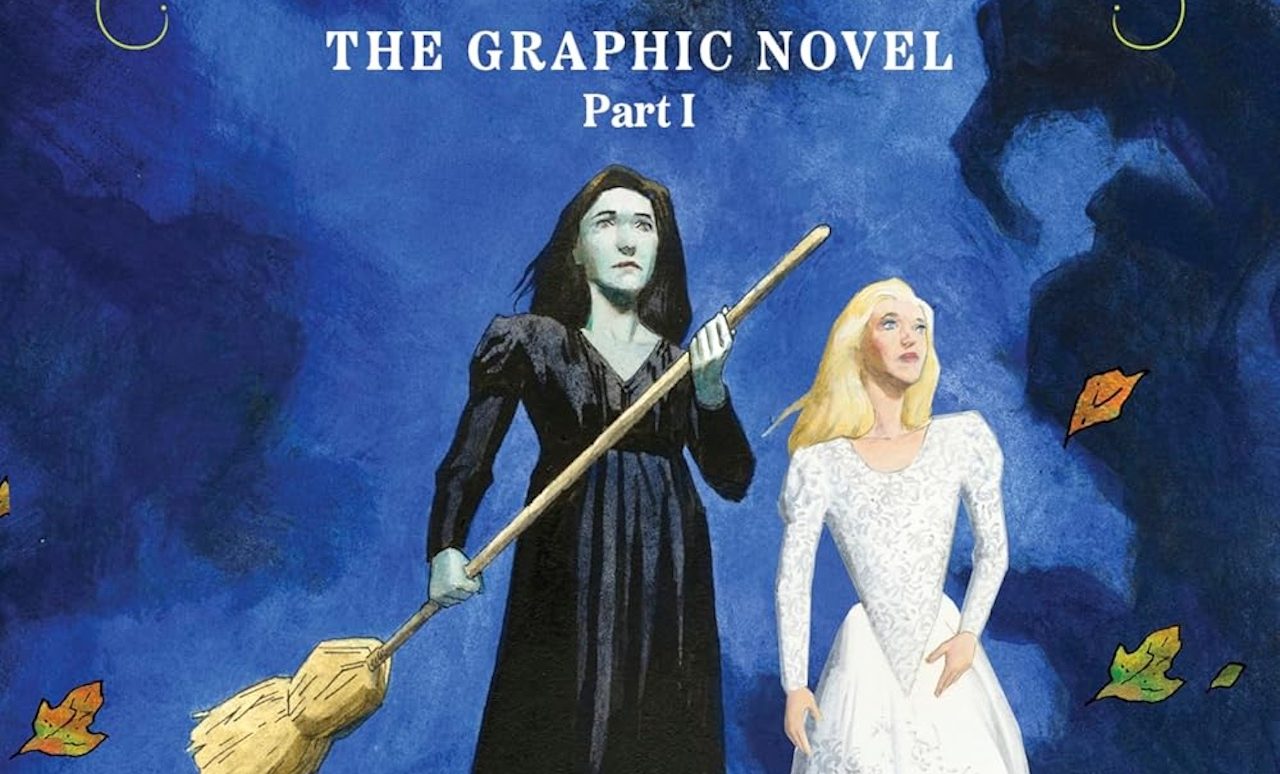

Adapting a written book into a graphic novel is more than just a translation of words into pictures; it’s a transformation that brings new life to a story. Graphic novels have the power to make dense narratives more accessible, enhance storytelling through visual world-building, and breathe fresh perspective into familiar tales. For a story as layered and complex as Wicked, the addition of artwork can deepen the emotional impact, immerse readers in the fantastical land of Oz, and offer a new way to experience the journey of Elphaba, the infamous Wicked Witch of the West.
With Wicked: The Graphic Novel Part 1, readers now have the chance to see Gregory Maguire’s dark and richly woven tale adapted to an entirely new medium by artist Scott Hampton. Unlike the Broadway musical or the recent film adaptation, this graphic novel remains closely tied to the source material, embracing its deeper themes of power, prejudice, and destiny.
The fact that I own an original Spider-Man piece by Hampton made reading this lush graphic novel all the more intriguing. This adaptation invites both longtime fans and newcomers to step into a visually stunning version of Oz that feels both familiar and newly reimagined. It’s darker than the films but also more lived-in. This is a world that doesn’t seem all that different from our own, save for a green-skinned lead character, to name just one. But does this first installment successfully capture the depth and complexity of Wicked, or does something get lost in the transition to a more visual format? Let’s dive in and find out.
It’s safe to say this adaptation is something we’ve desperately needed for a while. While the musical is fantastic, and the adaptation of that musical is also great, the source material got lost in translation. Not so here, as Hampton captures the darker, more realistic tone of the book. The graphic novel opens with Elphaba witnessing the familiar Wizard of Oz “heroes” from afar. At first, she seems evil, but soon, we see her deep human frailty.

Our lead characters.
Credit: William Morrow Paperbacks
In many cases, Hampton’s rendering of faces is so starkly contrasted with the shadowy backgrounds or highly detailed backgrounds that they dynamically come to life. This is key, as much of the book is heavy dialogue with little action. We’re right there with them, trying to understand their plight in a strange world.
Present are the themes of racism and fascism. We see it in how Hampton renders Oz, or at least his monstrous form, as a kind of demented dragon. It’s in a scene where Elphaba and Glinda meet with him, and he soon tells them off. There’s also an incredible scene with the three bears told over two pages. The parents stand over their baby bear and are soon escorted out by police. The baby bear continues to play, not knowing his parents were removed, and soon the policeman swings his stick at him, only for a curtain to obstruct what comes next as if to save the reader from the atrocity.

The great Oz!
Credit: William Morrow Paperbacks
One issue I had was how the story drops you into the tale. The opening with Elphaba watching Dorothy and her companions is good, but we immediately meet Elphaba’s parents, get introduced to the Clock of the Time Dragon, and then, before you know it, Elphaba is born. The narration in the film or musical helps draw your focus as the opening is scattered and hard to follow. It eventually falls together, however, particularly when it cuts to Elphaba at an older age.
For fans of Wicked, this graphic novel adaptation is a long-awaited and welcome addition, finally doing justice to the original novel’s darker and more intricate themes. Scott Hampton’s art elevates the storytelling, immersing readers in a beautifully grim Oz while capturing the emotional depth of Elphaba’s journey. While the opening may feel scattered and abrupt, the story eventually settles into a compelling rhythm, making it a must-read for longtime fans and a fascinating entry point for those new to Maguire’s vision of Oz.




You must be logged in to post a comment.