

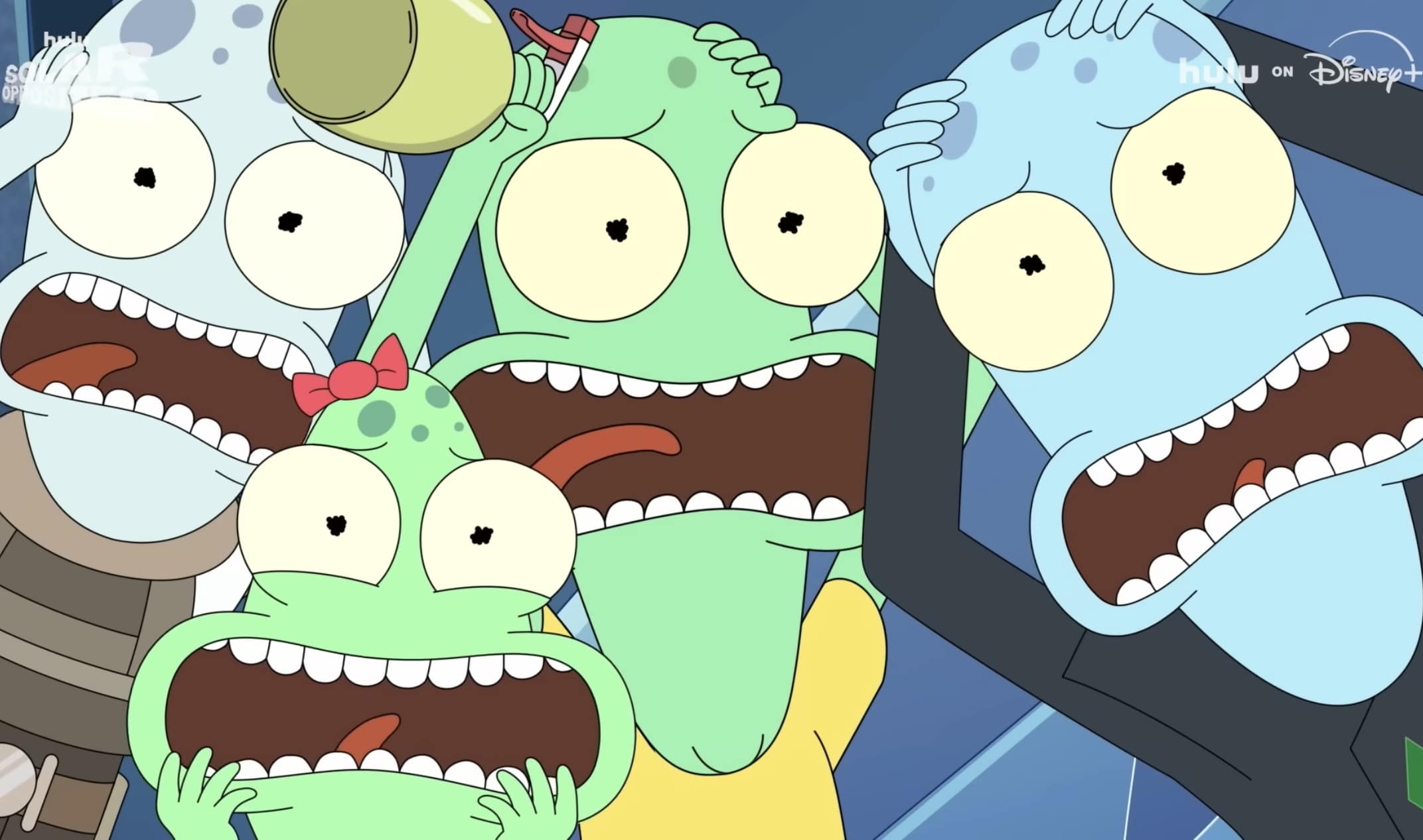

After five seasons of Schlorpian mayhem, Solar Opposites season six arrives with the same energy we’ve come to expect: big sci-fi swings, unapologetically crude gags, and subplots so bizarre they somehow circle back around to genius.
Yet beneath all the chaos, exploding beta nuts, ghost story detours, and even a lightsaber with testicles, the season doubles down on something that’s been quietly building over the years: an emotional throughline about family and connection.
The show kicks off its final season on October 13th, with all episodes premiering on the same day, and it’s well worth a binge (or two!).
Solar Opposites Season 6: Highs, Lows, and New Phases
The premiere wastes no time reminding us of this show’s absurdist DNA. Commander Zarck returns, forcing the family to literally burst beta nuts from their bodies as an offering, while Aisha and the Duke continue to complicate matters. A random ghost subplot and a bull machine called the Pelatoro only add to the madness, topped off by Terry’s T-shirt du jour: “Fartless.”
Episode two, “The Eternal Sleep Sack,” raises the bar on absurd escalation. What starts as a yard sale gag spirals into an estate sale death feud, a meditation on atheist afterlife sleeping bags, and the triumphant return of the Duke — alongside Alfred Molina’s voice talents. Background characters shouting things like “Subjugate us, we love you!” steal the show, proving once again that throwaway lines in this series often hit harder than the main plot.
By episode three, the sci-fi slingshot plotline turns into an oddly human story about sex addiction, school politics, and a great Mad Men joke. Episode four leans into family metaphors with a dad-off that leans so heavily into metaphor that the writers just had to poke fun at themselves.
The best episode of the bunch is the most heartfelt: Episode 5, “The Family Memories VHS Mix Tape.” This episode revolves around a fun VHS gimmick, complete with a fake FBI warning gag to start the episode. Much like most episodes, there are clever meta-jokes and humor that build off your expectations. It all starts with the family fighting and the pupa being sidelined, which results in Aisha showing the pupa scenes from the family over the years. They are scenes literally taped over a cartoon the pupa loves. This means multiple jokes, some of which callback to each other, that range from two minutes long to just a few seconds, packing a lot of humor in.
More importantly, the episode concludes with a poignant sentiment about the importance of family and loving one another. Paired with a peaceful song, many might feel emotional as the credits roll. I sure did. The lesson that fighting can be a love language is a nice one here, and it’s present in all the episodes, right down to the final moments of season six.
Later episodes continue to mix the grotesque with the sincere. Terry’s struggle with maturity redistribution (episode six) spirals into a skibidee urinal joke and an Ariana Grande gag. In contrast, episode seven embraces fantasy tropes with penis-lightsabers, a Dave Matthews Band nod, and a storybook mock trial. By episode eight, the show delivers a gut-punch involving The Wall characters. I’ll say no more to avoid spoilers!
Episodes nine and ten wrap things up with a balance of chaos and closure. The series finale brings various subplots together with effective callbacks, featuring not one but two recaps, and an epilogue of endings montage offers multiple quick send-offs. Much like every episode, nothing goes right for the family, but in the end, they find solutions and ways to coexist when they live in the moment and work together. It’s messy, heartfelt, and oddly inspiring — the perfect encapsulation of the show’s DNA.
Strongest character acting yet
It’s safe to say the voice acting is superb this season, with mainstays Dan Stevens, Thomas Middleditch, Mary Mack, and Sean Giambrone all putting in stellar work. Middleditch may take the cake, however, with multiple episodes featuring Terry as the central character, who is typically the most extra and ridiculous of the bunch. There were multiple episodes where it occurred to me that he had the most lines, which makes him stand out more. Meanwhile, casting Mack is one of the smartest things an animated show has ever done, because a Wisconsin accent can’t not be funny, especially for an alien.
Guest stars include Tiffany Haddish, who is surprisingly not a main character, given her exceptional performance in the show. You can practically see her smile when the A.I. delivers lines, even though it doesn’t have a face.
Also returning is Kieran Culkin, along with actors Christina Hendricks, Ken Marino, Alfred Molina, Natalie Morales, Jerry O’Connell, and Beck Bennett. There’s something extra hilarious about Culkin, an Oscar winner, delivering lines about things in his butt. Oh, and Bennett somehow finds himself in another vehicle with near-death situations occurring around him, similar to his stint in Superman this summer. Dare I say Bennett is getting typecast!?

Terry’s T-Shirt Tracker
One of the most consistent running gags is Terry’s ever-changing T-shirts, which double as punchlines in themselves. Season six delivers another stellar lineup of shirts:
-
Fartless
-
Dollywood Annual Sass Holder
-
Gyatt Mylk?
-
Long Live and Shock
-
SMASH
-
Chubby Jim
-
Six Loko
-
Nine Inch Snails
-
Coke Zero Dark Thirty
-
Limp Triscuit
-
#2 Dad
-
TMI (in NPR logo style)
-
Disney Princess
-
Skibidee Urinal
-
Little Bridgerton
-
Gum
-
Bottom (in Top Gun logo style)
-
Czar Castic
- Tag Hag
Each shirt feels like its own micro-joke, often undercutting or amplifying the scene in which it appears.
Pop Culture Overload
True to form, season six is overflowing with references that range from sharp satire to gloriously dumb callbacks. Here are just a few:
-
Peloton like you’ve never seen before (Episode 1)
-
John Carter of Mars (Episode 2)
-
Mad Men (Episode 3)
-
Rocko’s Modern Life (Episode 3)
-
Family Feud parody “Fam Slam” (Episode 4)
-
Braveheart via a peanut butter fridge war (Episode 5)
-
Stand By Me 2: Still Standing (Episode 7)
-
Dave Matthews Band + Chicago River victims (Episode 7)
-
Ariana Grande (Episode 8)
-
Baby’s Day Out (Episode 10)
The references range from niche to mainstream, but part of the fun is in their chaotic placement, often shouted in the background or tossed off as one-liners that only hit you a few seconds later.
Final Thoughts
Solar Opposites season six shows that even a show built on juvenile humor, grotesque violence, and over-the-top sci-fi plots can sneak in real emotion. The finale wraps up ongoing storylines while offering fresh perspectives on Schlorpian culture and legacy, leaving enough room for new adventures to unfold, should the show ever find new life on a rival streaming platform.
At its core, this season proves once again that Solar Opposites isn’t just about shock value. The crude jokes and wild references are still there, but what lingers is the family’s love, expressed through chaos, fighting, and ultimately, choosing one another above all else. Season 6 might not be the most polished ride, but it’s one of the most rewarding, proving that in Solar Opposites, family always comes first, even at the end of the world.
Solar Opposites season six premieres on October 13 on Hulu.




You must be logged in to post a comment.