


In the book Of Mice and Men, two migrant workers are driven by a shared American Dream to own a piece of land and achieve financial freedom. Very much of its time, the book only had one female character. She serves as an object of desire for the deuteragonist, a mentally disabled man who wants nothing more than to care for his pet rabbits. It is then no coincidence that Wonder Woman #26, the third chapter in the arc titled “The Island of Mice and Men”, starts with a group of people leaving on a yacht for a private island. A panel, elegantly drawn by Daniel Sampere, gives special attention to someone bringing his pet mice.
Tom King gives a twist on the outdated novella by asking the question: What would happen if someone who has felt small all his life actually had the resources to gain power? What would his American Dream look like? As it turns out, it is a direct opposition to Wonder Woman’s own paradise island. King knows all too well that the only private island we are familiar with in real life has no good connotations, and he plays with that implication.

DC
In the beginning, the private island’s purpose is to be a refuge from superheroes, a timely connection to Rick Flag Sr.’s motivation in the recently-completed Peacemaker Season 2. But looking between the lines, there is historical relevance to this exodus. Whether racially motivated or stoked by fearmongers, mass migration from urban centers to the suburbs has happened time and again.
It’s in this fear that personalities like Mouse Man can rise to power. In the island that no one dares to touch, a concoction of manosphere and fascism brewed. Once Mouse Man had a taste of suppressing free speech, the only word allowed on the private island was his. The island gave the small man room to be big, and now he enjoys making everyone else feel small. The people who once felt threatened by outsiders, being promised a dream of segregation, became oppressed by one of their own.
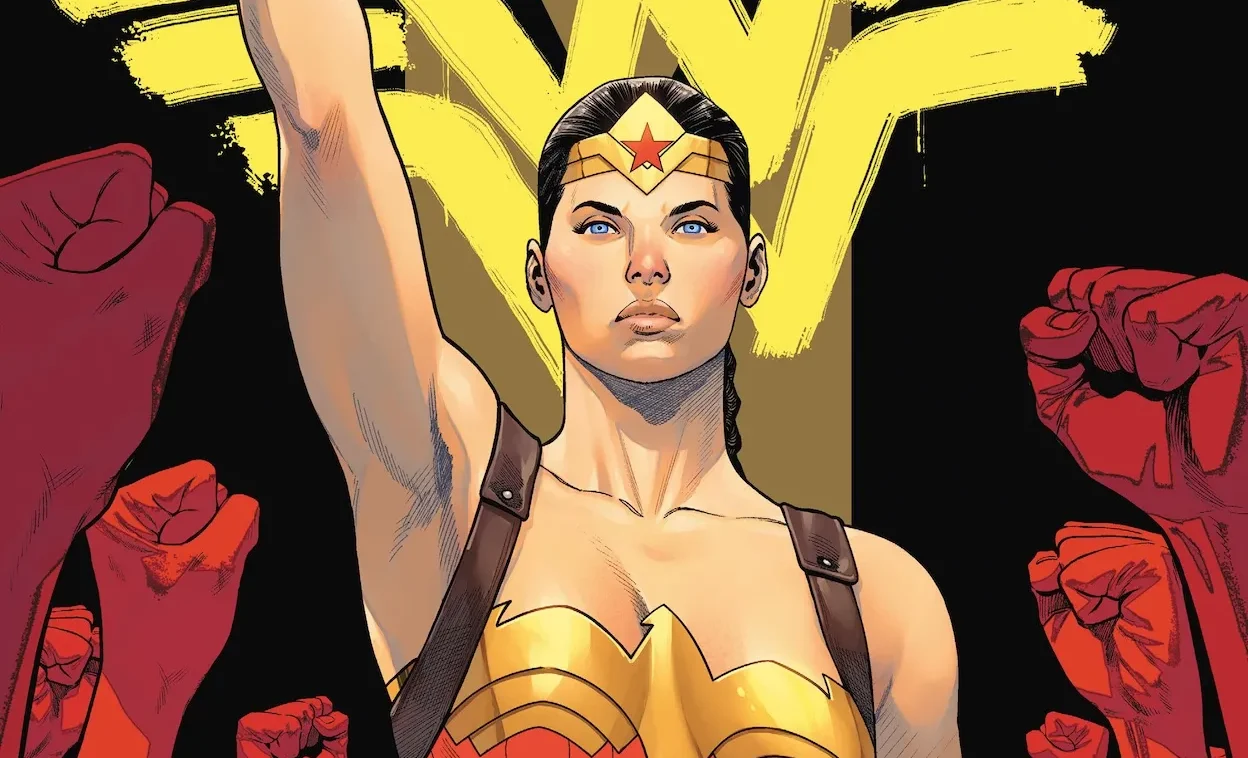
But that’s only part of the story. The other half is about Wonder Woman’s fistfight with the buck-toothed rodent fan. And for a book with her name on the title, it’s criminal that she’s the least interesting part of all this. Maybe it’s due to King’s choice of omitting any inner monologues, but Wonder Woman has no characters to bounce off of, so the readers aren’t privy to her thoughts. Batman has Robin. Superman has Lois Lane. Wonder Woman stands alone.
King’s mission statement was to make a Wonder Woman run that leaves a mark. Instead, her interesting personality traits are stripped away for a motherhood that contrives stakes in the shape of a baby in distress. There’s a lot left to be desired from King’s characterization. What’s more than satisfactory is Tomeu Morey’s coloring, which, in my opinion, will be looked back on as the hallmark style of the 2020s.
Wonder Woman #26 draws real-life parallels for the golden lassoed goddess to tackle. As much as we wish it wasn’t true, fascists on private islands are villains that have managed to leave the comic book page, but it’s always enjoyable to see someone like Wonder Woman put them in their place. If only Wonder Woman as a character is as fleshed out as Daniel Sampere’s illustration of mice.




You must be logged in to post a comment.