

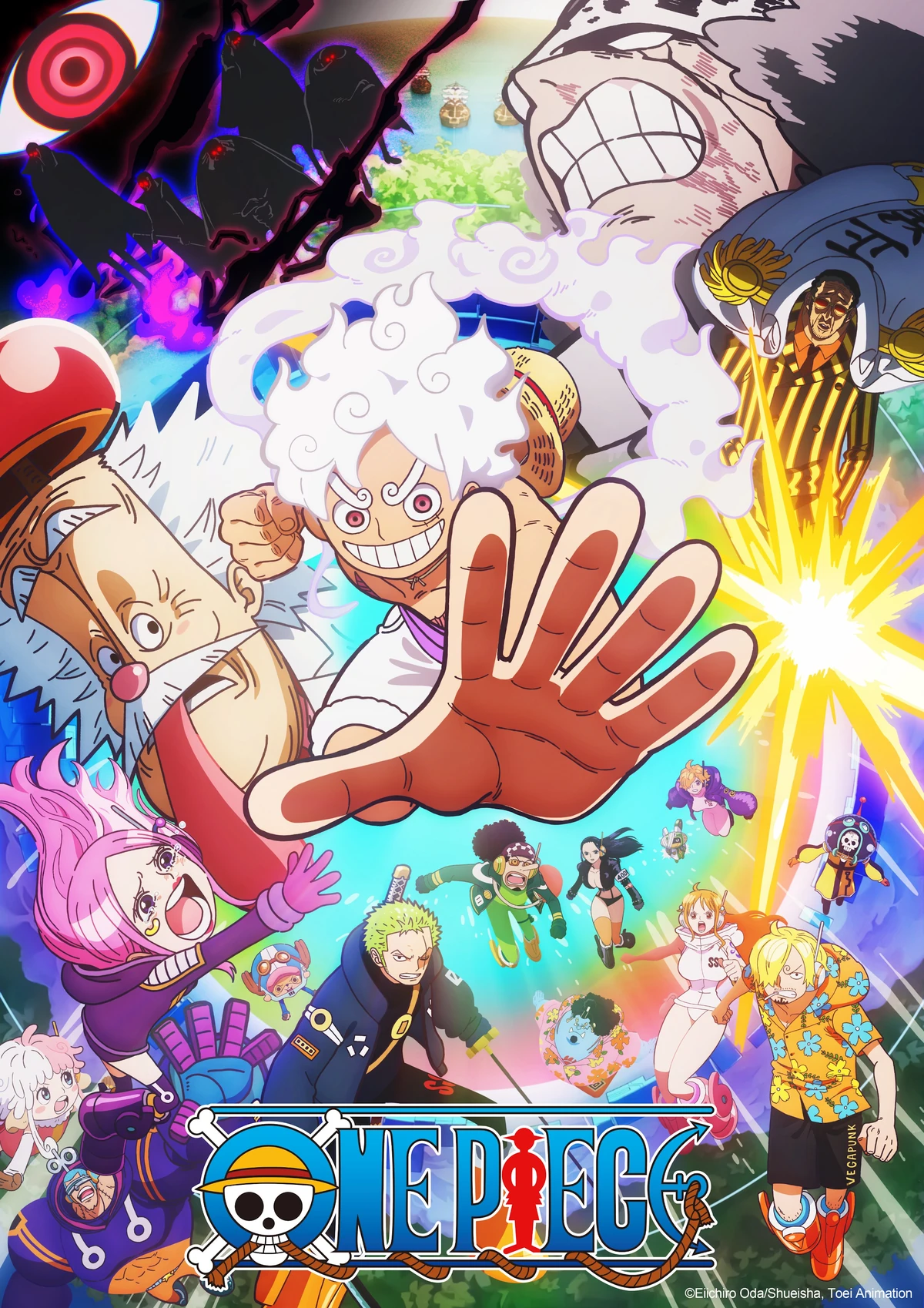

This article features spoilers of the recently concluded Egghead arc.
2025 marked the end of an era as Toei Animation’s long-running anime series One Piece concluded its time as a continuous year-round weekly show, which has been going on since its premiere in 1999. This does not mean that the show itself is over as like Eiichiro Oda’s ongoing manga of the same name, there is a lot more story to tell. In April 2026, One Piece will return as it will adapt the Elbaph arc, with a plan of releasing a maximum of twenty-six episodes annually.
Two years ago, I wrote about the future of One Piece as both the manga and its anime adaptation may have reached the final saga that may still take a few years to conclude, but there is more media to be spawned out of Oda’s creation, suggesting this is a franchise that may never end. Whilst we await more One Piece, it is time to look back at the last two years and what we have learned, from where the adventures of the Straw Hats have taken us, and how we as the fans have celebrated it.
Journey Through the Future Island
Following the Wano Arc, which concluded the New World Saga, Monkey D. Luffy and his pirate crew that is the Straw Hats are off on their own, continuing their search for the One Piece treasure. From the first episode of the Egghead Arc, it felt like we were in classic One Piece territory as our beloved crew sailing on the Thousand Sunny as they fight their way through extreme weather conditions to eventually finding themselves in the futuristic-looking island, Egghead.
Along with Jewelry Bonney, former captain of the Bonney Pirates, Luffy and the rest explore the island where they meet Dr. Vegapunk and his six satellites, artificial creations that represent aspects of his personality. After four years of Wano, which is visually inspired by Japan’s Edo period, we might as well be in a different world as Egghead is all about the hi-tech future from its architecture to inhabitants. Oda has acknowledged the late Akira Toriyama’s Dragon Ball as a massive influence on the series, and you can see Toriyama’s joyful mechanical design evoked through the future island.
That contrast is also apparent in the art style. Whereas the Wano Arc became known for its saturated colors and thick outlines – and the turning point that Toei’s adaptation was starting to look good – the Egghead Arc distinguishes itself with a softer palette and loose linework. For as much exploration through the island, as well as more information about the world’s secret history during the Void Century, it doesn’t take long for the action to kick in.
The Egghead Buster Call
Due to World Government rage and strategic threats, like Vegapunk’s technology and research of the Void Century, Saint Saturn of the Five Elders orders a massive Marine military operation to obliterate its inhabitants including Luffy and Vegapunk, and thus we get some intense battles along the way.
Ever since Wano when the late Tatsuya Nagamine took over as series director, the staff at Toei has upped their game when it comes to One Piece’s action. It may not be the most visually consistent show, but there are times when the incredibly fluid and flashy animation elevates Oda’s cartoonish yet heavily detailed illustrations.
A major factor that they introduced during Wano’s climax is Gear 5, which pushes the boundaries of Luffy’s already ridiculous rubber ability as he becomes a god with cartoon physics to rival the slapstick antics of Tom and Jerry. That is not to say that the show loses its badass Shonen moments – with Roronoa Zoro proving why he is the coolest – but now the Straw Hats battle the likes of elderly men turning into giant kaiju, not just cyborg weapons and government agents who can change into animal hybrids.
Emotional Detours
Considering the pre-timeskip adventuring that is evoked during the initial episodes of the Egghead Arc, much like Oda’s source material, the show breaks away from that formula, not just in how the action escalates, but even stepping away from the Straw Hats’ current situation and instead focuses on other major players, such as Shanks and Blackbeard. We also get to see what really happened in the Reverie where more secrets are revealed, whilst the rest of the world comes to grips with the shocking news from Vegapunk’s televised message that the Earth is sinking.
While the story is getting ready for its final stage by placing all the major players in a world-defining race to claim the One Piece, the arc’s biggest detour devotes nine episodes to showcase the life of one character: Bartholomew Kuma. While it is tradition for nearly every character in One Piece to have a tragic backstory, Kuma’s past might be the most tragic of them all.
Introduced as a villain as part of the Seven Warlords during the Thriller Bark arc, this arc recontextualizes him as a tragic and complex individual who has experienced major turmoils and sacrifices throughout his life. From being enslaved as a child to the death of his parents that broke him into utter despair, the only ray of hope he clung to was his belief in the Sun God Nika and the family he made along the way.
During the post-timeskip, there has been more focus on father-daughter subplots, some of which are the most moving moments from the entire series; no doubt this comes from Oda himself being a father of two daughters. After losing his friend and romantic interest Ginny who gave birth to Bonney before passing, Kuma becomes a loving father to his adopted daughter, Bonney, having raised her out of love and respect for Ginny.
For as much love these two have for each other, outside forces will always drive them apart, not least of which is Saint Saturn, who has been the catalyst for their suffering, such as forcing Kuma to give up his brain and free will to become a weapon for the World Government.
Which is why it is so satisfying when we cut back to the present day, as not only are father and daughter reunited, but each delivers an almighty punch on the monster who has brought them so much harm. By the end of this arc where the Straw Hats have escaped the destroyed Egghead and celebrate by having a feast with the giants as they head to Elbaph, Kuma and Bonney tag along as they rest together looking at the horizon at sea.
The Celebration of Fan Letter
Whatever amazing moments there are throughout this arc, proving that Toei’s One Piece is still going through its golden age, the pacing will forever be an ongoing curse throughout this anime. Following the initial thirty-four episodes of the arc, the show took a six-month hiatus in October 2024, whilst a remastered and re-edited version of the “Fishman Island” story arc would air in the show’s timeslot during the break.
Although the remaster was an interesting experiment in how to update the visuals and condense the storytelling from one of the series’ more divisive arcs, it did pave the way for the best thing to be released during the last two years that celebrated the One Piece anime’s 25th anniversary in the best way possible.
Aired at the start of the hiatus, “One Piece Fan Letter” centers on a young girl with strong admiration for Nami of the Straw Hats who sets out on a small adventure from the Sabaody Archipelago, two years after the Summit War of Marineford. While the Straw Hats do feature, the TV special is about a group of people who are living through the Great Pirate Era without any interest in finding the One Piece and yet their lives are somewhat shaped by the Straw Hats.
Directed by Megumi Ishitani, who is responsible for helming the single best episode of the entire show that is episode 1015, the special could have been an Easter Egg extravaganza that is well animated and edited. However, it ends up being a meta commentary on how One Piece has impacted the fandom in various ways, whether it is about the Shonen fans who will debate about the series’ power-scaling, or those who will take at heart the themes of the story, which is about freedom and achieving your dreams.
Less than a half-hour long, “One Piece Fan Letter” not only celebrates Oda’s creation and its fans, but also delivers an adventure that balances the light-hearted fun and weighty themes that have defined the long-running masterpiece.
“Set Sail!”
As previously mentioned, we have witnessed the end of the era with One Piece concluding its run as a weekly show but does not mean the franchise is far from over.
Whilst we wait for the return of Toei’s adaptation, in which the Straw Hats will arrive at the Land of Giants (where the manga is currently at), this March sees the return of Netflix’s surprisingly successful live-action adaptation with season two introducing us to a CGI Tony Tony Chopper.
In terms of other projects in the future, there haven’t been any further updates regarding Wit Studio’s own adaptation titled The One Piece that will also drop on Netflix, so hopefully we will get some news later in the year.
There is also the confirmation back in August last year that writer Jun Esaka and artist Sayaka Suwa’s light novel One Piece: Heroines will get an anime adaptation, which will focus more on the female players like Nami and Nico Robin. Oh and Oda have announced that a new movie is officially confirmed and in development. With all this media coming our way, to quote one pantless cyborg: “super”.
Whenever a newcomer asks what is the best way to get into One Piece, in that should they read Eiichiro’s masterful manga series, or check out Toei’s long-running anime that has its own issues regarding filler and pacing. In recent years, we have been seeing more media that have put their own spin on this epic story that there are now multiple gateways for any newbie to jump into.
We may have to wait a few more years for Oda to wrap up the story that he has been telling since 1997, but One Piece in whatever form it is in will find its way into the heart of someone.



