

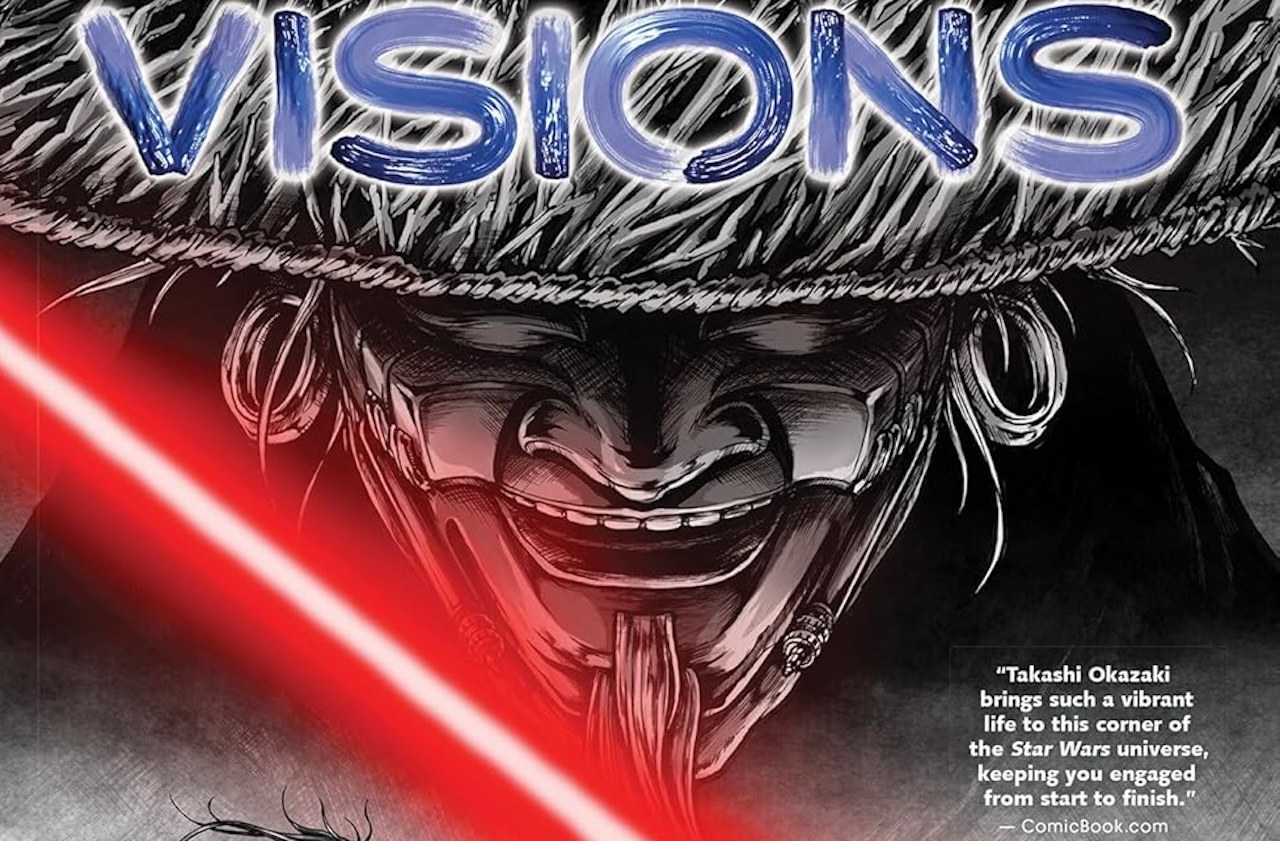

A look at Star Wars as we’ve never seen it, with subtle differences in myth and concepts and stylistically individualistic. Sith like wandering Ronin, psychedelic spiritualism, and grotesque imagery. This is what you can experience with Star Wars: Visions.
Like the anime of the same name, Visions allows Japanese creators a chance to reimagine the Star Wars universe as they see fit. With the comic, the incredible artists Takashi Okazaki and fan-favorite Peach Momoko are handed the reins, and the results are predictably striking.

Marvel
Being a book helmed by artists, the results are more style than narrative; Okazaki’s stories about lonesome Force warriors showcase a stylized, black and white world of droids and whirling red lightsabers, while Momoko’s work delves into the surreal and spiritual.
Okazaki gives us more narrative: his vision is the world of wandering Ronin, wandering Sith without masters, accompanied by their weaponized companion droids, occasionally bumping up against elderly masters and urging the occasional and respectful saber fight. His world hints at larger myth: shrines with dusty protectors, funeral pyres, and spiritual hot springs. There is suggestion of a much wider world in a single panel showcasing a horde of wild, lightsaber-wielding warriors, once beaten by our stoic hero and now forgotten. His stories suggest a deep and ancient nobility in the war between Dark Side and Light, even if the suggestion lingers unsaid, just below the surface.
Conversely, Peach Momoko’s stories are drawn along by surreal imagery and incredible, macabre stylings. Skull-like stormtrooper helmets and skeletal Darth Vaders haunt the gruesome dreams of a young woman; horrifying Imperial ceremonies suggest Lovecraftian influence. Her stories are wordless, almost inscrutable. There is suggestion of star-spawned malice, as if there is something beyond lurking in the power of the Force.

Marvel
Ultimately, these stories are narrative brick walls: they exist only to tease at style and concept, not to spawn further adventures or to enrich larger, cosmic world-building. It’s an exercise in cool, an exciting novelty more incredible than practical. It makes the reader excited by the prospect of such creative freedom in a narrative sandbox otherwise strictly controlled: there is no Star Wars like this Star Wars because such a thing would somehow break the larger property.
If only we could get this sort of creative play in further sandboxes, this freedom of ideas applied to other beloved properties that might benefit from fresh ideas and driven experimentation.




You must be logged in to post a comment.