


Throughout the 1970s, Francis Ford Coppola went through his imperial phase where he made The Godfather, The Conversation, The Godfather Part II and Apocalypse Now, all of which were critically acclaimed, as well as box-office hits. Coppola would use the success of those films to self-finance 1982’s One from the Heart, a visually stunning, if dramatically uninteresting box-office flop that may look and feel like a musical, but the music numbers were Tom Waits songs which will drive you nuts if you keep on listening. As the decades pass by, with Coppola delving into completely different genres, Megalopolis – his first film since 2011’s Twixt – seems like the culmination of all his work, for better or worse.
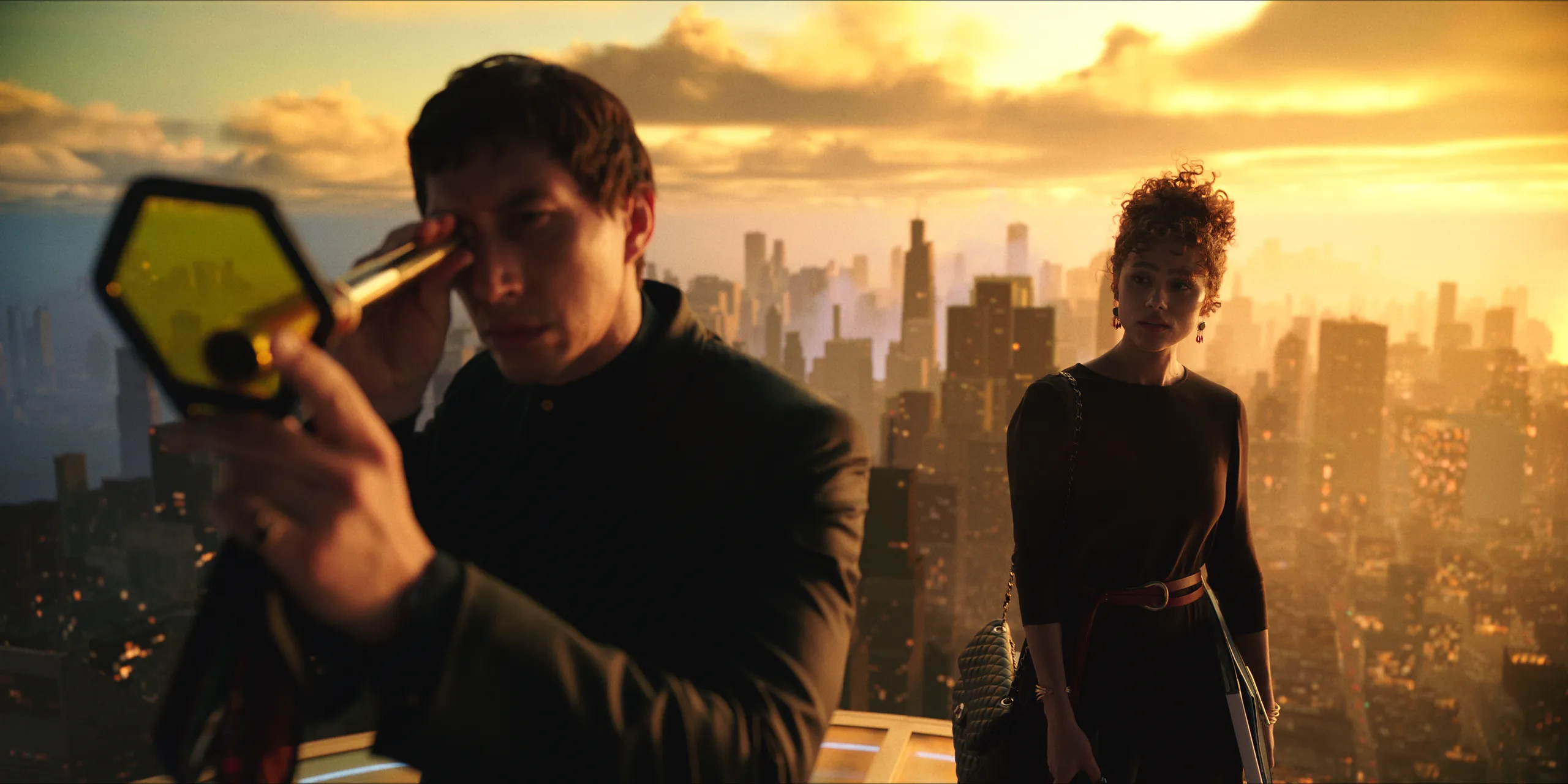
Something of a passion project that he initially conceived in 1977, Megalopolis takes place in an alternate present-day “American Republic”, where the architect Cesar Catilina (Adam Driver) clashes with the New Rome city mayor Franklyn Cicero (Giancarlo Esposito). With ambitious plans to utilize a new building material to construct a futuristic utopian city of his own design, there are forces that are determined to crush Cesar’s dream, whether it is the mayor leading a smear campaign against him, or even Cesar’s own cousin Clodio Pulcher (Shia Labeouf), who desires power in his own way.
It is not a stretch to say that Coppola sees himself in Cesar Catilina, the protagonist who is fighting for creative freedom and independence against a system that is unwilling to let him do so. This is a theme that you also see in Coppola’s underrated 1988 biopic Tucker: The Man and His Dream, which despite its fact-based subject matter, served as a meta-commentary of the director looking back at his own failure with One from the Heart. However, whereas Tucker is more of a crowd-pleaser, Megalopolis, which Coppola self-financed with a $120 million budget, has had polarizing responses since its premiere at Cannes.
Over the course of 138 minutes, Megalopolis throws a lot of ideas, ranging from outlandish sci-fi concepts about how the strange origins of the new material known as “Megalon”, to evoking aspects that you associate with the Roman Empire from the spectacular Colosseum sequence to the large sculptures that come alive. There is never an explanation into why all this strange stuff is happening.
The same goes with the characters, who function more as concepts that are defined by one function, which leaves an all-star cast delivering performances that can range from dramatically compelling like Esposito’s Cicero to cartoonish villainy like Labeouf’s Clodio. Driver, in particular, seems to be let off the leash, where his emotions can go from stilted to screeching, while reciting Hamlet’s “To be, or not to be” speech for no particular reason.
When you look at his Godfather trilogy, which were more rooted in classical filmmaking, Coppola knew how to balance the micro-macro storytelling. With Megalopolis, which has more in common with his recent art films, Coppola is using more stylistic techniques like split-screen. There is some stunning cinematography from Mihai Mălaimare Jr., but when the film leans harder on the CGI, the compositing can oddly look cheap. Considering that Coppola is re-treading familiar themes like family and how love and betrayal can come of it, his fixation with style that he now seems incapable of grasping traditional storytelling.




