

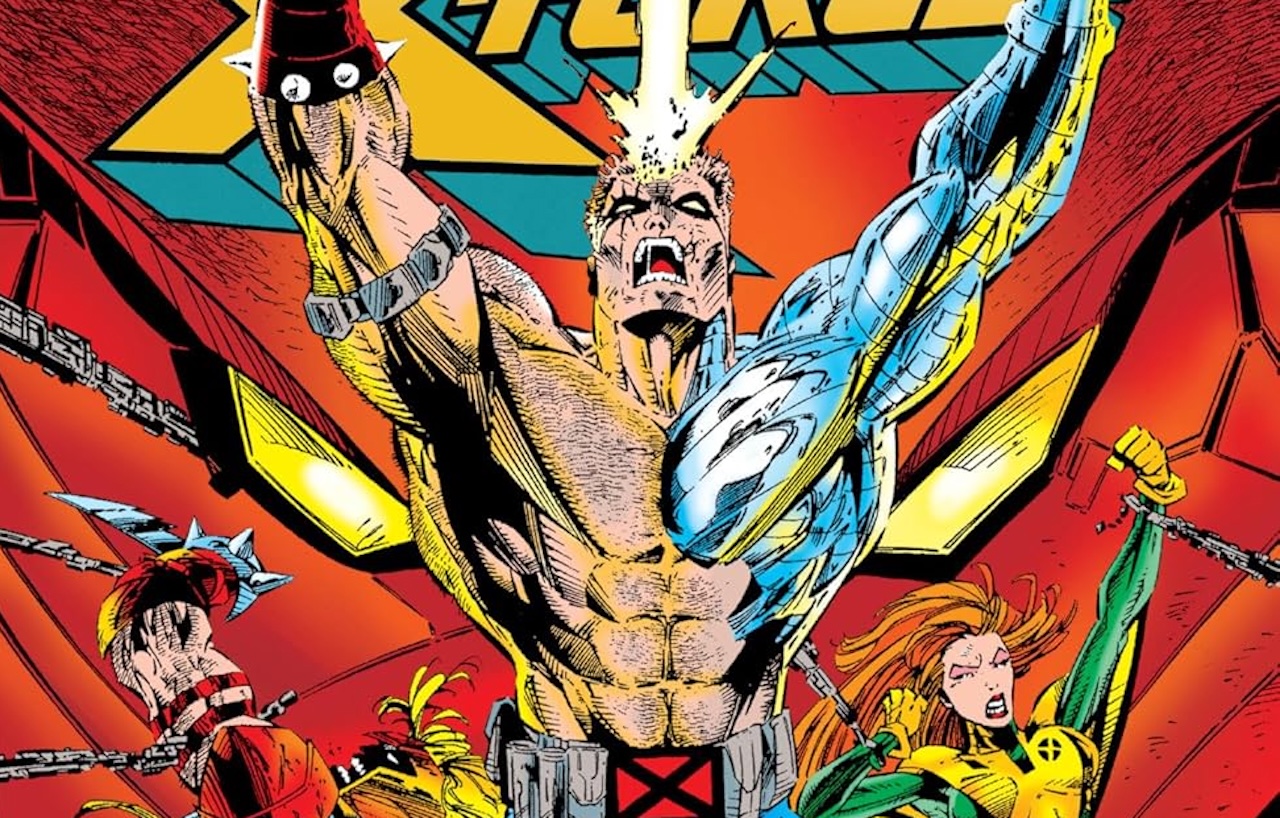

The years leading up to and following the debut of X-Force were a little turbulent and confusing, narratively and editorially.
The X-Men franchise had been undergoing a seemingly endless boom time since Chris Claremont took on the whole thing decades earlier – spin-offs New Mutants and X-Factor doubled and then tripled down on fans’ need for more mutants. But as those mutants marched toward the 1990s, where they would become household names in no small part due to X-Men: The Animated Series and ToyBiz action figures, things were rocky behind the scenes. Chris Claremont was ditched from both Uncanny X-Men and X-Men, as was Louise Simonson, who had been writing New Mutants. The industry demanded fresh talent with names that would define pop culture: Rob Liefeld, Jim Lee.
The final issues of New Mutants and the first issues of X-Force are, without a doubt, an utter mess. Characters and narratives are abandoned, fresh faces spring up, and are summarily under-utilized. Big concepts are introduced and then forgotten.
The saving grace of the book – the person who pulled all that mismanaged conceptual noise together – was writer Fabian Nicieza, who began clarifying major players like Deadpool and Cable in solo titles while trying to rein in the sloppier aspects of X-Force. By the issues collected in X-Force Epic Collection – Toy Soldiers, some semblance of narrative cohesion and cross-titled synergy is in place.

Marvel
That doesn’t mean that it wasn’t still confusing and occasionally obtuse. Much of the story threads early X-Force introduced and discussed would never find a natural or satisfactory conclusion. Ideas that were very big and important – Cannonball being an immortal External, for example – are barely mentioned in Toy Soldiers, just ten or so issues before they were introduced.
Dani Moonstar, a founding member, fan favorite, and major part of New Mutants, was now masquerading around in a Spider-Man mask and hurling slogans for the evil Mutant Liberation Front, a team whose membership seemed custom-built to overwhelm fans with new, vaguely powered characters. While Nicieza and crew were working hard to crystalize the heroes and their current roles, characters like the MLF wouldn’t find that clarity for years (some for decades).
Even Cable, initially the book’s central figure, had all but moved on; his solo book explored his past and his purpose, but that deepening didn’t translate to the team book, which was burdened by too many characters to properly explore. Toy Soldiers does some impressive work on that front, breaking the team into more manageable mini-groups and adventures.

Marvel
Shatterstar, whose entire vibe was ‘mysterious’, is given a little showcase as he battles Arcade with Adam X; Siryn and Warpath go on a quick jaunt to Ireland, where they confront Theresa’s uncle, Black Tom, with the help of Juggernaut. Rictor, a character doomed to be forgotten and neglected to this day, gets an issue dealing with his gun-running family. These stories ground long-floating characters, and though they step away from the larger team dynamic, they don’t feel wasted or clumsy.
That team dynamic is given its own space in a couple of crossovers – first with New Warriors and, for an issue, as part of the fantastic Phalanx Covenant. X-Force is inherently cool, militaristic in their teamwork, poised to balance one another out.

Marvel
Though the Liefeldian aspects of the book – villains like Reignfire – might be seen as the epitome of 90s excess, X-Force isn’t nearly as troubling as later books like Force Works. Artist Tony Daniel, who does a majority of the work here, embodies a lot of that ‘extreme’ energy, but does so without tipping into the realm of near self-parody. Sure, the women sometimes strike anatomically impossible poses, but this was the 90s; you couldn’t escape all that.
Though a lot of the narrative here has been long forgotten – the characters have been explored, their narratives stabilized – Toy Soldiers is already moving past the most turbulent aspects of the X-Franchise turnover. These are comics in transition but are part of a strong transition.




You must be logged in to post a comment.